

Read Time :
Table of Contents
Key Point’s
Intro: In San Francisco, Mia (designer) and Leo (musician) enter a fake marriage–like roommate setup born of survival and forced proximity.
Conflict 1: Routine makes them feel like a couple, but suspicion of hobosexuality lingers.
Conflict 2: Cramped living sparks intimacy, leading to romance mixed with doubt.
Conflict 3: Rumors and an ex raise mistrust—was it love or just survival?
Twist 1: To avoid eviction, Mia lies they’re engaged—fake marriage becomes a performance.
Twist 2: Mia’s finances collapse, but Leo stays and works hard, proving unexpected loyalty.
Climax: A fight forces truth—Leo admits past flaws but shows he wants real love.
Resolution: Mia chooses fragile trust over exile; their bond remains uncertain but hopeful.
Closing: Love is never certain—fake marriage and forced proximity reveal that love is always a gamble.
Introduction: The Unlikely Pact- A Forced Proximity Romance
“Love is not about merging, but about standing guard over each other’s solitude—even when a fake marriage or a fragile arrangement makes closeness inescapable.” – Rainer Maria Rilke
In San Francisco, the city of fog and glass towers, even love sometimes begins as a ruse.
Rent rises higher than the skyline, and survival pushes strangers into arrangements that blur the lines between necessity and desire.
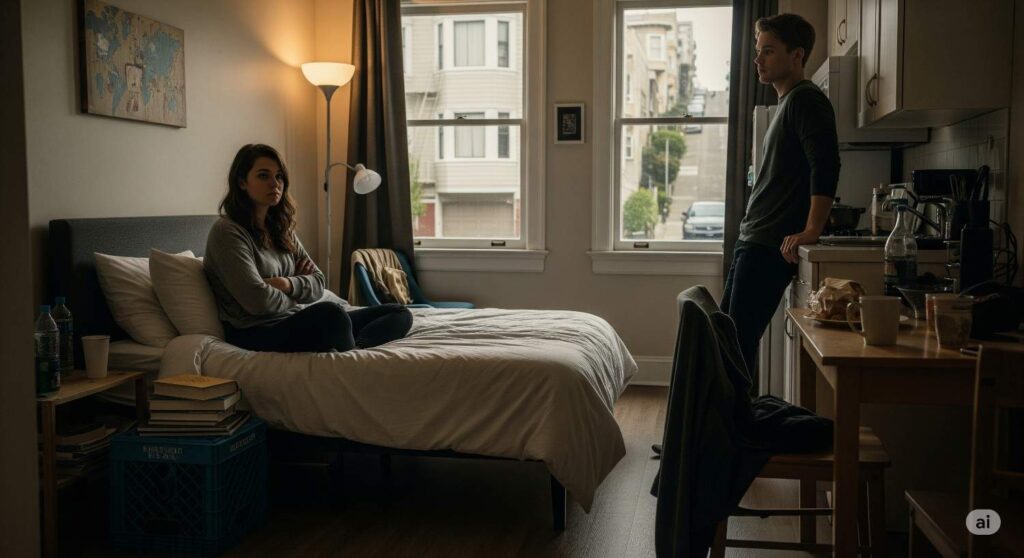
Here, in a studio that was barely large enough for one, two people found themselves living out a fake marriage without meaning to.
This is the story of Mia, a graphic designer stretched thin between clients, and Leo, a musician who carried more charm than steady income.
What began as forced proximity—two strangers colliding out of desperation—slowly unfolded into something resembling intimacy.
Yet nothing came without suspicion: whispers of hobosexuality, warnings of betrayal, and the fragile possibility that this stuck together love story might be nothing more than a gamble in a city where closeness is both survival and danger.
“Human beings are not born for solitude; it is in the cramped rooms of necessity, in the weight of forced proximity, that hearts begin to imagine tenderness.”- Gabriel García Márquez
A fake marriage born of survival and forced proximity is not a lie, but a mirror—reflecting what we fear, and sometimes, what we dare to call love.- romancetropes.com
Rules, Rent, and a Fake Marriage
“Human relationships are not built in certainty, but in the fragile encounters of daily life—moments of forced proximity that teach us who we are when no mask can last.” –Virginia Woolf
Mia had always been particular. Her notebooks were lined with careful sketches, her walls plastered with muted posters.
She disliked chaos, yet her life was full of it—clients dropping projects, bills piling up, her landlord demanding more each month.
The day the notice came, she felt the world collapse into numbers she couldn’t cover.
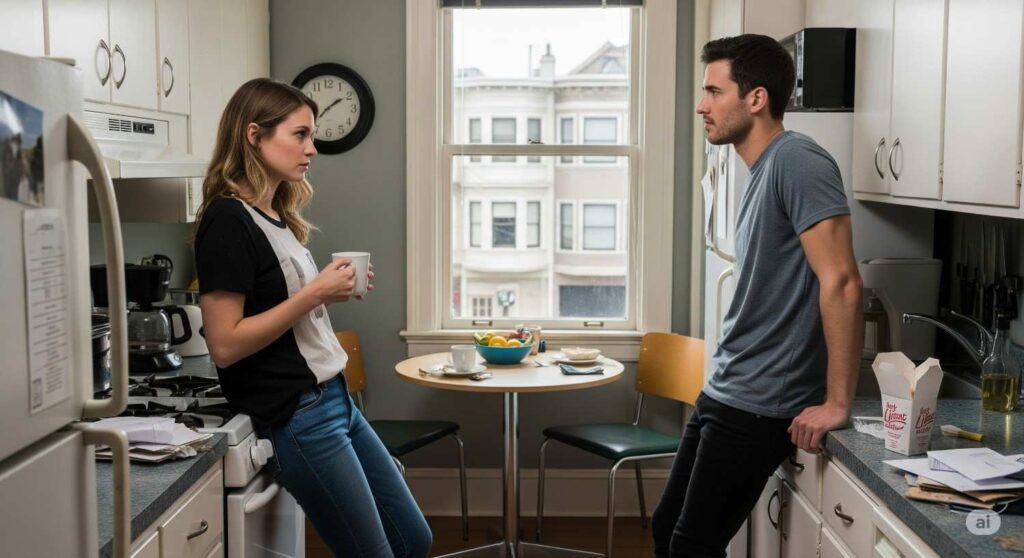
Rent, groceries, utilities—her income wasn’t enough. She sat in the dim light of her kitchen, scrolling through apartment listings, each one more impossible than the last.
At last, with more reluctance than courage, she typed out a roommate ad. She made her rules sharp: no couples, no drama, no one who thought the apartment came with her included.
Leo answered with a guitar case and a grin too easy for someone whose shoes were worn thin.
“We are all bound by need as much as by desire; even a fake marriage born of survival can reveal truths more dangerous than love itself.”- Fyodor Dostoevsky
He promised simplicity: he’d pay what he could, cook, clean, stay out of her way.
But within days, Mia noticed how seamlessly he fit in—placing mugs where they belonged, folding laundry that wasn’t his, moving around her space like he’d always been there.
It was uncanny, unsettling. A man she hardly knew slid into her routine with the ease of a fake marriage husband.
The thought pressed against her mind with discomfort: was he here for her, or merely for her shelter? That word—hobosexuality—hovered unspoken, shaping her suspicions.
“In the silence between rent and ruin, a stranger can become a companion; forced proximity turns routine into ritual, and a fake marriage into a question of the heart.”- romancetropes.com
When Cramped Spaces Create Forced Proximity
“In the narrow rooms of existence, we collide until we recognize each other; it is through forced proximity that tenderness begins to take shape against our will.”- Albert Camus
The apartment was too small to ignore each other. Their elbows collided at the sink, their schedules overlapped in the bathroom, their footsteps synchronized across creaking floorboards.
At first, every clash was irritation. Mia’s sketches spread over the dining table until Leo’s notebooks competed for space.
He strummed his guitar at night, humming fragments of songs that crawled under her skin.
She complained about the mess of teabags he left by the sink. He teased her about her hoard of pens and her habit of forgetting to eat.
But gradually, irritation dulled into something else. Shared dinners became routine.
He boiled cinnamon sticks in water, filling the apartment with warmth.
She began leaving her laptop open while he cooked, trusting the rhythm of his movements in the kitchen.
“We don’t fall in love in grand gestures, but in the quiet rituals of living together; even a fake marriage born of chance can stir truths we did not mean to reveal.”- Anaïs Nin
The city outside was loud, relentless. Inside, the apartment held a softer hum.
A forced proximity romance bloomed slowly, like mold creeping into corners—unwanted, undeniable.
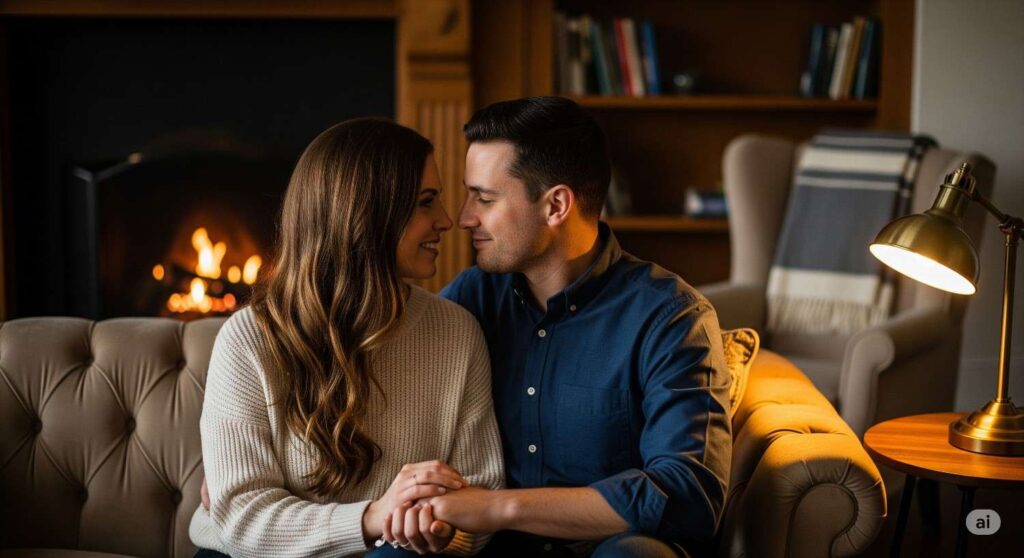
One night, after wine blurred the sharpness of their boundaries, she leaned toward him, or maybe he leaned toward her.
A kiss—awkward, hesitant—deepened until her back pressed against the counter. Heat replaced hesitation. Clothes tangled on the floor.
The next morning, silence hung heavier than the fog outside. Mia moved quickly, washing dishes she had already cleaned.
She told herself it was only the wine, only the moment. Yet her heart betrayed her—beating faster when he brushed past, aching when she heard him laugh.
Still, suspicion lingered. Was this the beginning of a stuck together love story, or just his clever way of securing rent?
“Every brush of the elbow, every shared cup of tea—this is how forced proximity turns irritation into longing, and a fake marriage into something dangerously close to love.”- romancetropes.com
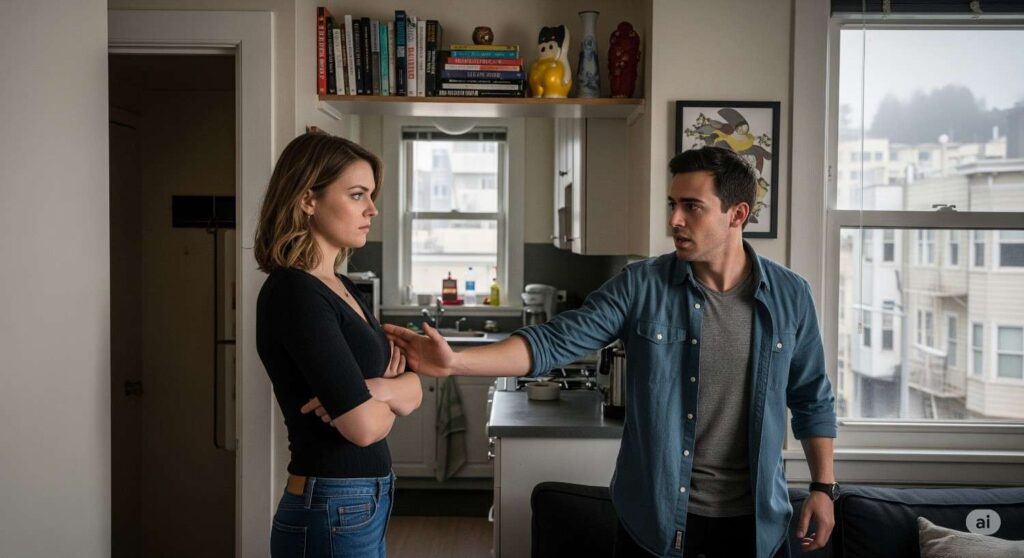
Whispers Against the Wall: Secrets of a Fake Marriage
” It was a casual remark, overheard from the hallway. Leo’s voice, half-laughing into his phone: “I scored a sweet deal—rent’s practically free.”
The words lodged like splinters.
Later, at a café, a mutual acquaintance leaned in with a hushed warning.
“Be careful. He does this. Moves in with women, plays house, then leaves when it stops working.”
The apartment once warm with laughter grew colder. Their closeness turned into walls. Every smile of his felt rehearsed. Every gesture of kindness seemed calculated.
What if their entire connection was nothing more than a trapped together romance trope, a fiction of survival masquerading as intimacy?
Mia found herself rehearsing questions she never asked aloud: Did he want her—or simply her apartment?
“In the silence after suspicion, even warmth feels rehearsed; forced proximity becomes a cage, and a fake marriage nothing more than survival in disguise.”- romancetropes.com
“Hell is not merely other people—it is the doubt sown in closeness, when forced proximity turns every gesture into a question of motive.” – Jean-Paul Sartre
Twist One: Panic, Pretense, and Forced Proximity
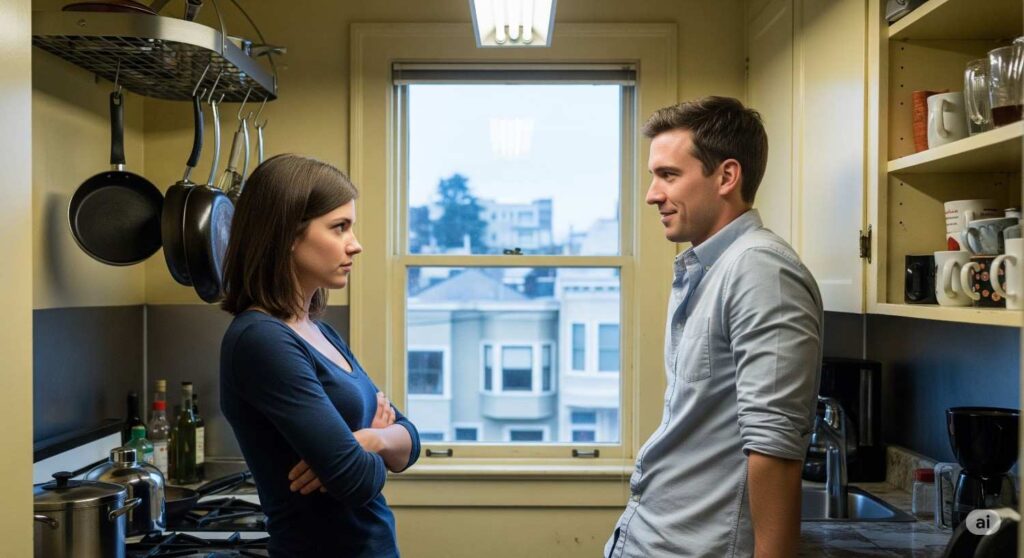
“Life is rarely lived as it is, but as it is performed; in the theater of survival, even forced proximity can masquerade as devotion.”-Oscar Wilde
It was late evening when their landlord arrived, umbrella dripping on the doormat. His expression was stern, his tone clipped.
“You have someone living here who isn’t on the lease,” he said. “This is grounds for eviction.”
Mia’s throat tightened. Without thinking, she blurted out the lie that would alter everything: “He’s my fiancé.”
The words startled even her. But once spoken, they became fact. The landlord’s gaze softened into skepticism, then reluctant acceptance.
“A lie repeated often enough shapes its own reality; a fake marriage can bind more tightly than vows, yet loosen the heart from trust.”- Simone de Beauvoir
Now she and Leo were no longer roommates—they were a couple in the eyes of others.
Their pretense demanded proof: shared glances, small touches, performances in the hallway for neighbors.
The lie bound them together more tightly than the lease. Their fake marriage became both shield and trap, blurring the fragile line between act and truth.
Sometimes, she caught herself wanting the performance to be real. Sometimes, she resented the way it was.
“When survival demands invention, a single word—‘fiancé’—can transform strangers; forced proximity hardens into ritual, and a fake marriage becomes both shield and snare.” -romancetropes.com
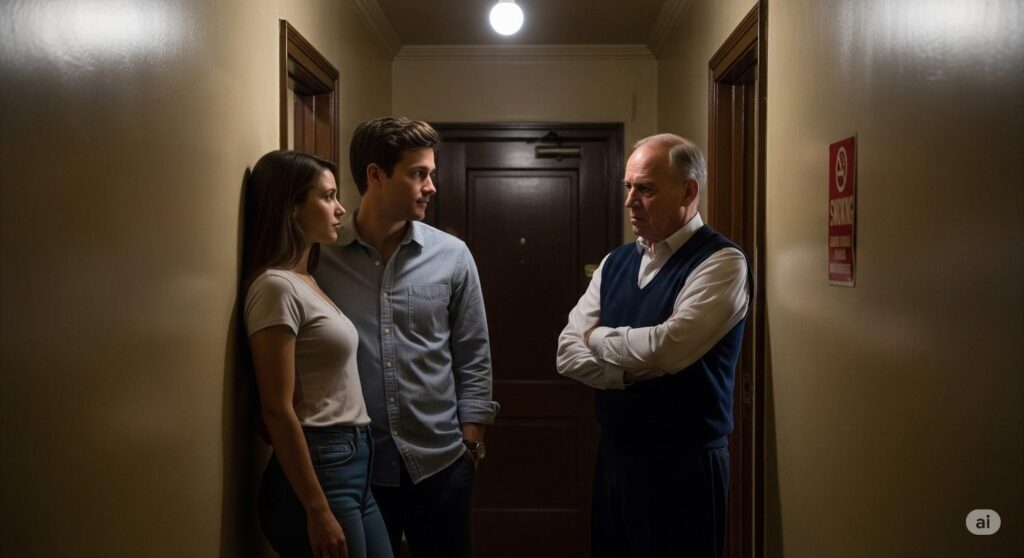
An Ex at the Door: Doubts in Their Fake Marriage
“Doubt is a pain too lonely to know that trust is its twin; in forced proximity, suspicion grows faster than love.” – Khalil Gibran
The encounter was almost too quiet. Mia was sketching at a café when a woman approached her table. She introduced herself without fanfare: Leo’s ex.
“He does this,” she said simply. “Moves in, pretends, leaves. Don’t mistake his patterns for promises.”
The words landed heavier than anger. They were resignation, a map of scars Mia had not yet collected.
“What begins as play can wound deeply; a fake marriage without truth is not shelter but storm.”- Leo Tolstoy
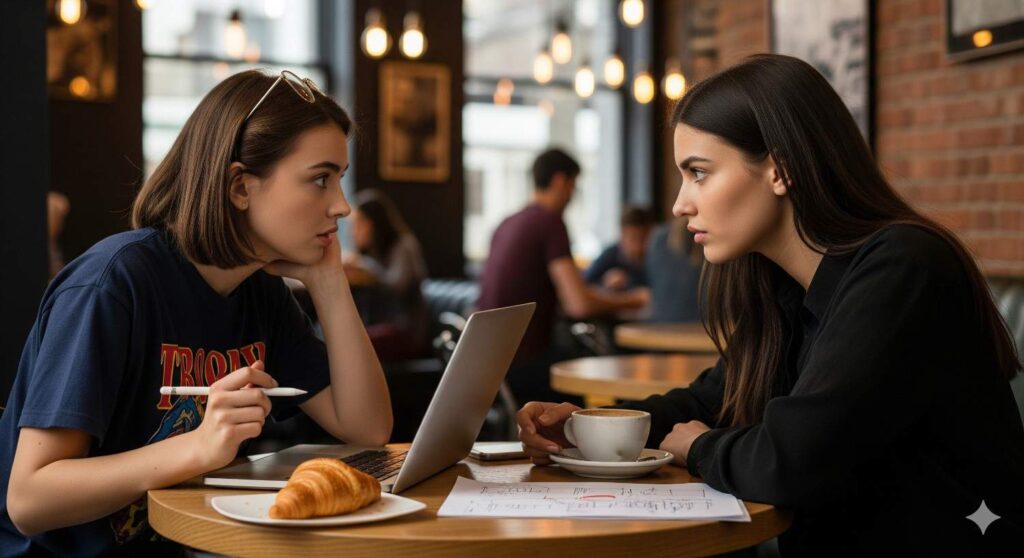
That night, Leo tried to reach for her, but she stiffened. Even after another heated night together, she woke with her arms folded, distance carved between them.
“This time is different,” he insisted.
But doubt shadowed every touch, every kiss. Could love survive if its foundation was mistrust?
“The return of the past casts shadows on the present; forced proximity becomes brittle, and a fake marriage trembles beneath the weight of mistrust.”- romancetropes.com
Twist Three: Forced Proximity Turns the Tables
“We are defined not by what we receive, but by what we endure for another; in forced proximity, sacrifice becomes the truest confession.” -Friedrich Nietzsche
Just as Mia planned to end it, her biggest client canceled. The project she depended on dissolved overnight, leaving her finances in shambles.
She braced for Leo to vanish. Instead, he remained.
He busked on corners, played late into nights, took odd jobs unloading crates.
His hands grew blistered, his shoulders stooped with fatigue.
“The strongest proof of love is not words but constancy; even a fake marriage may reveal sincerity when hardship tests it.” — George Eliot
He returned each evening with groceries, with meals he cooked carefully, with an unspoken loyalty she hadn’t expected.
This unsettled her more than his betrayals. If he was only here for shelter, why bleed his fingers raw for her survival?
Perhaps this was the moment when forced closeness turned to love—yet still, she could not tell if it was real or another performance to secure his place.
“When blistered hands carry bread instead of excuses, forced proximity ceases to be survival, and a fake marriage begins to resemble devotion.”- romancetropes.com
Climax: Truth Demands Its Due in a Fake Marriage
“We may act out roles to survive, yet the heart betrays the script; a fake marriage can stumble into truth when courage replaces fear.”- Maya Angelou
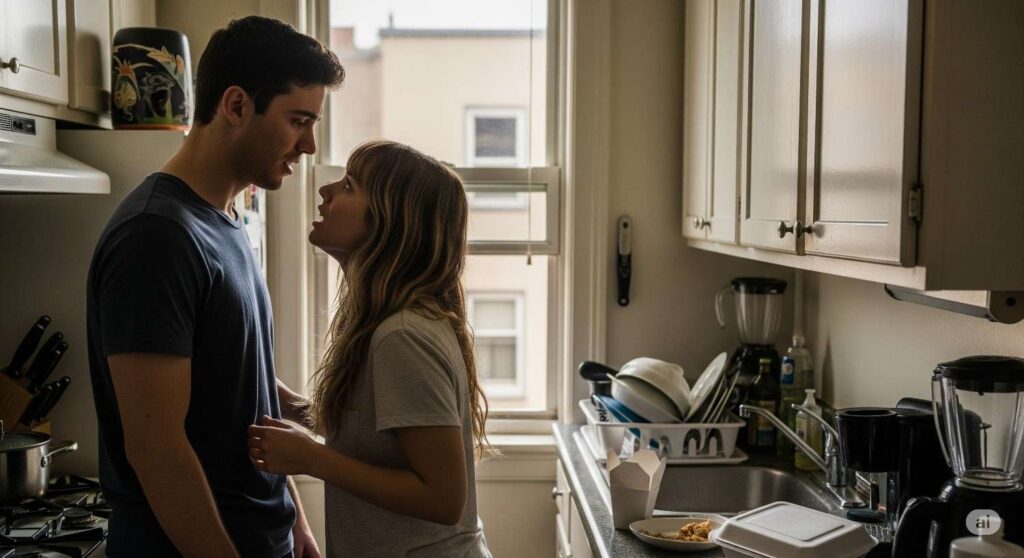
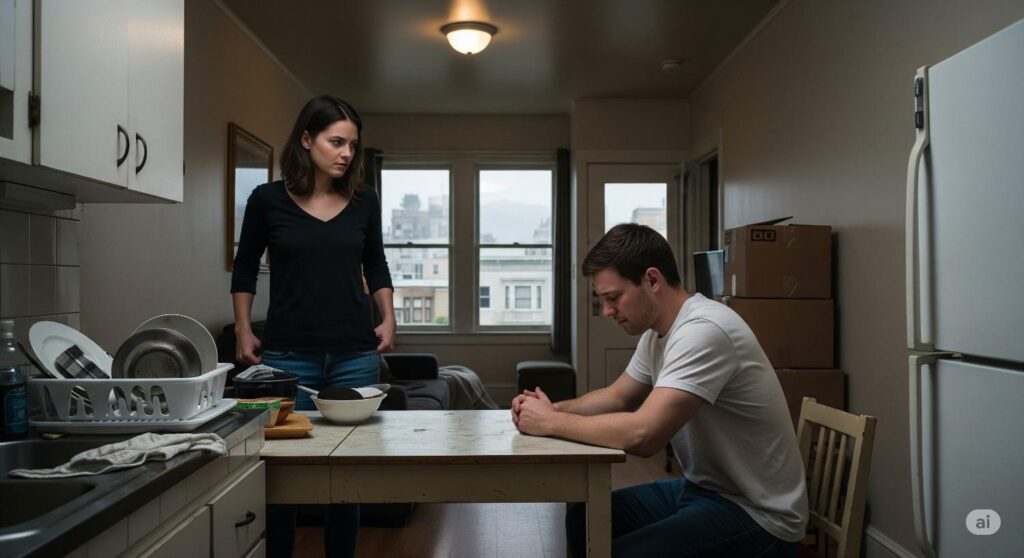
The argument broke over dishes stacked in the sink.
“Just say it,” Mia snapped. “Was it love—or just survival?”
Leo froze. Then, for the first time, the mask slipped.
He confessed shame over years of drifting, of being the man others described.
He admitted he had failed often, lived off others, pretended stability he never had.
But then he told her something else: that he had been quietly saving, scraping together money, preparing to stand on his own.
“I want you,” he whispered. “Not just the apartment. Not just the shelter.”
His voice cracked—not polished like his songs, but raw, trembling.
“Love does not begin in perfection, but in the cracked places where truth leaks through; in forced proximity, masks cannot survive.”- James Baldwin
Resolution: From Ruse to Reckoning
“In the midst of an indifferent world, we find meaning not in certainty but in choosing; even forced proximity can become the seed of tenderness.” –Albert Camus
At the window, Mia watched fog spread across the rooftops. The city looked like it always had—indifferent, transactional. Inside, she felt the weight of choice.
She could cast him out, label him the hobosexual everyone warned her about. Or she could risk the fragile possibility that his words, this time, were true.
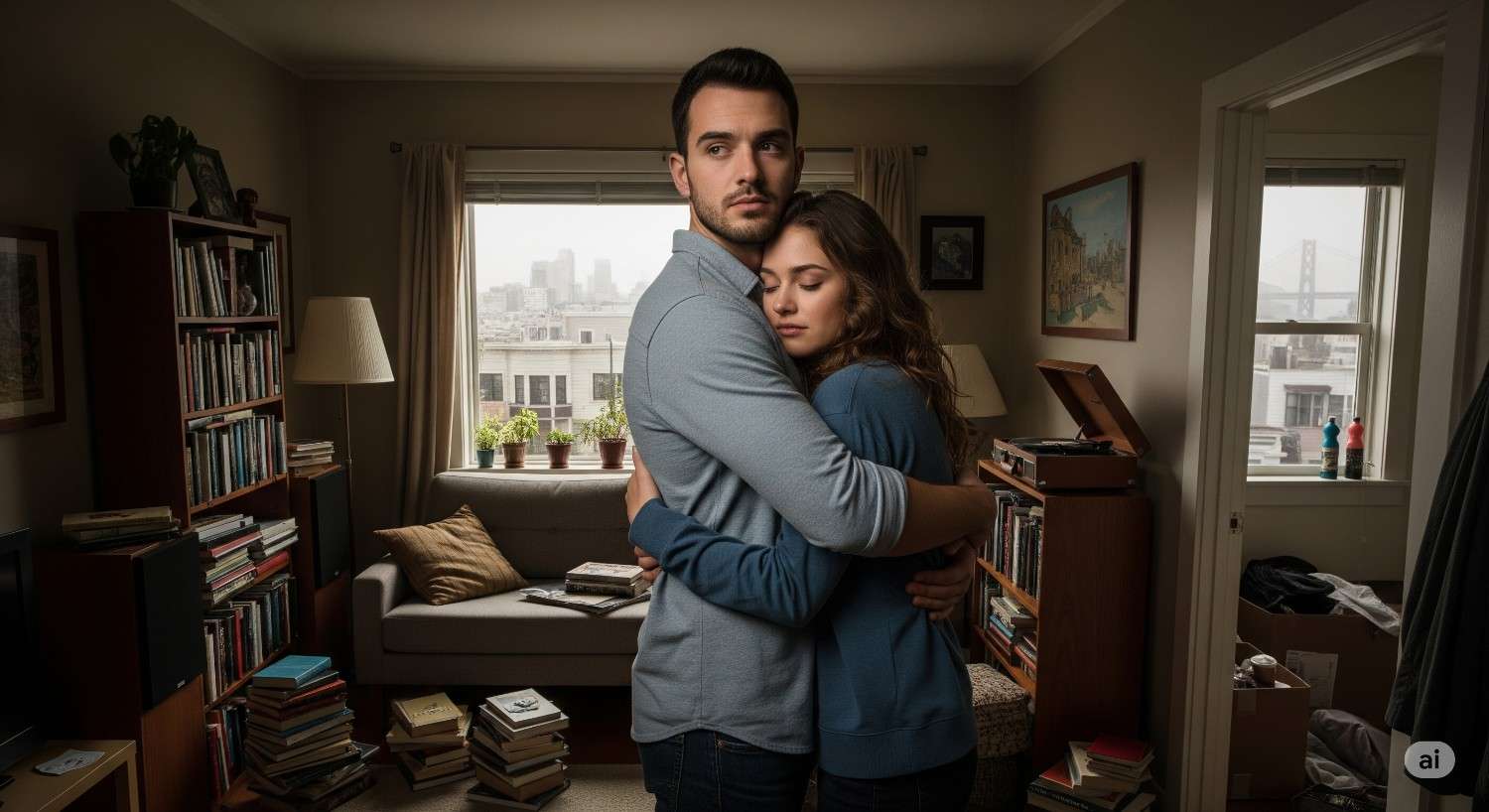
She turned, and instead of exile, she offered a fragile embrace. Not naïve trust, not blind faith—but a deliberate step into uncertainty.
They held each other in the cramped apartment. The walls still pressed in, but closeness no longer felt like a trap. It was imperfect, flawed, and perhaps temporary.
“Love is not born from vows alone, but from the weight of chance; a fake marriage may awaken truths that neither oath nor ceremony could promise.”- Milan Kundera
Yet it was theirs.
Their love remained unresolved—a gamble, a fragile possibility in a city built on transactions. Perhaps a bond. Perhaps only another story of survival.
But sometimes, love doesn’t begin with vows. Sometimes, it begins with lies, necessity, and the faint hope that pretense can bloom into something real.
“Amid fog and fragile embraces, forced proximity no longer felt like survival; their fake marriage was flawed, uncertain, yet daring enough to hope.” romancetropes.com
Closing Reflection
A fake marriage is a fiction of survival. But in its performance, truths surface—about what we need, what we fear, what we dare to hope for. Mia and Leo’s story was never about certainty. It was about risk, about choosing intimacy when suspicion was easier.
And in that choice lies the essence of every romance: not perfection, but gamble. Not promise, but fragile trust.
Because isn’t that, in the end, what love always is?
“Love is never certain—it is the gamble we take when forced proximity turns a fake marriage into the fragile hope of something real.”
“A fake marriage without truth is not shelter but storm.”
—Leo Tolstoy
More Tale’s
Bound by a Fake Marriage: How an Inheritance Rewrote Our Love Story
When circumstances meets pretend
Forced Proximity Vs Fake Marriage
Fake Marriage Romance in a Lighthouse
Eternal Silence of the Warbler: A Fake Marriage in the Wild
The Understudy: A 3-Year Fake Marriage That Ignited a Slow Burn Heartbreak
–
Link
Fake Marriage: The Real Phenomenon Behind Fiction’s Most Addictive Trop
Story F&Q: Fake Marriage, Forced Proximity, Fragile Love Story
🌳 Story FAQ: Fake Marriage, Forced Proximity, Fragile Love Story
What is the main theme of the story?
A fake marriage born from forced proximity in San Francisco, where survival turns into fragile love.
Who are the protagonists?
Mia, a graphic designer struggling with bills, and Leo, a musician with charm but little stability.
What trope does it explore?
Fake marriage, forced proximity romance, and hobosexual suspicion.
Why does Mia take Leo in?
Rising rent forces her to accept a roommate despite her strict rules.
How does forced proximity affect them?
Daily closeness blurs irritation into intimacy, like a fake marriage routine.
What sparks suspicion?
Rumors and overheard remarks suggesting Leo might be using her for shelter.
What lie changes everything?
Mia claims Leo is her fiancé to the landlord, cementing their fake marriage.
How does the ex complicate matters?
She warns Mia of Leo’s pattern—moving in, pretending, and leaving.
What role does hardship play?
When Mia’s finances collapse, Leo stays, working hard to support them.
What is the story’s emotional climax?
Mia demands truth; Leo confesses past failures but reveals genuine feelings.
Does their love resolve?
Not fully—ending on fragile trust, uncertainty, and the hope of something real.
Is it a happy ending?
It’s bittersweet—love remains possible, but never certain.
What does the apartment symbolize?
A cage of survival and intimacy—both trap and sanctuary.
What larger theme does the story convey?
That love is a gamble—born of necessity, risk, and fragile hope.
How does hobosexuality fit in?
It represents the suspicion that survival, not love, drives closeness.

0 Comments