
Read Time: 22 Mins
Table of Contents
Introduction
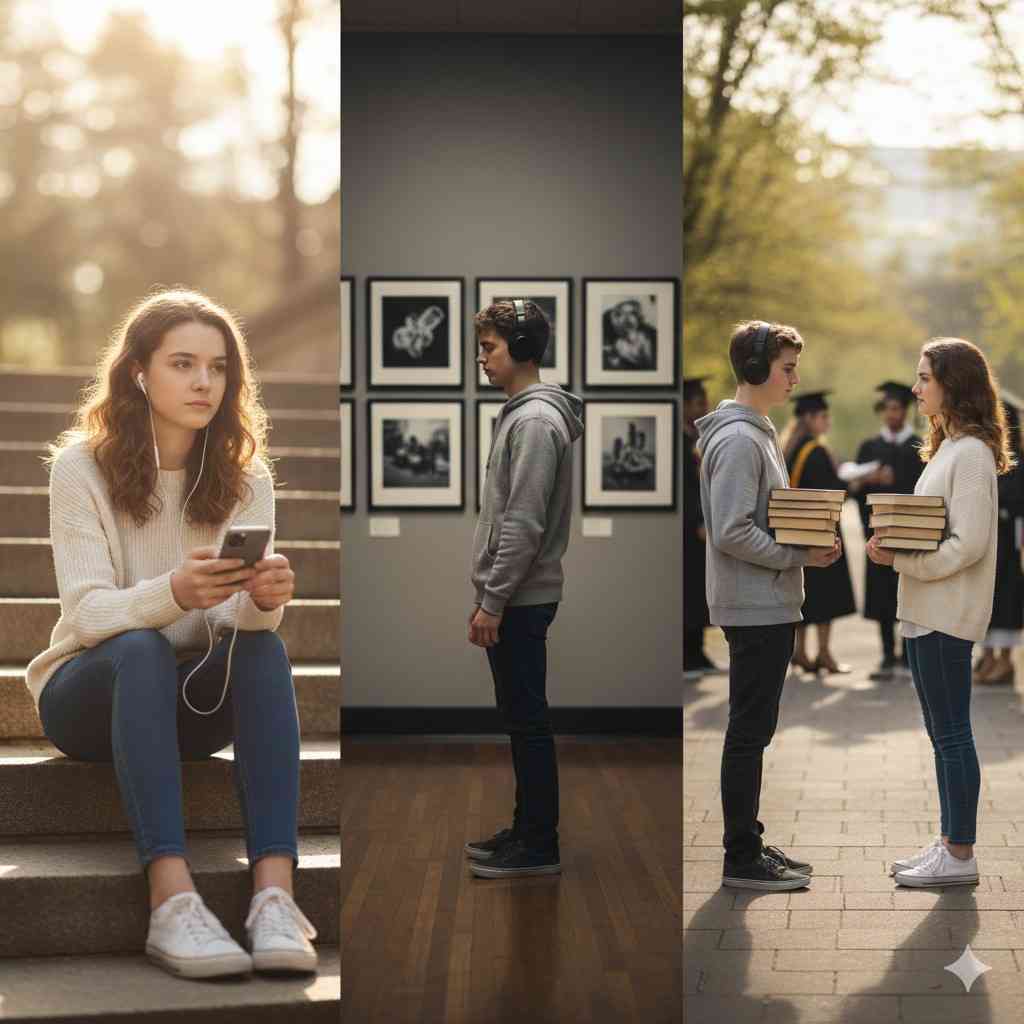
Silent First Love is a modern tale of Unspoken Love and Innocent Modern Romance, exploring the quiet awakening of emotional connection between two seventeen-year-olds, Phil and Myla. They share no conversations, messages, or accidental meetings, yet their lives gin to orbit each other through sound and empty spaces. This story celebrates Pre-Confession Love and Love Without Words, showing how recognition and understanding can exist before identity is revealed. It captures a young, delicate Silent First Love that remains Unmet Yet Understood, teaching the heart patience, observation, and the enduring beauty of emotional innocence in the modern world.
Keypoints
- Silent First Love: Phil and Myla experience a young, emotional connection without ever speaking or meeting directly.
- Unspoken Love: Their feelings develop through sounds and empty spaces, creating a subtle, Innocent Modern Romance.
- Pre-Confession Love: Both choose not to express their emotions verbally or digitally, preserving the purity of their bond.
- Love Without Words: Recognition and understanding arise before identity is known, allowing a rare emotional intimacy to flourish.
- Unmet Yet Understood: Even years later, the connection remains alive in memory, teaching the heart how to notice, appreciate, and feel without expectation.
Chapter One: Silent First Love in Modern School Life and the Origin of Phil’s Sound Recordings
This chapter introduces Phil and Myla as two ordinary seventeen-year-olds living separate lives in the same modern school environment. Phil quietly records everyday sounds that people usually ignore, while Myla slowly becomes drawn to photographing empty spaces. They do not know each other, and no connection exists yet—but the emotional ground for Silent First Love is carefully prepared through observation, restraint, and unnoticed creation.
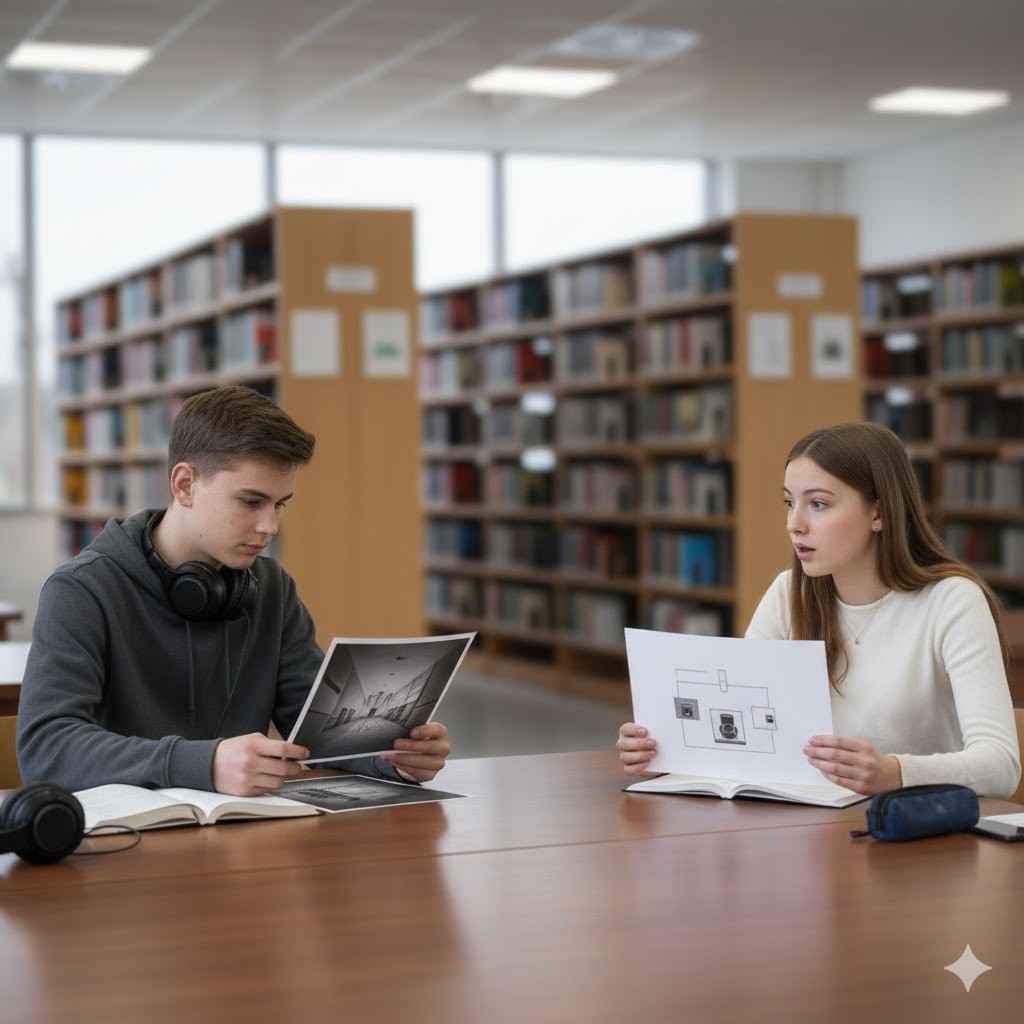
Phil did not record music.
He recorded what remained after music had already ended.
In the late afternoons, when the school began to empty and the corridors slowly forgot the noise of the day, Phil stayed behind.
The building felt different then.
Lockers no longer echoed with laughter or hurried footsteps.
The air itself seemed to settle, as if relieved to finally rest.
He stood near the staircase, leaning lightly against the wall.
The paint there was chipped from years of bags brushing past it.
Above him, a ceiling fan turned slowly, not fast enough to cool the room, not slow enough to stop completely.
Phil held his phone in one hand.
He waited.
Silence never arrived suddenly. It came in layers.
First, the loud sounds left—voices, movement, announcements.
Then the smaller ones faded—footsteps, doors, chairs scraping.
What remained was something softer, something most people never stayed long enough to notice.
A faint electrical hum from the lights.
A distant door closing somewhere on the ground floor.
The uneven rhythm of the fan blades cutting the air.
Phil pressed record.
He was seventeen and attended music classes twice a week.
His teachers often told him the same thing.
His work did not follow structure. His timing was uncertain.
His compositions felt unfinished.
They were right.
Phil knew the grammar of sound the way others knew language, but he did not enjoy using it correctly.
Correctness felt heavy. Silence felt honest.
He liked sounds that were slightly broken. Sounds that did not perform.
Sounds that existed even when no one cared enough to listen.
After each recording, he listened once. Sometimes twice.
If the sound felt crowded, he deleted it without regret.
If it felt open, if it felt like it could breathe, he saved it.
He uploaded these recordings to a public cloud folder.
No name. No description. No explanation.
It was not meant to be shared, yet it was not hidden either.
It existed in between—available, but unnoticed.
Sometimes, late at night, Phil wondered if silence changed once it was recorded.
Or if it stayed the same, untouched by being heard.
—
On the other side of the city, Myla stood alone in her classroom after school.
Sunlight entered through the tall windows at an angle that only appeared at the end of the day.
Dust floated slowly in the air, visible only because the room was empty.
Chairs were pushed under desks unevenly.
One desk leaned slightly to the left, its leg shorter than the others.
Myla lifted her phone and framed the scene.
She had received the smartphone on her birthday.
At first, she did what everyone else did.
She took selfies. She adjusted angles, lighting, expressions.
She deleted most of them.
The photos felt noisy, as if they were trying too hard to exist.
What stayed were the images she took by accident.
An empty bench at the bus stop.
Wet plastic chairs after rain.
Shoes left outside a temple, perfectly aligned, waiting.
She did not know when her interest shifted from people to places.
She only knew that empty spaces felt truthful.
They did not pretend. They did not ask to be liked.
For a school art assignment, Myla searched online for references.
She typed simple words.
Quiet background.Empty sound. Silence.
That was when she found the folder.
There was nothing written. No introduction. No explanation.
Only short audio files with names that meant nothing to her.
She paused before pressing play, then listened through her earphones.
The sound was soft.
It did not demand attention.
It waited.
She sat down and listened again.
The sound felt like standing alone in a room after everyone had left, when the space finally belonged to itself.
Myla felt something she could not explain—not excitement, not happiness, but recognition.
She did not imagine the person who recorded it.
She did not wonder about gender or face or age.
The sound existed without identity, and that felt right.
That evening, after rain had washed the streets clean, Myla stepped onto her balcony.
A single plastic chair stood near the wall. Its surface was still wet. Drops of water reflected the weak streetlight below.
She framed the chair carefully and pressed the shutter.
She looked at the photo for a long time before saving it.
This was not attraction.
This was not fantasy.
It was the beginning of Silent First Love—a form of Unspoken Love, an Innocent Modern Romance built on Emotion Before Identity and Love Without Words.
As Khalil Gibran wrote, “The deepest feelings are often the ones that remain unspoken.”
new the other existed.
And because of that, something rare remained untouched—
a Pre-Confession Love, quiet, modern, and Unmet Yet Understood.
Chapter Two: Silent First Love Through Anonymous Art and Myla’s Discovery of Empty Spaces →
Chapter Two: Silent First Love Through Anonymous Art and Myla’s Discovery of Empty Spaces
In this chapter, Myla begins responding to anonymous sounds through her photography, while Phil unknowingly encounters her images displayed publicly. Neither knows the other exists as a person. Their connection grows silently through art alone, deepening Silent First Love as an experience of Unspoken Love, where recognition forms before identity.
Myla did not listen to the sounds every day.
At first, she returned to the folder only when her school project required it.
But soon, she noticed that the sounds stayed with her even after she removed her earphones.
While walking to school, she became aware of pauses between traffic noise.
While sitting in class, she noticed how silence collected at the back of the room when everyone else stopped paying attention.
The sounds had changed the way she noticed things.
She began taking photographs differently.
Before pressing the shutter, she waited. She allowed the space to settle.
If someone entered the frame, she lowered the phone and waited again.
Empty spaces, she had learned, did not reveal themselves immediately.
A corridor after lunch break, still smelling faintly of food.
A bus seat left warm, then slowly cooling.
A playground bench at dusk, its surface darkened by shadow.
Myla started uploading these photos to a public board used by students to share artwork. She added no captions.
No hashtags. No explanations. She did not expect anyone to respond.
She only wanted the images to exist somewhere beyond her phone.
—
Phil found the photographs by accident.
One evening, while scrolling through the same board to upload a class assignment, an image caught his attention.
It showed a staircase corner he did not recognize. The light in the photo was weak, almost uncertain.
The space looked as if it had been waiting.
Phil stopped scrolling.
The image felt familiar, though he had never been there.
He opened another photograph from the same account. Then another.
Empty desks. Wet chairs. Spaces without people, yet full of presence.
Something inside him tightened—not with excitement, but with recognition.
These photographs looked the way his recordings sounded.
Phil did not think about the photographer. He did not imagine a face or a name.
What mattered was not who had taken the images, but that someone had noticed the same quiet things he had.
The next afternoon, Phil stayed back again.
This time, he recorded sounds more carefully. He stood longer before pressing record.
He waited for the moment when a space felt complete.
A hallway after the janitor had finished cleaning.
A classroom fan turning slower than usual.
The faint echo left behind when a door closed gently.
He uploaded the sounds without checking the board.
—
Myla noticed the change.
The newer recordings felt slower. More open.
As if the person recording them had waited longer before deciding they were ready.
She listened while sitting on her bed, her feet pulled close to her chest. Outside, the city continued its usual noise.
Inside her earphones, the sounds remained patient.
She opened her camera and went out again.
This time, she photographed a school corridor early in the morning, before students arrived.
The floor was still damp from cleaning. One light flickered slightly, then steadied.
She uploaded the image that evening.
—
Days passed like this.
Phil recorded.
Myla photographed.
Neither planned it. Neither claimed it. They responded without knowing they were responding.
This was not attraction.
This was not longing.
It was Silent First Love taking shape through Love Without Words—a quiet exchange built on Emotion Before Identity.
Phil felt that someone was listening to his silences.
Myla felt that someone was looking at what she noticed.
Neither tried to confirm it.
They could have commented.
They could have messaged.
They could have asked questions.
They did not.
Not because of fear, but because something fragile existed in not knowing. Speaking would have made it smaller.
Naming it would have limited it.
As Virginia Woolf observed, “There are moments that shape us without ever asking for permission.”
This was such a moment.
An Innocent Modern Romance, unfolding without touch, without voice, without faces—
a Pre-Confession Love, quietly Unmet Yet Understood.
Chapter Three: Silent First Love at a School Exhibition Where Recognition Happened Without Words →
Chapter Three: Silent First Love at a School Exhibition Where Recognition Happened Without Words
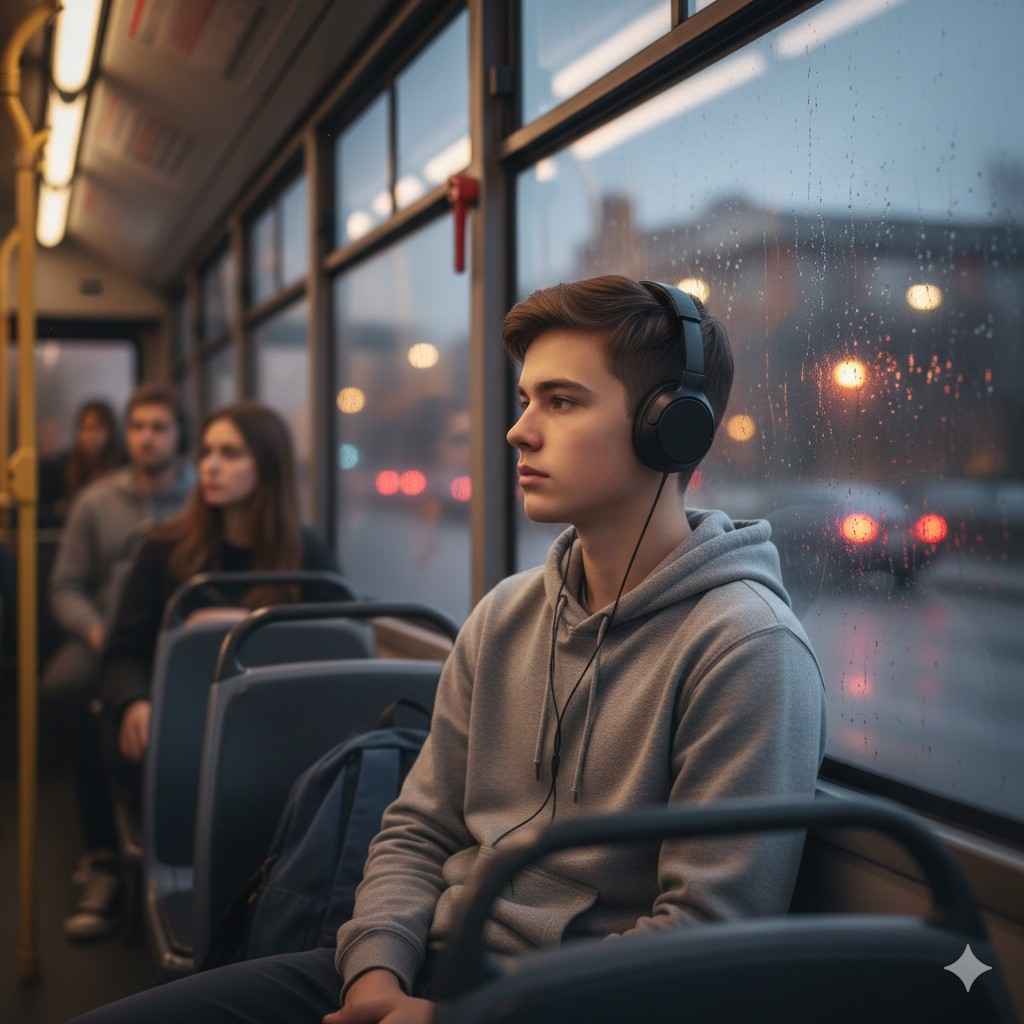
This chapter brings Phil and Myla into the same physical space for the first time during a school exhibition. Their anonymous works are placed in the same room. Without exchanging words, glances, or identities, both quietly realize the truth of their connection. Panic replaces joy, and each leaves separately, choosing to preserve Silent First Love rather than risk naming it.
—
The exhibition was scheduled for a Saturday.
Classrooms were rearranged. Desks were moved aside. White sheets were pinned to walls. Students carried their projects carefully, worried more about placement than praise.
Phil arrived early.
He helped set up his sound installation in a small room at the end of the corridor.
The room had no windows, only one ceiling fan and two lights that hummed softly when turned on. He placed headphones on a table and tested the volume once.
Low. Always low.
His recordings were meant to be entered, not announced.
He stepped back and waited.
—
Myla came later, holding her printed photographs against her chest.
She had not planned where to display them. When a teacher directed her to the same room, she nodded without thinking.
She pinned the photographs slowly, adjusting each one until the spacing felt even.
Empty desks.
Wet chairs.
Corridors without footsteps.
When she finished, she stepped back.
The room felt different now. Quieter, even with people outside.
—
Phil returned when the exhibition officially opened.
He stood near the doorway, not wanting to block anyone. The room filled slowly, then emptied again. Some students paused, listened briefly, then left.
Others removed the headphones too soon.
Phil did not mind.
Then he noticed the photographs.
They were not loud. They did not compete with the sounds. They seemed to wait beside them, as if they had always belonged there.
His chest tightened.
These images were not similar to his recordings. They were the same, only seen instead of heard.
Phil did not move closer. He stayed where he was, listening to his own sounds through the room instead of the headphones.
Someone else was here.
—
Myla entered the room again a few minutes later.
She stopped just inside the doorway.
The sounds were playing softly now, filling the space without direction. She did not need the headphones.
The recordings moved around her, touching corners she had photographed before without realizing it.
The room felt complete.
Myla understood before she thought.
This was the one.
Not a person.
Not a face.
But the presence she had been responding to all along.
Her breathing changed. Not faster. Shallower.
She did not look around. Looking would make it real. Reality would demand something in return.
—
They stood in the same room.
Not close enough to touch.
Not far enough to deny.
There was no excitement.
No relief.
Only panic.
Not fear of rejection, but fear of ending something perfect.
If they spoke, the silence would break.
If they looked, the idea would narrow.
If they stayed, something unnamed would demand a future.
Phil adjusted the volume lower.
Myla reached up and straightened a photograph that was already straight.
They did not look at each other.
—
Phil left first.
He stepped into the corridor and let the noise return to him slowly. Voices, footsteps, laughter. The ordinary world rushed back as if nothing had happened.
Myla left moments later through the opposite door.
She did not turn around.
—
The room remained.
Sounds continued to play.
Photographs stayed on the walls.
Together, they formed Silent First Love at its highest point—
an Unspoken Love, an Innocent Modern Romance, fully alive without being claimed.
As Khalil Gibran wrote, “When love beckons to you, follow him, though his ways are hard and steep.”
They followed by leaving.
This was Love Without Words.
This was Emotion Before Identity.
This was a Pre-Confession Love, deliberately Unmet Yet Understood.
Chapter Four: Silent First Love at Graduation and the Choice to Let Silence End Naturally →
Chapter Four: Silent First Love at Graduation and the Choice to Let Silence End Naturally
Graduation arrives. Phil deletes his sound recordings, and Myla stops photographing empty spaces. Both move forward in life without messages or goodbyes. The chapter explores the conscious choice to preserve Silent First Love and Unspoken Love, highlighting Pre-Confession Love as a deliberate, meaningful experience rather than a loss.
Graduation day arrived quietly, though the school seemed louder than ever. Students carried gifts, certificates, and photographs.
The corridors smelled faintly of chalk dust and polished floors, layered over the scent of damp uniforms. Adults moved between classrooms, reminding everyone to stay in order.
Phil entered the room where the exhibition had once been. The sound folder that had held his recordings now felt heavy.
For weeks he had considered leaving it untouched, but the thought of holding onto something that had no home, that belonged to no one, made him uneasy.
He opened the folder one last time. Each file played softly, bringing back the faint hum of fans, the echo of doors, the pauses that had once mattered so much.
He paused over one recording, listening. No one else would ever hear it the way he did. The sound was fragile, alive only in memory.
Finally, he deleted the folder. Every file, every sound, gone. The action was deliberate, not sad.
He had not lost it. He had preserved it. He had allowed it to remain **Unmet Yet Understood**, as it had always been.
—
Myla sat on the balcony of her home after the graduation ceremony. Her camera rested on the table beside her, its lens reflecting the soft evening light.
She had not photographed empty spaces for weeks, and now, she knew she would not again for a long time.
She remembered every corridor, every wet chair, every desk she had photographed. They were not memories of loss, but proof of presence.
Each photograph had existed for a reason, and that reason had been fulfilled. She did not need to look back.
—
Life pressed forward for both of them. College decisions, family expectations, summer plans—they did not pause for reflection.
And yet, in quiet moments, Phil and Myla would find themselves recalling a sound, a sight, or a space that felt strangely complete.
They never searched for each other. They never messaged. They did not even know if the other remembered.
Some loves, they discovered, existed only to teach the heart how to recognize itself.
—
Phil walked along a tree-lined street after graduation. The sunlight fell through the branches, touching the pavement in scattered patches.
He imagined Myla somewhere, moving through a similar quiet space, noticing details that others ignored. He smiled, not with longing, but with understanding.
Myla, meanwhile, paused at a small park near her home. A swing moved gently in the wind, empty.
She noticed the texture of the seat, the curve of the chains, the way the light bent on the metal.
She felt a strange comfort in the emptiness, as though the presence of someone unseen had passed through.
—
This was not love for possession. It was not a story that required closure. It was Silent First Love in its purest form: Unspoken Love, Innocent Modern Romance, Love Without Words.
As Khalil Gibran wrote, “The deepest feelings are often the ones that remain unspoken.” These were words Phil and Myla had lived, without ever reading them aloud.
Every decision to let silence remain was deliberate. Every moment to withhold acknowledgment strengthened the connection.
It was a conscious choice to preserve Pre-Confession Love, leaving it untouched, alive only in memory.
—
Graduation ended. Caps were thrown. Photos were taken. Families celebrated. The school emptied again, just as it had emptied before.
And in the quiet corners of classrooms, stairwells, and hallways, Silent First Love continued to exist—unclaimed, unspoken, but fully understood.
Phil walked home, head tilted slightly toward the soft hum of the city. Myla did the same, noticing the empty bench under a streetlight. Neither sought the other. Neither needed to.
They had learned that some connections were meant to exist only in their original form—Unmet Yet Understood, a testament to restraint, recognition, and the quiet power of noticing.
Chapter Five: Silent First Love in Adulthood and the Quiet Meaning of Unmet Yet Understood →
Chapter Five: Silent First Love in Adulthood and the Quiet Meaning of Unmet Yet Understood
Years later, Phil and Myla, now in their early twenties, encounter moments that echo their past Silent First Love. Phil hears familiar quiet in a café; Myla notices an empty chair that feels complete. They do not reunite or search, preserving the purity of their Unspoken Love. This chapter emphasizes that some connections exist to teach the heart about recognition, restraint, and the meaning of Pre-Confession Love, leaving it eternally Unmet Yet Understood.
—
The city had grown taller and louder since graduation. Streets were busier. Cafés multiplied. Traffic hummed constantly.
Yet some moments retained their quiet, unnoticed by most, and those moments became the markers of memory for those who had learned to listen.
Phil sat in a small café on a rainy afternoon. Steam rose from a cup of black coffee, curling slowly toward the low ceiling.
The rain hit the glass with a soft rhythm, not heavy, not urgent—just enough to be noticed.
He listened.
It was not the rain that mattered. It was the pause between drops, the empty space that the city left when it exhaled.
The same patience he had once captured in his recordings was here again. He could feel it. It felt familiar.
For a moment, he imagined a presence. Not a face. Not a name. Just someone else noticing the same quiet rhythm.
—
Myla walked down a street lined with benches and lamp posts, her camera tucked in her bag. She noticed an empty chair under a lamppost, its paint chipped at one corner.
Light reflected off the wet surface. Shadows bent against it.
She paused.
It reminded her of corridors, of classrooms, of stairwells she had photographed long ago. Of spaces that had once spoken without anyone saying a word.
The chair seemed complete, as if waiting for someone who had never arrived.
She smiled faintly. Not with hope. Not with longing. With recognition.
—
They did not meet.
Phil left the café when the rain slowed. He did not glance at the benches outside. Myla continued walking past the streetlight, never looking up. Neither sought the other.
Neither even imagined doing so.
Some loves, they had learned, existed to teach the heart how to recognize itself.
Phil remembered a quote by Rainer Maria Rilke: “Perhaps all the dragons in our lives are princesses who are only waiting to see us act, just once, with beauty and courage.”
He thought about beauty and courage in silence. That had been the lesson. Not reunion. Not declaration. Only presence.
Myla thought of a similar truth. Recognition does not always need acknowledgment. Understanding does not always need words.
Their connection, born years ago in sound and empty spaces, remained untouched by time. It was Silent First Love, an Unspoken Love, an Innocent Modern Romance, alive in memory without contact.
—
Phil noticed the quiet spaces between people in the café—the empty chair at the corner table, the half-closed menu, the distant tap of a laptop.
Myla noticed the spaces left by footsteps, by chairs, by rain. Both felt something whole in the incompleteness.
This was Love Without Words. This was Pre-Confession Love. This was the purest form of Unmet Yet Understood.
They did not need to search. They did not need closure. They did not need to speak. The heart, when trained in patience and recognition, does not demand fulfillment. It only remembers.
Phil sipped his coffee slowly, listening. Myla adjusted the strap of her bag and continued walking, noticing light on wet pavement.
Both carried the past like a quiet sound or a photograph—alive, unclaimed, unforgettable.
Some loves exist to teach the heart how to see.
Some loves exist to remain unspoken.
Some loves exist only to make recognition eternal.
And so it was.
Silent First Love endured.
Unspoken Love endured.
Pre-Confession Love endured.
And it would always remain Unmet Yet Understood.
Chapter One: Silent First Love in Modern School Life and the Origin of Phil’s Sound Recordings
Tale Basket:
Rent Is Due on Mars Street: A Romance in a Dystopian Society
A Quiet Achievement in Modern Romantic Storytelling
About the Author
Ranjan Sarkhel is an independent writer whose fiction is shaped by decades of close observation of human behaviour across diverse social and cultural settings. His work focuses on emotional realism, restraint, and the quiet moments that often define personal memory.
This story is a work of fiction.
FAQ
It focuses on emotional recognition without dialogue, messaging, or physical interaction, emphasizing authenticity over dramatization.
Silent First Love centers on emotional development, showing how understanding can form before attraction or expression.
They sense that silence protects the emotional integrity of the connection, keeping it genuine and undisturbed.

0 Comments