
Table of Contents
—-
Introduction
Introduction
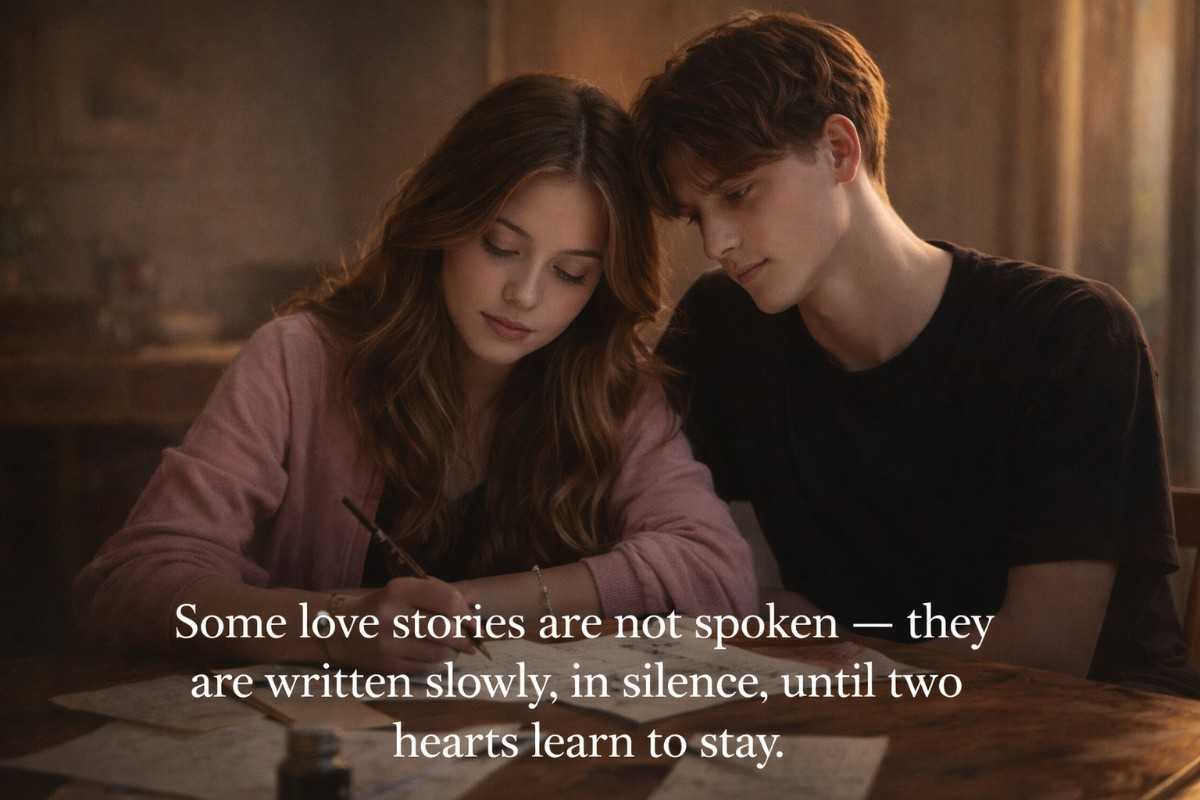
In a world that moves too fast, where love is often spoken in seconds and forgotten just as quickly, some stories choose a different pace.
This is a slow burn love story — not built on instant attraction, but on silence, patience, and understanding. It begins in a quiet archive, where old letters still carry the weight of real emotion, and where every word once mattered enough to be written by hand.
When two completely different worlds collide — one that captures moments, and one that preserves them — something unexpected begins to grow. Not loudly. Not quickly. But deeply.
Because sometimes, the truest form of love is not the one that is shown… but the one that is slowly understood.
—-
Keypoints
Key Points of the Story
- A quiet archive becomes the starting point of a slow burn love story.
- Two opposite worlds collide — preservation vs performance.
- Connection begins with resistance, not attraction.
- Old letters teach the meaning of patience and real emotion.
- Silence becomes their strongest form of communication.
- Growth happens through learning, not confession.
- Ego breaks what understanding slowly builds.
- Distance forces both to face their true selves.
- Love returns through handwritten words, not digital noise.
- In the end, they choose presence over performance.
—-
“Love consists in this, that two solitudes protect and touch and greet each other.”
— Rainer Maria Rilke(This is the essence of a slow burn love — quiet, patient, and deeply understood over time.)
—-
CHAPTER 1: THE ROOM THAT DOESN’T FORGIVE NOISE
The room was quiet.
Not empty. Not dull. Quiet in a way that felt strict.
Paper rested under soft light. Old ink, faded but still alive. The air carried a faint smell of chemicals. Slow work. Careful work.
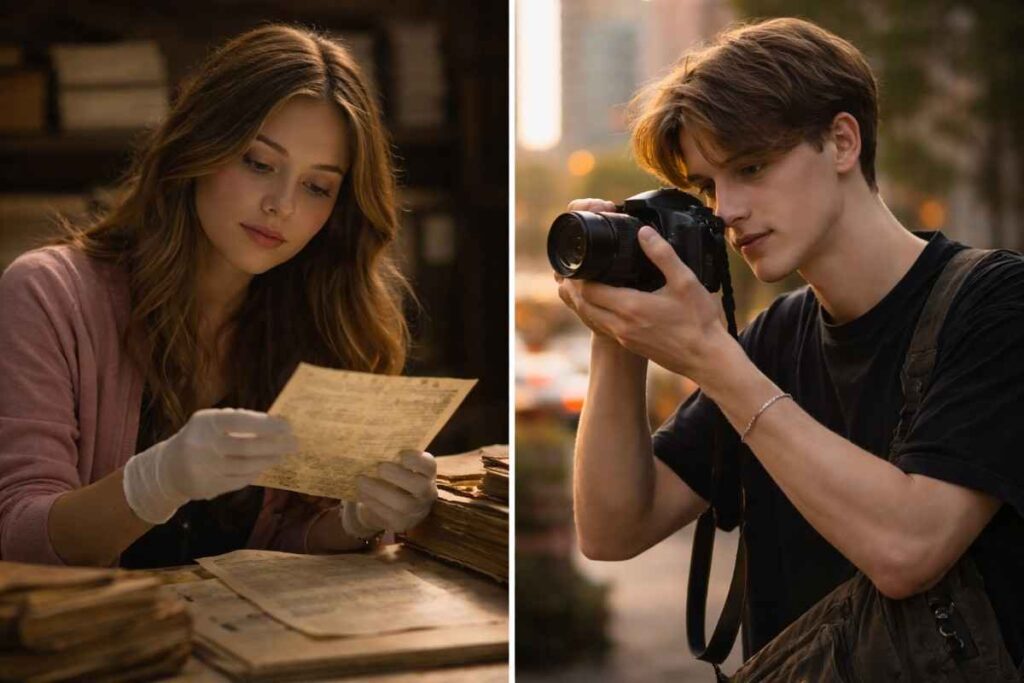
Bianka wore gloves. Thin. White. She held a letter that had survived more years than most people could imagine. The paper was weak. The edges had started to break. But the words were still there.
She brushed a small line with a fine tool. One movement. Then she stopped.
She always stopped.
Because in this room, nothing was rushed.
Ink over impulse.
She had learned that early.
The letter was from the 17th century. Two people. No names on the front. Only a date. And a fold that had been opened too many times.
Bianka did not read it fully. Not yet.
Reading was not the first duty.
Preserving was.
She adjusted the light. Turned it slightly away. Too much light could harm the ink. Too little would hide the cracks.
Balance.
That was the work.
The room held many such letters. Thousands. Each one quiet. Each one carrying something that once mattered more than time.
No phones. No noise. No quick steps.
Only paper.
Only patience.
Then the door opened.
The sound was small. But in this room, even a small sound felt loud.
Footsteps followed. Fast. Uneven.
Bianka did not look up.
She finished the line she was working on. Cleaned the tip of her tool. Placed it down. Only then did she speak.
“Noise is not allowed here.”
The footsteps stopped. For a second.
Then a voice came. Confident. Casual. Not careful.
“Yeah, yeah. I’ll keep it low. Just give me two minutes.”
A pause.
“Bro, I’m inside. This place is perfect. Old stuff everywhere. We can get amazing shots here.”
Bianka’s hand stilled.
She lifted her eyes.
A man stood near the entrance. Phone pressed to his ear. A small camera in his other hand. No gloves. No hesitation.
He turned slightly, looking around like the room was already his.
“Listen,” he said into the phone, “people love this kind of thing. Old letters, broken paper. It feels real. We’ll make it emotional.”
Bianka removed her mask.
Slowly.
“I said,” she repeated, her voice calm, “noise is not allowed.”
He looked at her now.
Really looked.
For a moment, he didn’t speak. Then he smiled, a little careless.
“Relax. I’m almost done.”
He turned away again. Continued his call.
“Yeah, I’ll take some close shots. The more torn, the better. Makes it look authentic.”
Bianka stood up.
Not fast. Not angry.
Just certain.
“Mister,” she said, “someone’s entire lifetime of loyalty is inside those papers you’re calling ‘torn.’”
He ended the call.
Finally.
The room felt quieter again.
He walked a few steps closer. Looked at the table. At the letter in her hand.
“You work here?” he asked.
“Yes.”
“Good. Then you can help me. I need access to these letters.”
Bianka placed the letter down carefully. Covered it with a thin sheet.
“They are not for display.”
He laughed lightly. “Everything is for display. You just need the right camera.”
She looked at him.
Steady. Direct.
“I haven’t watched your show,” she said. “But those letters have manners.”
A small pause.
“Something your generation’s camera forgot to capture.”
The smile on his face faded.
Not fully. But enough.
For the first time, he did not have an immediate reply.
He looked at her again. This time, longer.
Then he straightened slightly.
“I’m Julian,” he said. “I have permission to be here.”
“Show it.”
He hesitated.
Just for a second.
“I’m getting it,” he said. “It’s coming.”
“Then you can come back when you have it.”
Her voice did not rise. It did not soften either.
It stayed the same.
Julian exhaled. Looked around again. As if the room might change its mind.
It didn’t.
“Fine,” he said. “I’ll come back.”
He picked up his camera. Slipped his phone into his pocket.
Walked toward the door.
At the entrance, he stopped.
Turned once more.
“You know,” he said, “people would actually care about this place if someone showed it properly.”
Bianka did not answer.
He waited.
Still nothing.
He gave a small shrug. Then he left.
The door closed.
The sound settled.
Silence returned.
Bianka stood still for a moment.
Then she sat down again.
Removed the sheet.
Looked at the letter.
The ink had faded, but it was still holding on.
She touched the edge, very lightly.
Paper remembers everything.
She resumed her work.
But something had shifted.
Not in the room.
In the rhythm.
Far outside, footsteps moved away. Fast at first. Then slower.
Julian walked down the corridor. No phone in his hand now.
No call.
Only a thought that stayed longer than he expected.
He had been told “no” before.
Many times.
But not like that.
Not without trying to impress him. Not without recognizing him.
Not without caring.
He frowned slightly.
Then shook his head.
“It’s just a room,” he muttered.
But even as he said it, he knew—
It wasn’t.
And neither was she.
Back inside, the letter rested under careful light.
Bianka worked in silence.
The room held its rules.
Unchanged.
But somewhere, very quietly—
something had begun.
This was where slow burn love started.
Not with warmth.
With resistance.
Continue Reading →
Chapter 2: Permission Doesn’t Mean Understanding
—-
CHAPTER 2: PERMISSION DOESN’T MEAN UNDERSTANDING
He came back the next day.
This time, the door opened slower.
Julian stepped in. No phone on his ear. No camera in his hand. A file rested under his arm.
The room felt the same.
Quiet. Measured. Watching.
Bianka did not look up immediately.
She finished what she was doing. Closed the small glass bottle. Wiped the edge. Only then did she raise her eyes.
Julian walked forward. Stopped at a careful distance.
“I brought the permission,” he said.
He placed the paper on the table.
She did not touch it right away.
She looked at him first.
Then at the paper.
Then back at him.
“Gloves,” she said.
He paused. Looked at his hands.
“Oh.”
He stepped back. Picked up a pair from the side shelf. Wore them, slightly unsure. The fit was tight.
Bianka took the paper now. Read it without hurry.
Every line.
Every signature.
Julian shifted his weight once. Then stood still again.
After a moment, she placed the paper down.
“You can sit in the research room,” she said. “No recording. No touching without instruction.”
“That’s it?” he asked.
“That’s enough.”
He gave a small nod. Half relief. Half confusion.
She pointed toward a long table near the shelves.
Julian walked there. Sat down.
For a few minutes, he did nothing.
Just looked.
Rows of documents. Boxes with labels. Files tied with thin thread. Everything arranged with care.
He picked one file.
Opened it.
Inside, pages. Old handwriting. Dates. Names he did not recognize.
He read a line.
Then another.
Then he stopped.
Closed it.
Opened another.
Same feeling.
Too many words. No clear story. No hook.
He leaned back.
His eyes moved around the room. No screens. No quick answers. No captions.
Only paper.
He checked his pocket. No phone.
He tapped the table once. Lightly.
Then again.
He exhaled.
After some time, he stood up and walked back to Bianka.
She was working again. Same steady rhythm.
“I don’t get it,” he said.
She did not look up.
“What don’t you get?”
“Any of this.”
Now she looked at him.
“These are letters,” she said.
“I know that,” he replied. “But where is the story? What am I supposed to see?”
She watched him for a second.
Then said, “Sit.”
He sat on the chair near her table.
She opened a file. Took out a single page. Placed it between them.
“Read this.”
Julian leaned in.
The handwriting was slow. Careful. Some words faded.
He read aloud, softly at first.
“…I will write again when the rains stop. I don’t know if this will reach you. But I am still here…”
He stopped.
“That’s it?” he asked.
“That is one letter,” she said.
He frowned. “It feels… incomplete.”
Bianka nodded slightly.
“It is.”
She took another page. Placed it next to the first.
“Now read this.”
Julian looked at the date.
Months later.
He read again.
“…your letter reached after three months. I read it many times. I could not reply sooner…”
His voice slowed.
He read the rest quietly.
When he finished, he did not speak.
For a few seconds, neither did she.
“This is patience,” Bianka said.
Julian looked at the two pages again.
The gap between them felt… long.
Too long.
“No one waits like that now,” he said.
She did not argue.
She simply covered the letters again.
“That is why you don’t understand yet.”
The words were not harsh.
Just clear.
Julian leaned back.
For the first time, he did not try to defend himself.
Instead, he asked, “Can you help me?”
Bianka shook her head.
“The permission letter doesn’t mention a guide.”
He blinked. “What?”
“You have access. Not guidance.”
“That makes no sense.”
“It makes structure.”
He let out a short laugh. Not amused.
“So I go get another permission?”
“If you want help.”
There was a pause.
Julian looked at her. Studied her face.
No anger. No pride.
Only rules.
“Fine,” he said. “I’ll get it.”
Bianka took a small piece of paper. Wrote something on it. Slid it toward him.
“My name,” she said. “And number. For official request.”
He picked it up.
Looked at it longer than needed.
“Bianka,” he repeated.
She had already returned to her work.
The conversation was over.
Julian stood there for a moment.
Then he walked back to the table.
Sat again.
Opened the same file.
This time, he did not rush.
He read one line.
Then stopped.
Looked at the date.
Then at the next page.
He did not fully understand.
But he did not close it either.
Across the room, Bianka worked in silence.
The same steady pace.
Paper remembers everything.
Time passed.
Slowly.
Later that night—
The room was loud.
Music. Glass. Voices.
Julian sat at a bar. A drink in his hand. Another already empty.
“She thinks she’s the only one who understands stories,” he said. “It’s just paper.”
His friend laughed. “Then why are you still thinking about it?”
Julian didn’t answer immediately.
He took another sip.
“She said no,” he muttered.
“So?”
“So… she meant it.”
He looked down at the glass.
No smile now.
“I’ve heard no before,” he said. “But this was different.”
“How?”
Julian searched for the word.
Couldn’t find it.
He shook his head.
“I don’t know.”
Silence for a moment.
Then, almost to himself, he said—
“She didn’t try to impress me.”
The music played on.
People talked.
But that one line stayed.
Somewhere between irritation and something else.
Not respect.
Not yet.
But close.
Far away, in a quiet room, letters rested under careful light.
And somewhere in between—
a question had started to grow.
Can something slow really mean more?
Continue Reading →
Chapter 3: The Language He Never Learned
—-
CHAPTER 3: THE LANGUAGE HE NEVER LEARNED
The first day felt long.
Julian sat with a file open in front of him.
He did not move much.
Only his eyes did.
Line to line. Word to word.
Slow.
Too slow.
He closed the file.
Then opened it again.
Across the table, Bianka worked.
Same pace. Same silence.
Nothing in her changed.
Julian looked at her once.
Then back at the page.
He picked up a pencil. Wrote a small note on the side.
“Waited 3 months.”
He underlined it.
Then he stopped.
That line stayed longer than the rest.
He didn’t know why.
—
Days passed.
Julian returned each morning.
On time.
No phone in his hand now.
Sometimes it stayed in his bag all day.
He read more.
Not everything. Not yet.
But he stopped leaving things halfway.
That was new.
—
One afternoon, he walked up to Bianka again.
“I think I found something,” he said.
She looked up.
He placed a letter in front of her.
“This one,” he said, “it’s… boring.”
She didn’t react.
“Why?” she asked.
He pointed at the page.
“It just says he reached safely. Weather is fine. Nothing happens.”
Bianka took the letter.
Read it once.
Then she stood up. Walked to a shelf. Opened a box. Took out another paper.
She placed it beside the first.
“Read this one.”
Julian leaned in.
The handwriting was different. But the date was close.
He read slowly.
“…your letter reached. You wrote that the journey was safe. I read that line again and again. I kept thinking—if you are safe, then I can breathe…”
He stopped.
Looked at the first letter again.
Then back at the second.
The same words.
But not the same meaning.
He read the second one again. This time, quieter.
When he finished, he didn’t speak.
Bianka covered both pages.
“That is why nothing is ‘boring,’” she said.
Julian nodded.
Slowly.
This time, he didn’t argue.
—
He went back to his table.
Opened the same letter again.
Now it felt different.
He read it as if someone was waiting at the other end.
That changed everything.
—
Later that evening, he sat with another file.
This one had a gap.
Two letters. Then nothing for months.
He frowned.
Looked around.
“Where is the next one?” he asked.
Bianka didn’t answer.
He waited.
Still nothing.
He stood up. Walked closer.
“There’s a gap,” he said.
“Yes.”
“So what happened?”
She looked at him.
“What do you think happened?”
“I don’t know,” he said. “That’s the problem.”
She held his gaze for a moment.
“Sometimes,” she said, “nothing comes.”
He didn’t understand.
She returned to her work.
Julian stood there.
Then he went back.
Sat down.
Looked at the empty space between the letters.
For the first time, he didn’t rush to fill it.
He just… looked.
—
The room was quiet.
But it didn’t feel empty anymore.
It felt… full.
With things not written.
Unsent truths.
Julian rested his elbow on the table.
Read the last line again.
“Write soon.”
He whispered it under his breath.
Then he looked at the date.
No reply.
He leaned back.
A strange feeling settled in his chest.
Not sadness.
Not fully.
Something slower.
He didn’t name it.
—
The next morning, he came early.
Before Bianka.
He sat in the same place.
Opened the same file.
Waited.
He didn’t know what for.
—
When Bianka entered, she noticed.
“You’re early,” she said.
He nodded.
“I wanted to read this again.”
She looked at the file.
Said nothing.
—
Days turned into a rhythm.
He read.
She worked.
Sometimes they spoke.
Short lines.
Clear.
No extra words.
—
One afternoon, Julian looked up.
“How do you read like this?” he asked.
Bianka paused.
“What do you mean?”
“You don’t rush. You don’t skip. You… stay.”
She thought for a second.
Then said, “Because someone took time to write it.”
He held that answer.
It felt simple.
But not easy.
—
Later, she watched him from a distance.
He was reading slowly now.
Not perfectly.
But trying.
That was enough.
—
In the evening, he brought something.
A small camera.
He placed it on the table.
“I didn’t use it,” he said.
Bianka looked at it.
Then at him.
“Why bring it?”
He shrugged.
“Habit.”
A pause.
Then he added, “I think I’m unlearning it.”
She didn’t respond.
But she noticed.
—
Another day.
Julian stood beside her table.
“Teach me,” he said.
She didn’t look up.
“I am not a teacher.”
“Then what is this?” he asked.
She paused.
Then said, “Work.”
He waited.
Then nodded.
“Okay,” he said. “Then I’ll work.”
—
He went back.
Sat down.
Opened a blank page.
Wrote one line:
“Read slowly.”
He looked at it.
Then added:
“Wait.”
He stopped there.
Closed the notebook.
—
Across the room, Bianka adjusted the light over a letter.
Careful. Exact.
The same as always.
But something had shifted.
Very quietly.
He was not just looking anymore.
He was beginning to see.
—
The room stayed silent.
But now, it held two rhythms.
Not equal.
Not yet.
But moving closer.
This was not change you could notice in a moment.
It was slower than that.
Ink over impulse.
Julian leaned over another page.
Read a line.
Then stopped.
Read it again.
And this time—
he didn’t look for the story.
He waited for it.
—
Somewhere between the words and the gaps, something was forming.
Not spoken.
Not defined.
But present.
A connection built without asking.
Without naming.
Only through time.
And in that quiet, steady space—
their slow burn love moved forward.
Not faster.
Just deeper.
Continue Reading →
Chapter 4: When Love Outlives the Body
—-
CHAPTER 4: WHEN LOVE OUTLIVES THE BODY
It was late.
The archive had closed hours ago.
But Bianka’s house was still awake.
A small lamp lit the table. Papers spread in careful order. Not rushed. Not messy. Just placed with intent.
Julian sat across from her.
No camera. No bag.
Only a file between them.
“Forty years,” Bianka said softly. “Same two people.”
Julian looked at the bundle.
The edges were worn. The paper thinner than the others.
“Where did you find this?” he asked.
“Private collection,” she said. “Not many people read it.”
He nodded.
She handed him the first letter.
“Start.”
Julian took it.
The handwriting was slow. Steady. Not perfect.
He began reading.
A simple letter. A man writing about his day. Small details. Weather. Work. Waiting.
Nothing dramatic.
He moved to the next.
Then the next.
Time passed.
The letters changed slowly.
From days… to months… to years.
The words became softer.
Closer.
More certain.
Julian read without stopping now.
He didn’t ask questions.
Didn’t look up.
Only turned pages.
—
At one point, he paused.
“This one…” he said quietly.
Bianka looked up.
He read a line again.
“…I kept your last letter under my pillow. Not to remember your words. But to feel that you are still here…”
He didn’t continue.
The room stayed still.
Bianka didn’t explain.
She let the letter do its work.
—
More pages turned.
The years moved forward.
Faster on paper.
Slower in feeling.
Julian’s eyes stayed on the words.
But something inside him had started to shift.
He leaned forward.
Closer to the page.
As if distance might take something away.
—
Then he reached the last letter.
The paper was different.
Softer.
Fragile.
Bianka’s hand rested near it.
“Careful,” she said.
Julian nodded.
He picked it up slowly.
The handwriting was weaker now.
Uneven.
He began reading.
His voice was low.
“…I don’t know if this letter will reach you. My hands don’t stay steady anymore…”
He swallowed.
Continued.
“…the doctor says I should rest. But I wanted to write one more time…”
His voice slowed.
The room felt smaller.
Quieter.
“…you once asked me why I keep writing. Even when replies take months…”
He paused.
Looked at the next line.
Read it again.
Then out loud.
“…because somewhere in this world, you are reading me. And that is enough…”
Julian stopped.
His eyes stayed on the page.
But he didn’t read further.
Bianka did not speak.
Seconds passed.
Then more.
Julian tried to continue.
But the words blurred.
He blinked once.
Then again.
A breath left him, uneven.
“I have never…” he started.
Stopped.
He looked up.
For the first time, his face had no control.
“I have never loved like that,” he said.
His voice broke, but he didn’t hide it.
“I just kept shooting,” he added. “Recording. Posting.”
He let out a quiet laugh.
Empty.
“I never wrote a letter to anyone.”
Silence followed.
Not heavy.
Not awkward.
Just there.
Bianka stood up.
Walked around the table.
Slow steps.
No rush.
She stopped beside him.
Then, without a word—
she placed her arms around him.
Julian didn’t react at first.
Then he did.
Not by moving.
By not moving.
He stayed still.
His breath slowed.
Matched hers.
Time stretched.
No sound.
No need.
Touch after understanding.
Twenty seconds.
Maybe more.
Neither counted.
—
She stepped back.
Julian wiped his face lightly.
Didn’t look embarrassed.
Just… quiet.
He looked at the letter again.
Held it with more care now.
Like it could feel him.
—
After a moment, he spoke.
“I have fallen in love with you,” he said.
No drama.
No build-up.
Just truth.
Bianka looked at him.
Her expression didn’t change much.
But something softened.
“Without anything physical,” he added. “For the first time.”
A pause.
She held his gaze.
Then said,
“Then you are beginning to understand true love.”
He didn’t smile.
Didn’t respond.
He just listened.
And accepted.
—
The lamp flickered slightly.
The night stayed still.
Between them, the letters rested.
Forty years of waiting.
Of writing.
Of believing.
Julian closed the file gently.
Not because it ended.
But because he understood enough.
For now.
—
Outside, the world moved fast.
Inside, time stayed where it was.
Held together by words.
By patience.
By something that did not need to be shown.
Only lived.
And in that quiet space—
without announcement, without claim—
their slow burn love became something deeper.
Not louder.
Just real.
Continue Reading →
Chapter 5: Peace Without Declaration
—-
CHAPTER 5: PEACE WITHOUT DECLARATION
Delhi was louder than anything they had worked in before. Cars moved without pause. Voices overlapped. Time did not slow down for anyone.
But inside the National Archives, the rhythm felt different.
Familiar.
Julian stood at the entrance for a moment. He read the name again, as if it carried more meaning now.
“National Archives,” he said softly.
Bianka stood beside him. “We start today.”
He nodded.
No excitement. No rush.
Just readiness.
—
Inside, the space was larger. The collections deeper. Rows of documents stretched across time, holding years that no one hurried anymore.
Julian walked slowly.
He did not look for angles.
He looked for meaning.
Bianka noticed.
She did not say anything.
—
Their days settled into a pattern.
Morning tea.
Work.
Silence.
Short conversations when needed.
Nothing more.
They did not talk about what they were to each other.
The question never came.
—
Jaipur felt softer.
The nights were longer. The air carried warmth.
Their hotel had a flat roof. Open sky above. Old tiles under their feet.
They started going there after dinner.
Files in hand.
Sometimes Julian read aloud. Sometimes they sat quietly, each with their own pages.
The sound of paper turning was enough.
—
One night, Julian stopped reading midway.
“What happened?” Bianka asked.
“I already know the rest,” he said.
She looked at him. “How?”
He thought for a moment.
“It sounds like them.”
She did not question it.
Some things did not need proof.
—
A light wind moved across the roof. The papers shifted slightly.
Bianka placed her hand over them, holding them still.
Julian noticed that.
He didn’t speak.
But he remembered.
—
Another night, he was setting up a shot in an old palace.
Moonlight fell through broken arches. Soft light. Quiet space.
He adjusted the frame.
Then stepped back.
Bianka sat nearby, writing.
He looked at her.
Then at the light.
He took off his jacket and placed it over her shoulders.
No words.
She paused.
Looked up.
Their eyes met for a moment.
That was enough.
Quiet becoming connection.
—
Back in London, the editing room felt closed and still.
Screens glowed in the dark.
Julian worked through the footage.
Bianka stood near the microphone.
“Ready?” he asked.
She nodded.
Her voice filled the room.
Simple. Clear. No extra emotion.
Julian pressed play.
Then stopped touching anything.
He just listened.
—
Time passed.
Her voice slowed.
Then stopped.
Julian turned slightly.
Bianka had fallen asleep.
Her head rested on his shoulder.
He did not move.
Not even a little.
The weight stayed.
Real. Present.
He looked at her once.
Then forward again.
Time moved quietly.
Three hours passed.
—
Morning light entered slowly.
Bianka lifted her head.
“You didn’t move?” she asked.
Julian shook his head.
“I didn’t want to,” he said.
After a pause, he added, “I just kept looking at you.”
She didn’t smile.
But she understood.
—
They returned to work.
Nothing was discussed.
Nothing changed on the surface.
But something had settled.
—
The project moved forward.
Eighty percent complete.
Everything aligned.
Except one thing.
Unspoken.
Still unnamed.
—
There were no confessions.
No questions.
No need to define anything.
What they had did not ask for names.
It simply stayed.
Built slowly.
Without noise.
Without pressure.
—
In that quiet balance between work and waiting, their slow burn love found stillness.
Not rising.
Not falling.
Just present.
Continue Reading →
Chapter 6: The Break That Reveals Truth
—-
CHAPTER 6: THE BREAK THAT REVEALS TRUTH
The studio felt almost complete.
Clips were aligned. Sound was balanced. The structure held without effort.
Eighty percent done.
Julian sat in front of the system, focused on the timeline.
Bianka stood behind him, holding a file.
“Play that again,” she said.
He played the segment.
Her voice filled the room—calm, steady, exact.
Julian adjusted a small cut.
“Better,” he said.
She nodded.
Work continued.
Quiet. Controlled.
As it had been for weeks.
—
Later that night, Bianka stepped aside.
She checked her phone.
Notifications had gathered.
She opened one.
A video.
Julian—earlier version. Louder. Faster.
“I am the brain behind this documentary,” he said. “The rest are just support.”
Bianka watched till the end.
No reaction.
Then she locked her phone.
—
She walked back slowly.
Julian was still working.
He didn’t notice.
Bianka stood there for a moment.
Then turned.
Walked to the table.
Picked up her bag.
—
“Where are you going?” Julian asked.
“I’m leaving,” she said.
“Now?”
“Yes.”
He turned in his chair.
“What happened?”
She faced him.
“You put my name in the credits as ‘Research Assistant.’”
A pause.
“I was the Content Director.”
Julian exhaled.
“It’s just credits—”
“You called my 500 hours of work ‘support,’” she said.
Her voice was calm.
That made it sharper.
“The same old ego.”
—
Julian stood up.
“That interview is old,” he said. “Before this project.”
She held his gaze.
“But the credits are new.”
Silence filled the room.
Tight. Still.
—
Julian ran his hand through his hair.
“You’re making this bigger than it is,” he said.
Bianka shook her head.
“No. I’m seeing it clearly.”
He stepped closer.
“So what do you want?” he asked. “Do you want me to say this documentary is yours?”
She didn’t move.
“I want you to say ‘ours.’”
A pause.
“But you can’t.”
—
Julian looked away.
That was enough.
—
Bianka picked up her bag.
Walked to the door.
He didn’t stop her.
Not because he didn’t want to.
Because he didn’t know how.
The door closed.
The sound stayed.
—
The studio was quiet again.
But not the same quiet.
This one felt empty.
Julian stood still for a moment.
Then slowly sat down.
On the screen, her voice remained paused mid-frame.
He pressed play.
Listened.
Then stopped it.
He leaned back.
Closed his eyes.
For the first time in a long time, he had no answer.
—
Days passed.
No calls.
No messages.
Her number stayed in his phone.
Untouched.
—
Online, things moved fast.
Clips spread. People talked.
A tag began to appear.
#WhereIsBianka
Julian saw it.
He didn’t open it.
—
A message came from his fan page manager.
“That girl made you human. You chose to become the creator again.”
Julian read it twice.
Then put the phone away.
—
That night, his room was silent.
He opened a box.
The letters were still there.
He picked one.
Dated 1852.
Opened it carefully.
“I don’t know if you’ve forgotten me or died. But what I saw in you was real…”
He paused.
Then read further.
“That’s why I’m writing. On the 41st day. On the 100th day. As long as there is paper…”
Julian lowered the letter.
The words stayed.
Longer than before.
—
He looked at the table.
Empty.
Then stood up.
Opened a drawer.
Took out a blank sheet.
And a pen.
He sat down again.
Held the pen.
For a moment, he did nothing.
Then he began to write.
Slowly.
He stopped once.
Crossed a line.
Started again.
Time passed.
He didn’t notice.
There was no camera.
No recording.
No audience.
Just writing.
—
When he finished, the page was uneven.
Not clean.
Not perfect.
But real.
He folded it.
Placed it aside.
Did not read it again.
—
The room stayed silent.
But something had changed.
Not outside.
Inside him.
—
For the first time, Julian was not trying to control the story.
He was trying to understand it.
—
And in that quiet realization, where ego once stood—
their slow burn love broke.
Not to end.
But to show what still needed to change.
Continue Reading →
Chapter 7: The Return to Paper
—-
CHAPTER 7: THE RETURN TO PAPER
The room felt different now.
Not louder. Not darker.
Just empty in a way Julian could not ignore.
The studio lights were on, but he was not working.
The timeline on the screen stayed untouched.
He sat still.
The chair had not moved since the night she left.
—
Her voice was still inside the system.
Paused.
Waiting.
He didn’t play it again.
Not yet.
—
The letter he had written lay on the table.
Folded.
Unsent.
He looked at it for a long time.
Then looked away.
Then back again.
—
He picked it up.
Opened it slowly.
The lines were uneven. Words crossed out. Some sentences incomplete.
He read the first line.
Then stopped.
Closed it again.
He wasn’t ready to hear himself.
—
Days passed like that.
No work.
No edits.
No calls.
Only quiet.
—
One morning, he opened the box again.
The old letters were still there.
He took one out.
Then another.
Placed them on the table.
Not searching.
Just choosing.
—
He read slowly.
Not like before.
Now he stopped between lines.
Let the words stay longer.
Some letters spoke of waiting.
Some of doubt.
Some of silence that never broke.
But none of them rushed.
None of them demanded.
They simply stayed.
—
Julian leaned back.
Looked at the empty space between two letters.
There was a gap again.
No reply.
No ending.
Just distance.
—
He did not ask why.
He understood now.
**Unsent truths.**
—
He picked up his own letter again.
Opened it.
This time, he read.
“Dear Bianka…”
He paused.
The name felt heavier now.
He continued.
“I have made thousands of videos. I thought being watched meant being known…”
He stopped.
Crossed a word.
Rewrote it.
“…I thought being watched meant being loved.”
He stared at that line.
Then went on.
“You didn’t watch me. You read me.”
His hand slowed.
“I cut your name because I was afraid.”
He stopped again.
This time, he didn’t change it.
He let it stay.
“…afraid that if the world saw this story as ours, I would become smaller.”
Julian leaned back.
Closed his eyes.
That line stayed.
Longer than the rest.
—
He folded the paper again.
But not completely.
Left it half open.
As if it still needed air.
—
That evening, he sat in front of the camera.
For the first time in days.
But he did not switch on the lights.
He did not adjust the frame.
He did not check his face.
—
He pressed “Go Live.”
No announcement.
No title.
The screen showed him as he was.
Quiet. Unprepared.
—
At first, only a few people joined.
A hundred.
Then two hundred.
He did not look at the number.
—
“I am not here to make content today,” he said.
His voice was slower.
Different.
“I just want to read something.”
He picked up the letter.
His hands were steady.
Not perfect.
But steady.
—
“Dear Bianka…”
He read.
Line by line.
No performance.
No pauses for effect.
Only where the words stopped him.
—
“I thought I was creating something. But I was only showing it…”
A small pause.
“I didn’t understand what it meant to share it.”
He looked down at the page.
Then continued.
“I called you support. Because I was afraid of standing beside you.”
Silence filled the space between sentences.
But he did not rush through it.
—
The viewers increased.
He did not notice.
—
“I don’t know if you will read this,” he said, reaching the last lines.
“But I will leave it where you can.”
He folded the letter fully now.
Held it in his hand.
“And I will keep writing. As long as you have paper.”
—
He looked at the camera.
For a moment, he said nothing.
Then he reached forward.
Turned it off.
—
The room returned to silence.
Not empty this time.
Different.
—
Julian stood up.
Picked up the letter.
Put it in his pocket.
No bag.
No camera.
—
He walked out.
Not fast.
Not slow.
Just steady.
—
Outside, the world was moving like always.
Cars. People. Noise.
But he did not reach for his phone.
He did not record anything.
—
For the first time, he carried nothing to show.
Only something to give.
—
The road ahead was not clear.
He did not know where he would find her.
He did not know how long it would take.
—
But for the first time—
he was willing to wait.
—
Ink over impulse.
—
And in that quiet decision, without certainty, without guarantee—
their slow burn love began again.
Not as before.
But as something he was ready to earn.
Continue Reading →
Chapter 8: The Waiting Man
—-
CHAPTER 8: THE WAITING MAN
The village was quiet.
Not like the archive.
This quiet moved with people. With wind. With small sounds that did not ask to be heard.
A bus stopped near the stand. Dust rose, then settled.
Julian stepped down.
No bag. No camera.
Only a folded letter in his pocket.
—
He looked around.
A few shops. A tea stall. Children passing by.
Nothing told him he was in the right place.
But he stayed.
—
He sat on the wooden bench near the bus stand.
Waited.
At first, he thought he would ask someone.
Then he didn’t.
He chose to sit.
—
Time passed.
Morning turned to afternoon.
The light changed slowly.
People came and went.
Some looked at him.
Most didn’t.
—
A man at the tea stall watched him for a while.
“You’re waiting?” he asked.
Julian nodded.
“For someone?”
“Yes.”
The man smiled faintly. “Then wait.”
Julian did not reply.
He understood.
—
Day turned to evening.
The sky softened.
Julian was still there.
He had not checked his phone.
He had not moved much.
Only once—to buy water.
Then back to the same place.
—
Second day.
The bench felt familiar now.
The dust did not bother him.
The silence did not feel empty.
—
Across the village, in a small school, Bianka sat with a group of children.
Sheets of paper in front of them.
Old copies. Rewritten letters.
“Read slowly,” she said.
A child stumbled on a word.
She did not correct immediately.
She waited.
The child tried again.
This time, softer.
Better.
Bianka nodded.
—
“Why do we write letters?” one girl asked.
Bianka paused.
Then said, “So someone can read you when you are not there.”
The children listened.
Not fully understanding.
But feeling something.
—
The day moved on.
Classes ended.
Children left in small groups.
One girl stayed back.
“Ma’am,” she said, “there’s a man at the bus stand.”
Bianka didn’t react.
“He’s been there since yesterday,” the girl added. “He gave this.”
She held out a folded paper.
Bianka looked at it.
Her hands did not move immediately.
Then they did.
She took it.
Opened it.
—
The handwriting was uneven.
But she recognized it.
She read the first line.
Then the next.
Her eyes slowed.
The words stayed longer.
—
“I thought being seen was enough,” it said. “But you showed me what it means to be understood…”
She paused.
Read again.
“…I will keep writing. As long as you have paper.”
Her fingers tightened slightly on the page.
Then loosened.
—
The last line.
“I am here. Without a camera.”
Bianka folded the letter.
Held it for a moment.
Then stood up.
“Where is he?” she asked.
The girl pointed toward the road.
—
Bianka walked.
At first, steady.
Then faster.
The road felt longer than it was.
Dust rose with her steps.
—
At the bus stand, Julian sat in the same place.
Head slightly down.
Hands resting together.
Still.
—
Bianka stopped a few steps away.
She did not call his name.
He looked up.
Saw her.
For a moment, neither moved.
—
A child nearby took out her phone.
Started recording.
Julian noticed.
He stood up.
Walked to her.
Gently took the phone.
“Sorry,” he said. “No content today.”
He switched it off.
Returned it.
—
He turned back.
Bianka was still there.
Looking at him.
Not angry.
Not soft.
Just present.
—
“You really sold your camera?” she asked.
Julian nodded.
“Yes.”
She looked at him carefully.
“That was worth much more.”
“I know,” he said.
A small pause.
“But I needed to let it go.”
—
She held his gaze.
“And if I still say no?”
Julian reached into his pocket.
Took out an old folded paper.
The 1852 letter.
He held it out.
“Then I’ll do what he did,” he said.
His voice was steady.
“Write. As long as there is paper.”
—
Bianka looked at the letter.
Then into her own bag.
She took out another folded page.
Older. Worn at the edges.
“I wrote this the day I left,” she said. “I didn’t send it.”
She handed it to him.
—
Julian opened it slowly.
Read.
“Julian, you are still the same. A showman…”
He paused.
Then continued.
“…but if you ever come to me without a camera, I will read again the letter where you said you loved me…”
He looked up.
A faint smile came.
Mixed with something heavier.
“So we both wrote letters,” he said, “and never sent them?”
Bianka nodded.
“Yes.”
A small pause.
“Maybe we both needed to learn patience.”
—
The air was still.
The light softer now.
Evening settling in.
—
Julian looked at her.
“And now?”
Bianka held his gaze.
“Now the paper has run out.”
—
She stepped forward.
Took his hand.
For the first time—
without hesitation.
—
He didn’t speak.
Neither did she.
—
The bus stand remained the same.
People passed.
The world moved.
—
But between them, something had finally stopped waiting.
—
And in that quiet ending of distance—
their slow burn love returned.
Not louder.
Not brighter.
Just… certain.
Continue Reading →
Chapter 9: The Last Record
—-
CHAPTER 9: THE LAST RECORD
The room was small.
No studio lights. No sound panels. No large screens.
Just a table. A chair. A cheap webcam.
Julian sat in front of it.
Bianka stood near the window.
Evening light entered quietly.
—
“This is enough,” Julian said.
Bianka nodded.
They didn’t need more.
—
The screen showed a simple frame.
No setup. No perfection.
Just him.
—
Julian looked at the camera.
Not as a tool.
Just as something that would carry his words one last time.
—
He pressed record.
Paused for a moment.
Then began.
“This will be my last video,” he said.
His voice was steady.
No performance.
No energy to impress.
Only truth.
—
“I have made thousands of videos,” he continued. “I thought being watched meant something real.”
A small pause.
“I was wrong.”
—
He looked down once.
Then back at the camera.
“I met someone who didn’t watch me,” he said. “She read me.”
Bianka did not move.
But her eyes stayed on him.
—
“I called her support,” Julian said. “Because I was afraid to stand beside her.”
His voice slowed.
“But this story was never mine.”
A pause.
“It was ours.”
—
The room stayed still.
—
“I have corrected the credits,” he said. “Her name comes first now.”
He didn’t look at Bianka.
He didn’t need to.
—
“I am not leaving because I failed,” he added. “I am leaving because I finally understood.”
A small breath.
“The deepest stories are not made for the camera.”
—
He leaned back slightly.
Then forward again.
—
“Love is not something you show,” he said. “It is something you stay with.”
A pause.
Then, quietly—
“Something like *eternal love*… it doesn’t need an audience.”
—
Bianka lowered her eyes for a moment.
Then looked back.
—
Julian continued.
“I am not a creator anymore,” he said. “I am learning to be present.”
A small silence followed.
—
“I will work in the archive now,” he said. “Not to tell stories. To understand them.”
—
He reached forward.
Paused again.
Then added—
“If you have followed me till now… thank you.”
—
His voice softened.
“And if you are still waiting for something real in your life… don’t rush it.”
A breath.
“Some things only grow when you don’t try to capture them.”
—
He stopped.
Looked at the camera one last time.
Then turned it off.
—
The room returned to silence.
—
A notification sound came from the screen.
A live chat message.
Julian glanced at it.
Did not react immediately.
—
Then he read it.
“I watched your first video. And I’m watching this last one. You have changed. So have I. — Bianka”
—
He looked at her.
A small smile came.
Not wide.
But real.
—
Bianka stepped closer.
Sat across from him.
She placed a blank sheet of paper on the table.
Another one in front of herself.
—
Julian picked up a pen.
So did she.
—
No camera now.
No audience.
No noise.
—
Only paper.
Only ink.
Only presence.
—
Their hands began to move.
Slowly.
Not writing to explain.
Not writing to prove.
Just writing.
—
Two separate pages.
Same silence.
Same rhythm.
—
No one spoke.
No one needed to.
—
This was not a scene to show.
Not a moment to capture.
—
This was something else.
Something that had taken time.
Something that had waited.
Something that had finally arrived.
—
A friends to lovers story would have spoken here.
Defined itself.
Explained the journey.
—
But this did not.
—
This stayed quiet.
Unlabeled.
Unannounced.
—
And in that shared silence—
their slow burn love found its final form.
Not in words.
But in the space between them.
Continue Reading →
Chapter 10: The Letter They Signed Together
—-
CHAPTER 10: THE LETTER THEY SIGNED TOGETHER
The room was simple.
No cameras. No lights.
Just a table between them.
Two sheets of paper.
Two pens.
Julian sat on one side.
Bianka on the other.
—
Morning light entered slowly.
It rested on the table.
On their hands.
On the blank space waiting to be filled.
—
They had written many letters before.
Separately.
Unsent.
Unfinished.
—
But this time was different.
—
Julian looked at the page.
Then at Bianka.
She had already begun writing.
Her hand moved steadily.
No hesitation.
—
He lowered his eyes.
Started writing too.
—
No one spoke.
The silence was not empty.
It carried something settled.
—
Time moved without notice.
Lines formed.
Words crossed out.
Then written again.
—
Julian paused once.
Looked at what he had written.
Not perfect.
But honest.
He did not change it.
—
Across from him, Bianka stopped too.
She read her lines once.
Then placed the pen down.
—
They both looked at their pages.
Then at each other.
—
Without a word, they exchanged the papers.
—
Julian read hers first.
The handwriting was familiar.
Calm. Measured.
—
“Julian,” it began.
“I waited for you to become quiet.”
He smiled faintly.
Continued reading.
“You always knew how to show things. Now you are learning how to stay.”
—
He paused.
The words did not rush him.
They held him.
—
“…I don’t need promises. I don’t need answers. I only need truth that does not change when no one is watching.”
—
Julian lowered the paper slightly.
Then finished the last line.
“Sit with me. That is enough.”
—
He folded it slowly.
Not closing it completely.
—
Bianka read his letter next.
Her eyes moved at the same pace.
No hurry.
—
“Bianka,” he had written.
“I thought I needed to become something before I could stand beside you.”
A pause.
Her fingers tightened slightly.
—
“…but you were never asking me to become anything. Only to be honest.”
—
She read the next line again.
“…I don’t know how long this will last. But I know I will not run from it.”
—
Her eyes softened.
—
The last line—
“Let me stay. Not as someone who shows love. But as someone who learns it.”
—
She lowered the paper.
Looked at him.
—
Neither spoke.
—
Julian reached for his pen again.
Bianka did the same.
—
They placed both letters side by side.
One empty space at the bottom.
—
Julian wrote his name first.
Not bold.
Not large.
Just clear.
—
Bianka looked at it.
Then wrote hers beside his.
—
Same line.
Same space.
—
They did not underline it.
Did not decorate it.
They left it as it was.
—
Two names.
One decision.
—
The papers rested on the table.
Still.
Complete.
—
Julian leaned back slightly.
Not far.
Just enough to see her clearly.
—
Bianka folded both letters together.
Carefully.
Aligned.
—
She placed them in an envelope.
Plain.
No marking outside.
—
“Where will this go?” Julian asked.
—
Bianka looked at him.
“Archive.”
—
He nodded.
That felt right.
—
Not for display.
Not for attention.
—
For keeping.
—
They stood up together.
—
No rush.
No hesitation.
—
Outside, the world moved as always.
Cars. Voices. Passing time.
—
But they did not step into it immediately.
—
For a moment, they stood still.
—
Then Bianka reached for his hand.
Not unsure.
Not questioning.
—
Julian held it.
Firm.
Present.
—
No promise was spoken.
No future was described.
—
Nothing needed to be said.
—
Because what they had now did not depend on words.
—
It had been written already.
Slowly.
Across time.
Across silence.
—
And now—
together.
—
The room behind them stayed quiet.
The envelope rested on the table.
—
Inside it—
two letters.
One story.
—
Unfinished.
But no longer waiting.
—
Perfect. Let’s make the ending quietly unforgettable—no excess, no noise, just weight.
—
And in that quiet certainty—
their slow burn love did not ask to be named.
It did not promise forever.
It did not need witnesses.
—
It simply stayed.
In the space between two people
who had finally learned
how to read each other without speaking.
—
Not everything they felt was written.
Not everything they wrote was shown.
But what remained—
was eternal love.
—
Not loud.
Not perfect.
Just…
true.
Read Again from Beginning →
Chapter 1: The Room That Did Not Allow Noise
—-
Tale Basket
Slow Burn- Authentic Vs Synthetic Love
The Quiet Power of a Slow Burn Love Story
—-
FAQ
FAQs – Slow Burn Love & Dating Rules
What is the 3-3-3 rule for the early stages of dating?
The 3-3-3 rule in dating explains how relationships grow over time.
- First 3 days: First impressions and attraction
- First 3 weeks: Communication and behavior patterns
- First 3 months: Real compatibility and emotional depth
This rule helps avoid rushing feelings and supports a natural emotional connection.
Signs of a slow burn relationship
- Feelings grow gradually
- Deeper conversations over time
- Comfort becomes stronger than excitement
- Trust builds naturally
- No pressure for quick intimacy
- Small moments feel meaningful
A slow burn relationship is steady, calm, and long-lasting.
Can true love be a slow burn?
Yes, true love can be a slow burn. It builds emotional safety, trust, and long-term compatibility.
This kind of love feels calm and stable, and often lasts longer because it grows naturally over time.
What is the 72 hour intimacy rule?
The 72 hour rule in dating suggests waiting three days before physical intimacy.
This helps build emotional clarity and reduces impulsive decisions. It is a personal choice, not a strict rule.
Slow burn romance in real life Reddit
Many real-life slow burn stories shared online show love growing over time.
- Friends becoming lovers after years
- Workplace bonds turning into relationships
- Connections without instant attraction
“We were just friends for two years. Then one day, it felt different.”
“There was no spark at first. But there was peace. And that stayed.”
These stories show that slow burn love often feels deeper and more lasting.
—-

0 Comments