
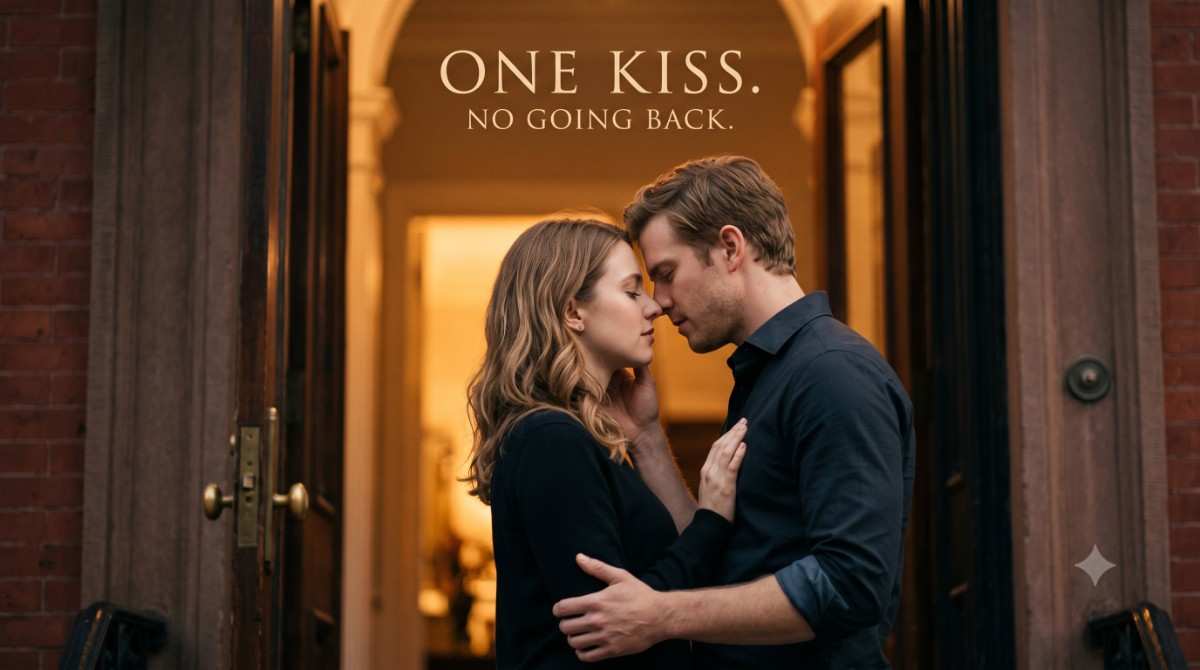
By: Ranjan Sarkhell
–
Table of Contents
–
Opening Quote
“It is a truth universally acknowledged, that a single man in possession of a good fortune, must be in want of a wife.”
— Jane Austen, Pride and Prejudice
–
Introduction
Claire never wanted a husband. She wanted her independence, her career, and a life she had built entirely on her own terms.
But her grandmother’s will had other plans — a debt-free brownstone worth millions, and a single condition standing between Claire and everything she was about to inherit: a fake marriage, to a man she had spent most of her life trying not to love.
–
Key points in this story
- Claire inherits a brownstone only if she marries and lives with her spouse for one full year
- Her spouse has already been chosen for her: Ben, the childhood friend she has never quite been able to shake
- Ben is drowning in debt after a market crash, and the same fake marriage clause that angers Claire could be his only way out
- Their grandmothers shared decades of a strange, unbreakable friendship disguised as rivalry
- What begins as a business arrangement slowly turns into something neither of them can keep pretending is fake
- A hidden diary reveals the truth their grandmothers never told them — and a final twist in the will changes everything they thought they understood about why they were brought together
–
Chapter 1: The Shocking Fake Marriage Clause That Turned Claire’s World Upside Down
Claire’s Life Before Everything Changed
Claire liked her life exactly the way it was. She was in her late twenties, and she had spent every one of those years proving to herself that she did not need rescuing, did not need permission, and certainly did not need a husband.
She ran her own graphic design business out of a small, sun-filled apartment, and she was good at it — good enough that clients came back, good enough that she never had to chase work.
She was stubborn, and she knew it. Her friends teased her about it constantly.
Whenever someone brought up marriage, Claire had the same answer ready, half joke and half warning:
she would rather redesign the same logo fifty times than plan a wedding.
She believed, quietly and completely, that a woman could build a full life without waiting for anyone to build it with her.
Then her grandmother died, and the life Claire had built so carefully began to shift under her feet.
The Will That Demanded a Fake Marriage
The lawyer’s office smelled like old paper and coffee that had gone cold hours earlier.
Claire sat across the desk, her hands folded tightly in her lap, waiting for the kind of news people usually expect at these meetings — a modest sum, maybe a piece of jewelry, a few kind words about how much she had been loved.
Instead, the lawyer told her she was her grandmother’s sole heir.
Waiting for her, he explained, was a brownstone.
Not just any brownstone — a beautiful, completely debt-free home in one of the city’s most sought-after neighborhoods, worth more money than Claire had ever imagined having attached to her own name.
It was the kind of inheritance that could change the direction of an entire life.
Then came the condition.
Claire could only inherit the house if she was married, and if she lived in that house with her spouse for one full year. No shortcuts. No exceptions.
A real marriage, under one roof, for three hundred and sixty-five days.
Claire felt her jaw tighten. She had spent years insisting she did not need marriage to be complete, and now her own grandmother was demanding one from beyond the grave, as if that stubborn independence Claire had built meant nothing at all. That alone was enough to make her furious.
Then the lawyer said the part she truly could not believe.
The Man Chosen for Claire’s Fake Marriage
Her spouse, the lawyer said, had already been named. The will was specific. There was no ambiguity, no space for Claire to choose someone herself.
“Ben,” the lawyer said.
Claire stared at him for a long moment, certain she had misheard.
“Ben,” he repeated, checking the page as though Claire might think he had made an error. He had not.
The same Ben Claire had known since before she could properly tie her own shoes.
The same Ben she had spent years annoyed by, years competing with, years pretending not to think about.
Her grandmother had not simply left her a house with a strange condition attached — she had left her a fake marriage to a man Claire had spent most of her adult life trying not to like.
Claire sat in that office long after the lawyer finished speaking, staring at nothing, trying to understand how her grandmother — sweet, sharp-tongued, endlessly stubborn — could have done this to her.
Because whatever this was, it was not simple. It was not a mistake. Her grandmother had chosen every word of that will carefully, the same way she had chosen everything else in her life.
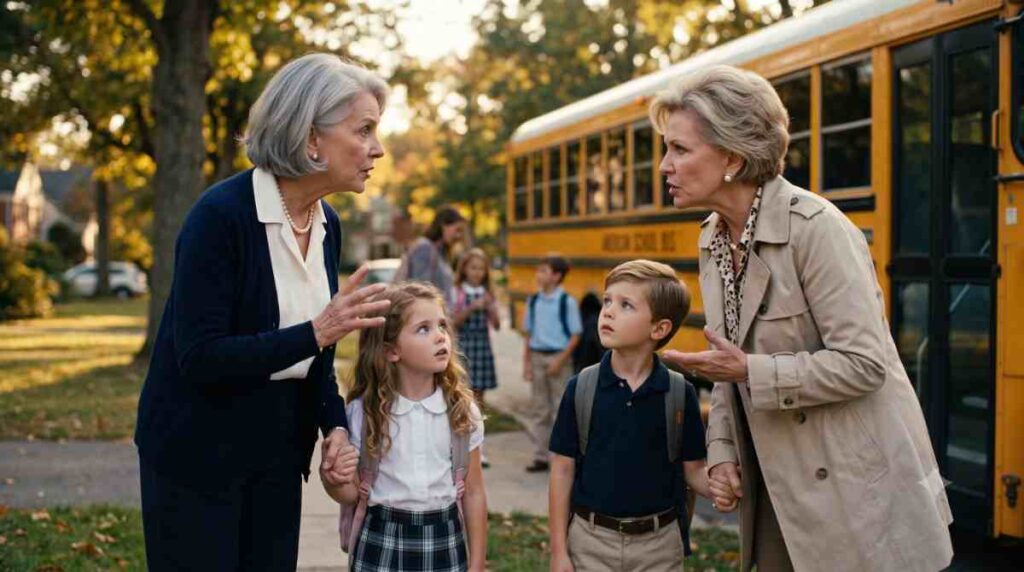
And somewhere in the back of Claire’s mind, a memory stirred that she had not thought about in years — a school bus stop, two arguing grandmothers, and a boy who had once kissed her cheek without asking permission.
She was not ready to think about what any of that might mean.
Not yet.
Her grandmother had not simply left her a house — she had left her a fake marriage to a man she’d spent years trying not to like.
Bound by a Fake Marriage: How an Inheritance Rewrote Our Love Story
–
Chapter 2: The Broken Investor Trapped by the Same Fake Marriage Clause
The Life Ben Built on Logic Alone
Ben had never been the kind of person who made decisions with his gut. He made them with spreadsheets, with data, with the quiet, almost stubborn confidence of a man who believed feelings were something to manage, not something to trust.
While other people described their choices as instincts, Ben described his as calculations. He trusted patterns. He trusted probability.
He trusted the version of the world that could be written down in numbers, because numbers, unlike people, did not change their story halfway through.
He had built a career investing in the stock market, and for a long time it suited him perfectly. He liked the discipline of it.
He liked that success came from staying calm when everyone else lost their nerve, from reading the long game instead of reacting to every small dip and spike.
He was good at it, and he knew he was good at it, and there was a quiet, private pride in that — the kind of pride Ben rarely spoke about out loud, because speaking about pride felt, to him, almost like tempting the market to prove him wrong.
It did.
The crash did not arrive slowly. It came the way these things always seem to in hindsight — sudden, brutal, and somehow both a complete shock and something Ben told himself later he should have seen coming.
Positions he had trusted for years collapsed in a matter of weeks. Clients he had built relationships with grew tense, then distant, then gone.
And underneath all of it, quietly, was Ben’s own money, tied up in the same decisions that had once made him so confident.
He did not tell people how bad it was. That was not who Ben was. He answered “how are things” with “fine,” the same clipped, controlled tone he used for everything, and he kept showing up, kept working, kept doing the math late at night with a coffee going cold beside him, trying to find some version of the numbers that did not end in disaster.
There was no version. The debt was real, and it was heavy, and it was his.
Why Ben Needed the Fake Marriage More Than He Would Admit
When Ben first heard about the will — about the brownstone, about the strange, specific condition attached to it, about his own name written into a stranger’s legal document as if he had any say in the matter — his first reaction was not interesting. It was irritating.
He did not want to be part of someone else’s plan. He especially did not want to be part of a plan that involved Claire, a woman he had spent most of his adult life keeping at a comfortable, deliberate distance.
But Ben was also, above everything else, a man who did the math.
And the math, when he finally let himself sit with it, was impossible to ignore.
The sum attached to the marriage arrangement was not small.
It was, in fact, almost exactly the kind of number that could pull him out from under the weight of the crash — enough to settle what he owed, enough to breathe again, enough to stop doing that late-night arithmetic that never landed anywhere good.
Ben hated how neatly it fit. He hated that the same fake marriage clause making Claire furious was quietly, privately, a lifeline for him.
There was something almost embarrassing about it, the idea that he — controlled, practical Ben, a man who prided himself on never needing anyone — might need this. Might need her.
He told himself it was simple. A business arrangement. A year, a contract, a clean exit on both ends. He was good at compartmentalizing things. He would compartmentalize this too.
He was not yet honest enough with himself to wonder whether that would actually be possible.
The Rival Grandmother Behind This Fake Marriage
What made the whole situation stranger, at least to everyone who did not know the full history, was the fact that Ben and Claire were not strangers being forced together by two unrelated old women with too much time and too much money.
Ben was the grandson of the woman who had lived beside Claire’s grandmother for decades — the same woman who had been, depending entirely on the day you asked, either her dearest friend or her fiercest rival.
There had never been a clean answer to which one was true. Ben had grown up hearing his grandmother talk about “that woman next door” with an intensity that could shift, sometimes in the same sentence, from open affection to open frustration.
And it meant that whatever was happening now — the will, the condition, the impossible pairing of two people who had spent years perfecting the art of not liking each other — had not come out of nowhere. It had roots. Old ones. Roots that went back further than either Ben or Claire had ever really understood.
Because Ben and Claire had not simply attended the same school for a few overlapping years.
They had known each other since before either of them could properly remember not knowing each other — preschool onward, the two of them dropped off and picked up by grandmothers who could not seem to stay away from one another no matter how many times it looked, from the outside, like they should have stopped speaking for good.
A Childhood That Made This Fake Marriage Impossible to Escape
Ben remembered fragments of it more than full stories — the sound of his grandmother’s voice getting sharp and then, somehow, softening again within the same afternoon.
The way she would come home from an argument at the brownstone practically vibrating with irritation, and then, the very next day, put on her good coat and walk right back over as though nothing at all had happened between them.
As a boy, Ben had found it baffling. He liked things that made sense, even then — patterns he could predict, outcomes he could count on.
His grandmother’s friendship with Claire’s grandmother followed no pattern he could ever fully explain.
It broke every rule he understood about how people were supposed to behave toward someone they were angry at.
And somewhere in all of that noise — the laughing, the arguing, the strange loyalty that never quite broke no matter how loudly it cracked — was Claire.
A girl who annoyed him with an ease that felt almost effortless, who argued with the same stubborn conviction her grandmother did, who Ben had spent years insisting he did not think about, in the exact tone of someone who thought about her more than he wanted to admit.
He had not seen her in years. Their lives had gone in separate directions the way lives often do after childhood ends — no falling out, no dramatic goodbye, just distance, the ordinary kind that accumulates quietly until one day you realize it has become permanent.
Except, apparently, it had not been permanent at all.
Their grandmothers, it seemed, had never really let go of each other.
And now, without either of them agreeing to it, without either of them being given a real choice, Ben and Claire were being pulled back into orbit around one another — bound together by a fake marriage neither of them had asked for, built on top of a history neither of them fully understood.
Ben sat with the contract in front of him longer than he needed to. He told himself he was reviewing the numbers.
He was not thinking about the numbers at all.
The same fake marriage clause that made Claire furious was, quietly, Ben’s only way out.
Bound by a Fake Marriage: How an Inheritance Rewrote Our Love Story
–
Chapter 3: The Grandmothers Whose Friendship Looked Like War
A Friendship That Looked Like a Battlefield
Claire and Ben had gone to the same school from preschool all the way through high school, and if you asked either of them to name their strongest memory from those years, neither of them would describe a classroom, or a teacher, or even a friend their own age.
They would describe the school gate at pickup time, and the two women who stood there, and the strange, almost theatrical show the two women put on nearly every single day.
It always began the same way.
The grandmothers would spot each other across the yard, and something in both of their faces would light up at once.
They would close the distance between them fast, already talking before they had even fully arrived, already laughing about something neither child could ever quite follow.
For those first few minutes, there was no question in Claire’s mind, or in Ben’s, that these two women were exactly what they appeared to be — the closest of friends, delighted simply to be standing near one another again.
And then, without any warning either child ever learned to predict, something would shift.
It rarely started as anything serious. A comment about whose casserole recipe was better. A disagreement over which of them had actually been the one to suggest a certain restaurant first.
Something small, almost silly, the kind of thing most people would let go without a second thought.
These two women never let anything go.
The Daily Ritual of Falling Out and Making Up
The small disagreement would grow teeth. Voices would rise. Point would meet counterpoint, and counterpoint would meet an even sharper point, until the two women who had been laughing together minutes earlier were standing in the exact same spot, in the exact same afternoon light, looking at each other like two people who had never liked one another at all.
Claire and Ben would watch this happen and feel, every single time, a small flicker of genuine alarm. Surely, they would think, this was the one.
Surely this time their grandmothers were finished for good. The two women would part ways with tight jaws and clipped goodbyes, and the children would walk home half expecting their grandmothers to never speak again.
The next day, without fail, the two women would meet at the school gate exactly as they always did.
They would laugh. They would catch up. They would talk as though the argument from the day before had happened to two entirely different people.
Whatever had been said, whatever accusations had been thrown, seemed to simply dissolve overnight, replaced by the same easy warmth that had opened every single one of their afternoons together.
And then, somehow, they would find something new to argue about, and the whole cycle would begin again.
Claire and Ben grew up inside that pattern without ever once understanding it. They did not have the language for it yet, the way children rarely have the language for the complicated things adults do to each other out of love.
All they knew was that their grandmothers seemed incapable of staying away from one another, and equally incapable of being near each other for long without finding a reason to fight.
Were they best friends who happened to argue constantly?
Or
Were they lifelong rivals who happened to genuinely enjoy each other’s company?
For years, neither Claire nor Ben had an answer. The two possibilities seemed to contradict each other completely, and yet somehow, standing at that school gate day after day, both of them turned out to be true at once.
What Claire and Ben Learned Without Knowing It
Looking back, much later, Claire would come to understand that this daily performance — the affection, the argument, the reconciliation, repeated like a piece of music neither woman ever tired of playing — had quietly shaped the way she and Ben understood each other, long before either of them had any reason to think it mattered.
Because without either of them noticing, they had absorbed the same rhythm their grandmothers lived by. Claire and Ben argued. They always had. It came easily to both of them, almost naturally, the way it seemed to come naturally to the two women who raised them in those afternoon hours at the school gate.
But underneath the arguing, in ways neither child could name at the time, there was something else running quietly alongside it — a kind of pull neither of them could fully explain, a reason they kept ending up near each other again and again despite years of insisting they preferred it otherwise.
Years later, standing in a lawyer’s office being told she was bound to Ben by a fake marriage neither of them had chosen, Claire would think back to those afternoons at the school gate more than once.
She would remember the two women who could not stop fighting, and could not stop finding their way back to each other either, and she would wonder — quietly, uneasily — whether she and Ben were simply repeating a story that had already been written for them, decades before either of them was born.
She was not ready to admit how much sense that idea made.
Not yet.
Long before the fake marriage, there were two grandmothers who could never stay away from each other.
Bound by a Fake Marriage: How an Inheritance Rewrote Our Love Story
–
Chapter 4: The Bus Stop Fight That Started Everything
The Rock Star Both Grandmothers Loved
There was one afternoon Claire and Ben would return for the rest of their lives, even though at the time it had felt like nothing more than an embarrassing scene at a school bus stop.
It started, as so many things with their grandmothers did, with something that should not have mattered at all.
Both women were devoted fans of a famous rock star named Aidan — the kind of fans who knew every album, every interview, every small detail of his career.
And because they were who they were, simply liking the same rock star was never going to be enough.
They had to compete over who liked him more, who understood him better, who had loved his music longer and with greater loyalty.
That particular afternoon, waiting at the bus stop with the other children and parents shuffling around them, the competition found a new target.
Ben’s grandmother turned to Claire’s grandmother with the confident look of a woman about to win an argument before it had even properly begun.
“If you are such a devoted fan,” she said, “you should at least be able to spell the man’s name correctly.”
She said it was Aidan.
Claire’s grandmother did not hesitate for even a second. She said it was Aiden.
Aidan Versus Aiden
What happened next unfolded the way it always did whenever these two women disagreed about anything.
The volume climbed. The certainty on both sides grew sharper.
And Claire and Ben, standing beside their grandmothers, did exactly what they always did in these moments — they took sides without a single thought, as though loyalty to their own grandmother was simply a reflex neither of them could control.
“It’s Aidan,” Ben said, crossing his arms the way his grandmother did when she felt she had already won.
“It’s Aiden,” Claire shot back, just as certain, just as stubborn.
Within minutes, what had started as two grown women arguing over a spelling had somehow become a full argument between two children who had never once discussed the rock star’s name before that exact moment.
Their voices rose to match their grandmothers’. The whole bus stop turned to look.
And then it got loud enough that people who were not even part of the argument came running to see what on earth was happening.
Principal McCauley Arrives
Mrs. McCauley, the school principal, was known throughout the building for a seriousness that could silence a hallway with a single glance.
She arrived at the bus stop flanked by two teachers, her expression already sharpening into the look she reserved for situations she found genuinely unacceptable.
“What,” she said, in the exact tone of a woman who already suspected the answer would not satisfy her, “is going on here?”
Nobody had a good answer. Four voices tried to explain at once — two adults, two children — and none of it came together into anything Mrs. McCauley could actually use.
So she did the only sensible thing. She called for the music teacher.
Timothy arrived at a half jog, slightly out of breath, clearly unsure what kind of emergency required his presence at a school bus stop.
He looked at Ben’s grandmother. Then at Claire’s grandmother. Then at Ben. Then at Claire.
Then back at the two women, who were still glaring at each other with the intensity of people settling a matter of national importance.
For a moment, Timothy said nothing at all.
Then he laughed.
Mrs. McCauley’s look could have stopped traffic. “Mr. Timothy.”
Timothy straightened immediately, clearing his throat and attempting, not entirely successfully, to look like a man taking the situation seriously. “Sorry, ma’am.”
He glanced around at the small crowd that had gathered, then folded his hands in front of him like a judge preparing to deliver a verdict. “All right. Let’s settle this properly.”
Timothy’s Verdict
He drew the moment out with the theatrical seriousness of a reality show host about to announce a winner, and despite the tension in the air, even Claire found herself holding her breath a little, waiting.
“The rock star’s real name,” Timothy announced finally, “was Aidan.”
Ben and his grandmother lit up at once, matching triumphant expressions on both their faces. Claire and her grandmother deflated in perfect unison.
Ben shot Claire a look that needed no words at all, and his grandmother looked, if anything, even more pleased with herself than he did.
But Timothy was not finished. He let the silence stretch a moment longer than necessary.
“Was,” he said again, slower this time.
Ben’s smile started to falter.
“…but now,” Timothy continued, clearly enjoying himself, “his name is Aiden.”
Claire and her grandmother came back to life instantly. Ben looked, for lack of a better description, personally betrayed by the entire universe.
Mrs. McCauley was not amused by the theatrics. “Now tell me the actual story,” she said flatly.
Timothy explained, a little more seriously this time, that he was a genuine fan himself. The rock star’s original name really had been Aidan.
But before his last world tour, he had consulted his spiritual guru — a well-known astrologer and numerologist — and following the numerology reading, he had officially changed the spelling of his name to Aiden.
Timothy spread his hands, palms up, like a man presenting an unavoidable conclusion.
“So,” he said, “technically, both of them were right.”
For a beat, nobody spoke. And then something happened that nobody standing at that bus stop had ever seen before.
Mrs. McCauley laughed.
Not a polite, professional smile. A real laugh, the kind that seemed to surprise her as much as it surprised everyone watching.
The principal who could silence an entire hallway with one look was standing at a school bus stop, laughing at a ridiculous argument over a rock star’s spelling, and for the first time many of them could remember, she looked completely, genuinely human.
Timothy looked rather proud of himself. Claire could not stop laughing either. Even Ben, despite his defeat, cracked something close to a smile.
Eventually Mrs. McCauley recovered enough of herself to deliver a stern warning to both grandmothers about causing another scene on school property.
Then, because she apparently believed in resolving things properly, she gave them one final order.
“Now. Both of you. Hug each other and end this.”
The Hug That Changed Everything
Claire and Ben exchanged a look, the kind of look that only two people who had grown up watching the exact same routine could share.
They both knew precisely what was about to happen. Their grandmothers would hug, laugh, and act as though the entire argument had never occurred — the same way they always did.
Ben’s grandmother stepped forward first and pulled Claire’s grandmother into a hug, already half laughing before the hug had even finished, exactly as predicted.
And then, just as Ben stepped toward his own version of the same ritual, something happened that nobody predicted at all.
Ben hugged Claire.
And then, quickly, almost shyly, he kissed her cheek.
Claire froze completely. She had no idea what to do with the moment, no framework for it, nothing in her seven-year-old understanding of the world that told her what a kiss on the cheek from Ben was supposed to mean.
But underneath the confusion, something small and strange moved through her — a tiny shiver she could not explain and would not think about again for a very long time.
Timothy and Mrs. McCauley both looked mildly startled. The two grandmothers, oddly, did not react at all.
They stood there as calmly as if nothing unusual had happened between the two children in front of them, as if this, too, had simply been expected.
Claire and Ben were far too young that day to understand what any of it meant. They walked to the bus in silence, neither one bringing it up, both privately certain the other had already forgotten about it.
Neither of them had. Not really. Not ever, if either of them had been honest about it.
Years later, sitting across from a lawyer discussing the terms of a fake marriage neither of them had asked for, Claire would think back to that afternoon at the bus stop more than once — to the argument, to Timothy’s ridiculous verdict, to Mrs. McCauley’s laugh, and to the small, unexplainable shiver she had never quite managed to forget.
At the time, it had seemed like nothing.
She was beginning to suspect it had never been nothing at all.
One kiss on the cheek, one shiver neither child could explain — the first hint of everything the fake marriage would later become.
Bound by a Fake Marriage: How an Inheritance Rewrote Our Love Story
–
Chapter 5: The Years That Pulled Them Apart
Different Roads
After high school, Claire and Ben’s lives split in two directions, the way lives usually do once the shared structure of school disappears.
There was no fight, no falling out, nothing dramatic enough to point to later and say, this is where it ended.
They simply stopped being in the same rooms. College took them to different cities. Careers took them further still.
The easy, built-in reasons they used to see each other — the same classroom, the same bus stop, the same two grandmothers standing at the same gate — quietly disappeared one by one.
Claire built her design career from nothing, moving into her small sun-filled apartment, learning slowly how to trust her own judgment without anyone else’s approval.
Ben built his career in the market, learning the discipline that would later both make him successful and nearly ruin him.
Neither of them thought about the other often. Or that is what they told themselves, on the rare occasions the subject came up at all.
Their grandmothers, however, never drifted the way Claire and Ben did.
The First Loss
Ben’s grandmother died several years before Claire’s did, and her death did something to Claire’s grandmother that nobody in the family fully understood until much later.
She did not simply grieve the way people grieve a longtime neighbor. She grieved the way people grieve losing the one person who truly understood them.
Claire remembered visiting her grandmother not long after the funeral, expecting to find her quiet, maybe a little sad, the way anyone would be after losing someone they had known for decades.
Instead she found her grandmother sitting at the kitchen table with the curtains half drawn, staring at nothing, looking smaller than Claire had ever seen her look.
“You two fought all the time,” Claire said gently, sitting down across from her. She meant it kindly, meant it as a small comfort, a reminder that at least the arguing was over now.
Her grandmother looked at her for a long moment, and something in her expression made Claire immediately regret saying it.
“We did,” her grandmother said quietly. “That was never the point, sweetheart.”
She did not explain further. Claire did not push. But the sentence stayed with her longer than she expected it to, tucked away in the back of her mind the way certain sentences are, waiting for a day when they would finally make sense.
Claire’s grandmother was never quite the same after that. She still laughed. She still kept her sharp tongue and her stubborn opinions right up until the end.
But there was a quietness underneath all of it now, a kind of absence Claire could feel even when her grandmother was sitting right in front of her.
The Second Will
Claire’s grandmother held on for a few more years after that, and then, on an ordinary Tuesday that gave no warning it would be the last one, she was gone too.
The funeral was smaller than Claire expected, quiet in the way her grandmother had probably wanted it to be, full of people who had loved her without ever fully understanding her.
Claire stood through all of it feeling strangely hollow, the kind of grief that had not fully arrived yet, still waiting somewhere just out of reach.
A few weeks later, she found herself back in the same lawyer’s office where, years earlier, another will had been read for another grandmother.
This time, there was no Ben sitting beside her, no shared history in the room to soften the moment.
Claire sat alone across the desk, waiting to hear what her grandmother had left behind.
The lawyer opened the folder slowly, the way lawyers do when they already know the contents are going to require careful handling.
And once again, the same two words appeared on the page, the same two words that had once, years before this, walked into her life through a school bus stop and a kiss on the cheek she had never quite explained to herself.
Claire’s grandmother had done it again.
Once again, the same two words appeared on the page. The fake marriage was back.
Bound by a Fake Marriage: How an Inheritance Rewrote Our Love Story
–
Chapter 6: The Impossible Condition
Claire’s Verdict
Claire left the lawyer’s office that day angrier than she had been in years, and underneath the anger, quieter and harder to look at directly, was something that felt uncomfortably close to grief.
Her grandmother had not just left her a complicated inheritance. She had left her one final, impossible request, wrapped inside a legal document, and there was no way left to ask her why.
The condition itself was exactly what it had been before — a year of marriage, a year living together under one roof in the brownstone, before the house would legally become hers.
No partial credit. No shortcuts. Her grandmother had built the terms with the same stubborn precision she had built everything else in her life, and there was no version of this where Claire could simply take the house and skip the part she did not want.
“She knew I would refuse,” Claire had said quietly in the office, more to herself than to the lawyer.
“She knew a great many things,” he had told her. “I’ve read a lot of wills in this office. I’ve never read one quite like hers.”
Claire had not found that comforting then. She did not find it comforting now, walking home with the weight of the whole arrangement settling over her one step at a time.
Ben Finds Out
Ben heard about the arrangement the way he heard about most things that mattered — through a phone call that started ordinary and turned strange fast.
His mother had run into someone who knew someone connected to the family, and by the time the story reached Ben, secondhand and slightly garbled, the basic shape of it was still unmistakable.
Claire had inherited a house. Claire could only keep it if she married. Claire’s grandmother had named him as the husband.
Ben sat with his phone against his ear for a long moment after his mother finished talking, saying nothing.
“Ben? Are you there?”
“I’m here,” he said finally, his voice giving away nothing.
But underneath that calm, something had shifted, the same quiet unease he’d felt reading the contract terms weeks earlier, except now it had a face attached to it, a name, a person he had spent years successfully not thinking about.
He told himself it did not matter. He told himself the money was the only relevant detail, the only part of this that actually concerned him.
He was less good, it turned out, at believing that than he expected to be.
Meeting Again
They met at a small café neither of them had chosen for any particular reason, a neutral space that felt appropriately businesslike for what both of them had convinced themselves this was going to be.
Claire arrived first. Ben arrived four minutes later, exactly on time by his own internal clock, which had never once in his life considered four minutes early to be necessary.
He saw her before she saw him, and for a moment — just a moment — something in his chest did something he did not have a spreadsheet for.
Then Claire looked up, and whatever that moment had been, it evaporated instantly under the weight of eleven years of practiced irritation.
“You look exactly the same,” Claire said, not entirely as a compliment.
“So do you,” Ben said, sliding into the seat across from her. “Still early. Still annoyed about it.”
“I’m not early. You’re just always suspiciously on time.”
“That’s called being responsible.”
“That’s called being exhausting.”
And just like that, without either of them deciding to, the old rhythm was back — quick, sharp, entirely too easy, as though the years between the school bus stop and this café had folded up and disappeared the second they sat down across from each other. It was unsettling how naturally it happened. Neither of them commented on it, though both of them noticed.
They talked business after that, or tried to. Claire laid out the terms as she understood them.
Ben listened with sharp, practical attention, asking questions that made Claire’s jaw tighten more than once.
“You’re already negotiating,” she said at one point, not quite an accusation.
“I negotiate everything,” Ben said. “It’s not personal.”
“With you, it never is.”
He did not have a quick answer for that one. For a second, something flickered across his face that Claire could not quite read, gone before she could study it properly.
Two Reasons to Say Yes
Neither of them liked the arrangement. That much was clear within the first ten minutes of sitting across from each other, both of them bristling at the idea of being bound together by two women who had never once asked either of them what they wanted.
But neither of them could walk away from it either.
For Claire, it was the brownstone — the home her grandmother had built a life inside of, the inheritance that could change everything about her financial future, the last real piece of her grandmother she had left to hold onto.
Walking away meant losing all of it, and some stubborn, grieving part of her refused to let that happen out of pure pride.
For Ben, it was the debt, heavier every month, quietly eating away at the confidence he had built his entire identity around.
Walking away meant continuing to drown in numbers that refused to add up in his favor, continuing to lie about how fine everything was.
Both of them had a reason. Neither of them wanted to say it out loud.
“One year,” Claire said finally, breaking the silence that had settled over the table. “Separate rooms. No real relationship. We convince everyone who needs convincing, and then it’s over.”
Ben studied her for a long moment before he nodded.
“One year,” he agreed.
Neither of them smiled. Neither of them shook hands. But something had been decided, and as Claire watched Ben nod once, final, businesslike, she felt the strangest, smallest flicker of relief underneath all her irritation — relief she did not examine too closely, and would not let herself examine again for a long time.
Neither of them wanted the fake marriage. Both of them needed it.
Bound by a Fake Marriage: How an Inheritance Rewrote Our Love Story
–
Chapter 7: The One-Year Marriage
Putting It on Paper
They met again a week later, this time in the same lawyer’s office where all of this had started, because Claire had insisted the terms needed to be written down properly, in language neither of them could later pretend to misunderstand.
Ben had agreed immediately. He trusted contracts more than he trusted conversations. A contract could not change its mind halfway through.
The lawyer sat across from them, sliding a single typed page across the desk, and read through it in the same measured, careful tone he used for everything.
They would marry within the month. They would live together in the brownstone for one full year, the entire three hundred and sixty-five days the will required, no exceptions and no early exits. They would sleep in separate rooms.
There would be no real romantic relationship between them, nothing beyond what the situation strictly required.
They would maintain, as much as possible, their separate lives — separate friends, separate routines, separate everything that did not overlap out of pure necessity.
After the year ended, they would divorce. Claire would keep the brownstone, fully and permanently hers.
Ben would receive the sum they had already discussed, enough to finally climb out from under the debt that had been suffocating him for months. Nothing more. Nothing less.
Claire read the page twice before signing it, the pen feeling heavier in her hand than a single sheet of paper had any right to feel.
Ben read it once, the way he read everything, quickly and completely, and signed without hesitation.
“That’s it?” Claire asked, watching him cap the pen like he had just approved a minor business expense.
“That’s it,” Ben said. “Unless you wanted a speech.”
“I would very much not like a speech from you.”
“Good. I don’t have one.”
The One Problem With the Plan
There was, however, one detail the contract could not fully account for, one the lawyer raised with the same careful seriousness he brought to everything else.
“You understand,” he said, looking between them, “that this cannot simply exist on paper. I will need to see, over the course of this year, that the two of you are genuinely building a life together. Not performing it for a single afternoon and disappearing back into separate corners the moment the door closes.”
Claire felt her stomach tighten. “You’re going to be checking in on us.”
“I am the executor of your grandmother’s estate,” the lawyer said simply. “It is, unfortunately, exactly my job to check.”
And it was not only the lawyer they would need to convince. The brownstone sat on a street full of neighbors who had known Claire’s grandmother for decades, neighbors who were curious, warm, endlessly nosy in the particular way people become when they have lived beside the same family for years.
A sudden marriage, a new husband appearing out of nowhere, would not go unnoticed. It would not go unquestioned either.
Ben absorbed this information the way he absorbed everything, filing it away, already calculating what it meant for the plan.
“So we don’t just live together,” he said slowly. “We perform being married. Convincingly.”
“For one year,” Claire said, mostly to remind herself as much as him.
“For one year,” Ben agreed. “And then it’s over, and everyone goes back to their actual lives.”
Claire nodded, and told herself the small unsettled feeling sitting in her chest was simply nerves about the performance ahead of them, nothing more complicated than that.
Moving In
The brownstone looked different once Claire understood she would be living in it, not just visiting it the way she had a hundred times as a child.
It still smelled faintly like her grandmother — old books, something floral, the particular dust of a house that had been lived in and loved for a very long time — and walking through the front door with a box of her belongings in her arms felt like stepping into a memory that was somehow also, now, her present.
Ben arrived an hour later with considerably less than Claire expected, two suitcases and a single box of what she assumed were essentials, everything arranged with the kind of neat, deliberate order that seemed to define everything about him.
“That’s it?” Claire asked, echoing her own words from the lawyer’s office without meaning to.
“I don’t need much,” Ben said, setting the box down in the hallway. “I like simple things.”
“You like controlled things.”
“Same thing, usually.”
They stood in the entryway for a moment, both of them looking around at the house that was, for the next year at least, going to belong to both of them in some strange, temporary, contractual way. It was quiet. Neither of them quite knew what to say.
“Separate rooms,” Claire said finally, mostly to break the silence.
“Separate rooms,” Ben agreed.
Upstairs, the house had exactly enough bedrooms to make that arrangement easy, one at each end of the hallway, a stretch of neutral territory in between.
Claire took the room that had been her grandmother’s guest room for as long as she could remember.
Ben took the one at the opposite end without comment, setting his suitcases down with the same efficient calm he brought to everything.
For a moment, standing at opposite ends of the same hallway, in the same house they would now share for a year neither of them had asked for, they simply looked at each other. Neither of them smiled. Neither of them said anything meaningful.
But something about the moment felt heavier than either of them expected it to, the reality of the year ahead finally settling in fully for the first time.
“Well,” Ben said eventually. “Here we are.”
“Here we are,” Claire echoed.
Neither of them could have guessed, standing in that hallway on the very first night, just how much that sentence was going to end up meaning by the time the year was over.
One year. Separate rooms. No real relationship. On paper, it was the simplest fake marriage either of them had ever signed.
Bound by a Fake Marriage: How an Inheritance Rewrote Our Love Story
–
Chapter 8: One House, Two Enemies
The Groceries That Started a War
It took exactly four days for the first real fight to happen, and it started, fittingly enough, over something as small as a bag of groceries.
Claire had gone to the store and stocked the kitchen the way she always had, the way she liked it — her usual brands, her usual arrangement, everything exactly where her instincts told her it belonged.
Ben came home that evening, opened the refrigerator, and stood there for a long moment in a way that immediately put Claire on edge.
“What,” she said, “is that face.”
“Nothing,” Ben said, which was clearly a lie, because he was still standing there, studying the shelves like they had personally wronged him.
“You’re judging my groceries.”
“I’m not judging anything. I just don’t understand why the eggs are next to the orange juice.”
“Because that’s where the eggs go.”
“That’s not where the eggs go anywhere I’ve ever lived.”
“Well, congratulations, you live somewhere new now.”
It escalated from there, the way these things always did with the two of them, sliding effortlessly from eggs into something that felt, absurdly, like a referendum on how each of them had lived their entire adult lives.
Ben rearranged the refrigerator without asking. Claire put everything back exactly where it had been the moment he left the room.
Ben noticed. Ben said nothing, which was somehow worse than if he had said something, and put it all back his way again the next morning.
By the end of the week, they had fought about the thermostat, the folding of towels, whose turn it was to take out the trash, and the correct volume at which the television should be played after nine at night.
Every disagreement felt, in the moment, like the most important disagreement either of them had ever had.
Every disagreement also felt, underneath the irritation, a little bit familiar — the same rhythm Claire remembered from childhood, the same rhythm she had spent years insisting she had never noticed.
The Performance Begins
And then, almost without warning, the doorbell would ring.
The first time it happened, it was one of the neighbors, an older woman named Delia who had lived three doors down for as long as Claire could remember, arriving with a plate of something warm and a look of open, delighted curiosity on her face.
“I heard the news,” Delia said, practically glowing. “Married! And to Ben, of all people. Your grandmother would be thrilled.”
Claire felt the words land somewhere uncomfortable in her chest, but she did not let it show.
Instead, she smiled, the practiced kind of smile she had learned to produce for difficult clients, and reached back for Ben’s hand without quite deciding to do it.
Ben took it without hesitation, sliding an arm loosely around her waist in a way that looked, to anyone standing in the doorway, completely natural.
“She really would be,” Ben said, and something in his voice sounded almost convincingly warm. “We’re very happy.”
Delia beamed at both of them, said something about young love and old friendships coming full circle, and left the plate on the counter with a promise to visit again soon.
The moment the door closed, Ben’s arm dropped from Claire’s waist immediately, and Claire took a full step back, the performance ending as cleanly and completely as it had begun.
“That was smooth,” Claire said, a little begrudgingly.
“I told you I would negotiate everything,” Ben said. “Turns out I also perform everything.”
“Don’t get used to it.”
“I wouldn’t dream of it.”
Learning the Choreography
It became, over the following weeks, a strange and specific choreography, one they both learned quickly out of necessity.
The lawyer came by twice in the first month, watching with careful, unreadable eyes, and both times Claire and Ben found themselves slipping into the same practiced warmth — a hand on a shoulder, a look held a beat too long, small domestic details recited convincingly enough to satisfy a man whose entire job was noticing when something did not add up.
“How is married life?” the lawyer asked, on his second visit, watching them both closely.
“Busy,” Claire said. “Ben reorganizes the refrigerator when he thinks I’m not paying attention.”
“She notices immediately every time,” Ben said, “and puts it back wrong on purpose.”
The lawyer almost smiled at that, something flickering across his face that looked, for a moment, like real amusement rather than professional scrutiny.
He made a note in his folder and did not elaborate on what it said.
The neighbors, for their part, needed less convincing than the lawyer did — most of them simply delighted to see the brownstone occupied again, delighted to see two familiar faces from childhood grown into a couple they had apparently, quietly, been rooting for the entire time without either Claire or Ben realizing it.
“Your grandmothers always said you two would end up together,” one neighbor told Claire, catching her on the front steps one afternoon. “We all just thought it would take you longer to admit it.”
Claire laughed it off the way she laughed off most uncomfortable truths, but the comment stayed with her longer than she expected, echoing somewhere in the back of her mind for the rest of the day.
The Door Closing
The strangest part, Claire found, was not the performance itself. It was how easily the performance ended the moment the door closed behind whoever had come to check on them — how quickly Ben’s hand left her waist, how quickly the warmth in his voice cooled back into its usual careful control, how quickly they both returned to arguing about groceries and thermostats as though nothing tender had happened between them at all.
It should have been a relief, that clean division between performance and reality. For the first few weeks, it was.
But there were moments, small and easy to dismiss, when the door would close and neither of them would step back quite as fast as they had the time before.
A hand would linger half a second too long. A look would hold just slightly past the point it needed to.
Neither of them mentioned it. Neither of them, if they were being honest with themselves, were entirely sure yet that it meant anything at all.
They still fought about everything that did not matter. They still performed everything that they did, whenever someone was watching.
But somewhere underneath both of those things, quietly, without either of them agreeing to it, the line between the two had already started, almost imperceptibly, to blur.
Behind closed doors, they fought like enemies. In front of witnesses, their fake marriage looked like the real thing.
Bound by a Fake Marriage: How an Inheritance Rewrote Our Love Story
–
Chapter 9: When Pretending Starts to Feel Real
The Faucet
The leak started small, a quiet drip from the kitchen faucet that Claire noticed one evening and decided, with the stubbornness that governed most of her decisions, she would deal with eventually.
Eventually turned into three days. Three days turned into a faucet that dripped steadily enough to keep Claire awake if she left her bedroom door open at night.
She came downstairs one morning expecting to find the same slow, irritating drip waiting for her.
It was gone.
The faucet sat there, fixed, dry, as though it had never leaked at all.
Claire stood in the kitchen for a moment, genuinely confused, before she understood what had happened.
Ben had not said anything. He had not mentioned it at breakfast the day before, had not asked whether she wanted it fixed, had not made it into something that required acknowledgment or thanks.
He had simply noticed a problem and solved it, quietly, the way he seemed to solve most things, and then gone about the rest of his evening as though it had not happened at all.
Claire found him at the small desk in the living room later that day, working through something on his laptop with the same focused concentration he brought to everything.
“You fixed the faucet,” she said.
Ben did not look up right away. “It was dripping.”
“You could have told me you were going to do it.”
“I could have,” he agreed, finally glancing up at her. “It didn’t seem necessary.”
Claire opened her mouth to say something else, something about how it actually was necessary, how a small warning would have been polite, and then stopped herself, because underneath the mild irritation she was manufacturing out of habit, there was something else entirely — something warmer and more complicated that she did not fully want to examine.
She said nothing else about it. But she noticed, later that evening, that she kept glancing toward the kitchen sink, listening for a drip that was no longer there.
The Coffee
A few weeks later, Ben came home late, later than usual, moving through the front door with the particular heaviness of a man who had spent the entire day fighting numbers that refused to cooperate.
He did not say much. He rarely did on days like that. But Claire had learned, without quite realizing she was learning it, to read the small differences in how he carried himself — the tightness in his shoulders, the way his jaw set a little harder than usual, the way his voice, when he did speak, came out slightly more clipped than its normal careful control.
She did not ask him about it. She had learned that much too.
Instead, without really thinking about it, without deciding to do it the way she decided most things, Claire made him a cup of coffee, exactly the way she had noticed he liked it over the past several weeks of sharing a kitchen — strong, no sugar, just enough milk to soften the edge.
She set it down beside him without comment and went back to her own work at the other end of the table.
Ben looked at the cup for a long moment before he picked it up. It was such a small thing. It should not have meant anything at all.
But he understood, in a way he could not have explained to anyone, that Claire had not made it because their contract required it, and had not made it as part of the performance they put on for the lawyer or the neighbors. There was no one here to see it. No one to convince.
She had simply noticed he needed it.
“Thank you,” he said, and something in his voice was quieter than usual, less guarded than the tone he used for almost everything else.
Claire glanced up, a little surprised by the sincerity in it. “It’s just coffee, Ben.”
“Sure,” he said, but he did not entirely believe that, and neither, if she was honest with herself, did she.
Small Repairs, Small Kindnesses
After that, the small things kept happening, quietly enough that neither of them ever quite stopped to name what was going on.
Ben started fixing things around the house without being asked — a sticking cabinet door, a wobbling chair leg, a curtain rod that had been hanging crooked since before Claire moved in.
None of it was required by their agreement. None of it earned him anything beyond the mild, grudging gratitude Claire offered each time, usually followed immediately by some complaint about him not asking first.
Claire, in turn, started noticing things about Ben she had never bothered to notice before, back when noticing him at all had felt like something to actively avoid.
She noticed when he was tired before he said a word about it. She noticed when something about his finances had gone wrong that day, the particular stillness that came over him when he thought no one was paying attention.
She noticed the effort it cost him to keep insisting everything was fine, and she started, without meaning to, making small adjustments of her own — leaving him alone when he needed space, staying nearby without pushing when she sensed he did not.
Neither of them announced any of it. Neither of them sat down and discussed what was happening, the way reasonable people might have, the way the contract technically should have required them to, if contracts accounted for things like this.
What Ben Started to See
Ben, for his part, began to notice something about Claire he had never fully understood before, not in all the years he had known her.
He had always thought of her stubbornness as simple, almost stubborn for its own sake, a kind of default setting she had been running on since childhood.
Living with her, watching her closely in a way he had never had reason to before, he started to see it differently.
Claire was not simply determined to do everything alone because she enjoyed proving a point.
She had built that independence carefully, deliberately, brick by brick, because somewhere along the way she had decided it was safer than depending on anyone who might eventually let her down.
He recognized something of himself in that, more than he wanted to admit.
His own careful control, his own refusal to ask for help even when he was drowning, was not so different from Claire’s insistence that she needed nothing from anyone.
They had simply built the same wall using different materials.
He did not say any of this to her. He was not entirely sure yet how to say it, or whether saying it would help anything at all.
But he started being gentler with her stubbornness after that, less irritated by it, more curious about what it was protecting.
The Arguments That Softened
They still argued. Some things about the two of them, Claire suspected, would probably never stop being a fight — the thermostat, mostly, and Ben’s persistent belief that the eggs belonged somewhere other than beside the orange juice.
But the arguments themselves had changed shape without either of them fully noticing when it happened.
The need to win, the sharp edge that used to define nearly everything between them, had started, quietly, to soften into something else.
They still disagreed. They simply stopped needing the disagreement to end in anyone losing.
Neither of them named what was happening. Neither of them were ready to.
But somewhere in the space between the leaking faucet and the coffee left quietly beside a laptop, they had started becoming something neither the will nor the contract had ever asked them to become.
Support. Quiet, unspoken, entirely unplanned support, given freely by two people who had spent most of their lives insisting they did not need it from anyone at all.
A fixed faucet. A quiet cup of coffee. Small proof that the fake marriage had stopped feeling fake.
Bound by a Fake Marriage: How an Inheritance Rewrote Our Love Story
–
Chapter 10: The Diary
A Weekend of Cleaning
It was a quiet Saturday, the kind neither of them had planned around anything in particular, when Claire decided the upstairs closet in her grandmother’s old sewing room had gone unexamined for long enough.
Ben offered to help without being asked, which had become, over the past several weeks, less unusual than it once would have been.
They worked through boxes of fabric scraps, old sewing patterns, photographs that made Claire pause more than once, holding them a little too long before setting them carefully aside.
It was slow, dusty work, comfortable in a way neither of them commented on, the kind of quiet companionship that would have felt impossible between them only a few months earlier.
It was Ben who found it, tucked into the back corner of the bottom shelf, wrapped in a faded scarf that had clearly been used to keep it hidden rather than protected.
A small leather book, its cover soft and worn from years of handling, the edges of the pages gone slightly yellow with age.
He turned it over once in his hands before he understood what he was holding.
“Claire,” he said. “You need to see this.”
What the Diary Revealed
They sat together on the floor of the sewing room, the box of old fabric forgotten beside them, and opened the diary carefully, as though it might fall apart if they were not gentle enough with it.
The handwriting was unmistakably Claire’s grandmother’s, familiar and looping, the same hand that had signed a will twice over with conditions neither of them had fully understood until now.
The early entries were ordinary enough — small observations about the neighborhood, complaints about the weather, notes about a garden she had been trying to keep alive.
But as they read further, a name began appearing again and again, the same name, entry after entry, in a tone that shifted the longer they read.
Ben’s grandmother.
The two women had not simply been neighbors who happened to argue.
The diary made that much clear within the first several pages. They had been, from the very beginning, drawn to each other in a way neither of them seemed to have fully understood or known how to name.
Competition ran through nearly every entry — who was smarter, who had the better taste, whose opinion on some small matter had ultimately been proven right — but underneath every single competitive line, plainly visible once you knew to look for it, was something else entirely.
Affection. Deep, stubborn, entirely undisguised affection, dressed up as rivalry because rivalry, for reasons the diary never quite explained outright, had apparently felt safer to both women than simply admitting how much they needed each other.
She told me today that my opinion on the matter was, and I quote, “predictably wrong,” one entry read. I told her hers was worse. We did not speak for three days. On the fourth day she brought over a pie and we did not discuss it again. I have never in my life met anyone I loved arguing with so much.
Claire read that line twice, then a third time, feeling something tighten in her chest.
“They loved arguing with each other,” she said quietly.
“They loved each other,” Ben corrected, just as quietly. “The arguing was just how they kept proving it.”
Reading Late Into the Night
They stayed on that floor far longer than either of them intended, the light outside shifting slowly from afternoon into evening without either of them noticing enough to move.
Sometimes they read in silence, each of them absorbing a page at their own pace. Sometimes one of them would read a line out loud, and they would sit with it together, letting it settle before turning the page.
Some entries made them laugh — a particularly detailed account of an argument over whose casserole recipe had been stolen from whose family first, resolved, according to the diary, only after both women agreed to never speak of casseroles again, a truce that apparently lasted exactly two weeks.
Other entries made them go quiet, the kind of quiet that comes from understanding something about two people you loved that you had never been given the chance to ask them about directly.
“I always thought they just tolerated each other,” Claire admitted at one point, her voice softer than usual. “Like they were stuck being friends because they lived next door and didn’t have another option.”
Ben shook his head slowly, still looking at the page in front of him. “I don’t think either of them ever thought of it as being stuck.” He glanced up at her. “I think this was the realest thing either of them had.”
Claire looked at him for a long moment, something unspoken passing between them that neither of them tried to put into words.
The diary sat open between them, decades of a friendship neither of them had ever fully understood, finally coming into focus, page by page, entry by entry.
What Changes When You Understand Someone
By the time they finally closed the diary for the night, something between Claire and Ben had shifted in a way neither of them could easily explain, even to themselves.
It was not simply that they understood their grandmothers better now, though they did.
It was that understanding their grandmothers had somehow, without either of them planning it, forced them to look at their own relationship differently too.
The pattern was too exact to ignore. The fighting that was never really about what it appeared to be about.
The inability to stay away from each other despite years of insisting they preferred distance.
The stubborn, competitive affection dressed up as something sharper because sharper felt safer than saying the truth out loud.
Claire thought about the argument over the groceries, over the thermostat, over a hundred small things that had never actually mattered as much as the arguing itself seemed to suggest.
She thought about the faucet Ben had fixed without being asked, the coffee she had made without deciding to, the small quiet kindnesses that had been building between them for weeks now, unnamed and unacknowledged.
She looked over at Ben, still sitting on the floor beside her, the old diary resting closed between them, and felt something she was not ready to name either.
“Do you think they knew?” she asked. “That we’d end up finding this?”
Ben considered the question seriously, the way he considered everything. “I think,” he said slowly, “they knew exactly what they were doing when they wrote us into the same will twice.”
Claire did not have an answer for that. She was not sure, sitting there in the fading evening light with a hundred years of complicated love laid open on the floor between them, that she needed one.
The diary revealed it: their grandmothers’ rivalry — and their own fake marriage — had never really been about winning at all.
Bound by a Fake Marriage: How an Inheritance Rewrote Our Love Story
–
Chapter 11: When the Touches Stop Being Pretend
A Hand That No Longer Needed a Reason
It happened first without either of them noticing exactly when it started, the way most real changes seem to arrive only after they have already settled in completely.
They were in the kitchen one evening, no one watching, no lawyer to convince and no neighbor at the door requiring a performance, and Ben reached past Claire to grab a plate from the cabinet behind her. His hand landed briefly on her waist as he moved, steadying himself more than steadying her, the kind of touch that should have meant nothing at all.
Claire did not step away.
She noticed the absence of her own reaction almost more than she noticed the touch itself — the fact that her first instinct was not to pull back, not to make some sharp comment about personal space the way she might have months earlier. It simply felt natural. Ordinary.
The kind of small, easy contact that belonged to two people who had stopped keeping careful count of the distance between them.
Ben noticed too. He always noticed things like that, cataloguing them the way he catalogued everything, except this particular observation did not come with any conclusion attached, no neat explanation his usual logic could offer him. He simply filed it away, quietly, and did not mention it.
Standing Beside Him
There was an afternoon, not long after, when one of the neighbors stopped Claire on the front steps to chat, the kind of unplanned conversation that used to require a small mental adjustment, a reminder to herself to look like a happily married woman for the next five minutes.
Ben came out to join her partway through, and Claire found herself shifting slightly, making room for him beside her, without thinking about it at all.
It was not for the neighbor’s benefit. The neighbor had already been sufficiently convinced weeks ago. It was simply where Claire wanted him standing.
She realized it partway through the conversation, a small, quiet realization that landed somewhere in her chest and stayed there.
She was not performing anymore. She had not been performing, in this particular moment, for longer than she could pinpoint.
Ben, beside her, laughed at something the neighbor said, an easy, unguarded sound Claire had rarely heard from him even in their most convincing performances.
It was not the sound of a man playing a role. It was simply Ben, present, comfortable, standing exactly where he wanted to be standing too.
Caring Without a Contract
Claire found herself doing something one evening that stopped her halfway through doing it — reaching for her phone to check the time, calculating without meaning to whether Ben should have been home from his meeting by now, whether something might have gone wrong, whether she should be worried.
She caught herself and sat very still for a moment, staring at nothing.
There was no clause in their agreement requiring her to worry about him. No neighbor watching to make the worry look convincing.
She was simply worried, plainly and privately, the way a person worries about someone who matters to them.
When Ben came home twenty minutes later than usual, tired but fine, Claire felt something in her chest loosen that she had not fully realized was tight.
“You’re late,” she said, aiming for casualness and missing it slightly.
Ben glanced at her, something shifting in his expression as he clearly registered the same thing she had just registered about herself. “You were worried.”
“I was not.”
“You were,” he said, quieter now, no teasing left in it. “That’s new.”
Claire did not have an answer for that. She was not sure, standing there in the hallway with him looking at her like that, that she wanted one yet.
The Kiss That Lasted One Second Longer
The lawyer visited again near the end of the month, the same routine check-in they had performed a dozen times before, and near the end of the visit, standing at the front door as he prepared to leave, Ben and Claire fell automatically into the small goodbye ritual they had built for exactly this kind of moment.
A goodnight kiss. Quick. Practiced. The kind of thing that had, by now, become almost mechanical, a piece of choreography neither of them needed to think about anymore.
Ben leaned in. Claire tilted her face toward him the way she always did.
And then, for reasons neither of them could explain afterward, neither of them pulled away when they should have.
One second. That was all it was. One single second longer than the kiss needed to last, longer than the performance required, longer than either of them had planned for.
But in that one extra second, something passed between them that had nothing to do with the lawyer standing a few feet away, nothing to do with the will, nothing to do with anything either of them could have written into a contract.
They pulled apart at almost the same moment, both of them a little too quickly, both of them careful not to look at each other for longer than necessary.
The lawyer said his goodbyes and left, apparently satisfied, apparently noticing nothing unusual at all.
Claire and Ben stood in the doorway together, the door closed now, the house quiet around them, and neither of them said a single word about what had just happened.
They did not need to. Both of them already knew.
A Question Neither of Them Said Out Loud
That night, lying awake in the room at her end of the hallway, Claire stared at the ceiling and let herself, finally, ask the question she had been avoiding for weeks.
This had started as a fake marriage. A contract. A year to be endured and then walked away from, clean and simple, exactly as planned.
She had told herself that so many times it had started to feel less like a fact and more like something she needed to keep repeating so it would stay true.
It no longer felt true at all.
Down the hallway, in his own room, Ben lay awake with the same question turning over in his mind, unable to file it away the way he filed away everything else, unable to reduce it to numbers or probability or any of the tools he usually trusted to make sense of things that felt uncertain.
Neither of them said it out loud that night. Neither of them were ready to.
But the question sat quietly between their two closed doors regardless, waiting, the same question it seemed their grandmothers had spent their entire lives circling without ever quite landing on an answer.
Was this still just a deal?
Or had it become the most real thing either of them had ever had?
One second too long. That’s all it took for the fake marriage to stop being pretend.
Bound by a Fake Marriage: How an Inheritance Rewrote Our Love Story
–
Chapter 12: Day 365
Counting Down Without Meaning To
Claire had not meant to start counting the days. It happened gradually, the way most things between her and Ben had happened gradually over the past year — a private awareness that crept in without permission, until one morning she caught herself doing the math before she had even fully woken up. Fourteen days left. Then eleven. Then a single week, arriving faster than she was prepared for, though she could not have said what preparation for this would even have looked like.
The contract had always been clear.
After three hundred and sixty-five days, the marriage would end.
Claire would keep the brownstone. Ben would take the money that had once felt like the only thing that mattered, the number that had once represented his entire way out of a crisis he had never fully admitted to anyone else.
That had been the plan since the very first afternoon in the lawyer’s office. Clean. Simple. Nothing complicated about it at all.
Neither of them was the same person who had signed that agreement.
Ben’s Restlessness
Ben found himself unable to concentrate the way he used to, unable to lose himself fully in the numbers that had once been the only place his mind felt calm.
He would sit at his laptop in the evenings, the same desk in the living room where Claire had once left him a cup of coffee without being asked, and find himself staring past the screen instead of at it, his mind circling back again and again to the same unavoidable date closing in on both of them.
He tried, several times, to have the conversation with himself the way he had trained himself to have every other difficult conversation — logically, methodically, laying out the facts and letting the conclusion follow naturally from them.
The facts were these: the marriage had been temporary from the start.
Both of them had agreed to that, clearly, deliberately, with nothing left ambiguous. The money would solve his debt completely.
The house would be Claire’s, exactly as her grandmother had intended. Everyone would get exactly what the contract had promised them.
The conclusion, according to every fact Ben could line up, should have been simple. This ending was not a loss. It was the plan working exactly as designed.
He could not make himself believe it. Not anymore. Somewhere over the past several months, the numbers had stopped being the only thing that mattered to him, and Ben did not have a formula for what to do with a feeling that refused to follow logic no matter how carefully he tried to organize it.
Claire’s Silence
Claire, for her part, had started avoiding the calendar entirely, as though not looking directly at the date might somehow slow its approach.
She threw herself into work more than usual, took on projects she did not strictly need, filled the hours with anything that kept her from sitting still long enough to think clearly about what was coming.
It did not work particularly well. The thoughts found her anyway, usually late at night, usually in the quiet moments right before sleep, when there was nothing left to distract her from the truth she had been avoiding for weeks.
She thought about the faucet Ben had fixed without asking. The coffee she had made for him without deciding to.
The hand that no longer needed a reason to rest against her waist. The one second, that single extra second, the goodnight kiss that had never fully left her mind since the night it happened.
She thought about her grandmother’s diary, the pages of stubborn, competitive love that had never once been named out loud by the woman who lived it, and wondered, with a kind of quiet dread she did not examine too closely, whether she and Ben were about to make exactly the same mistake — building something real and then letting it end anyway, simply because ending it had been the original plan.
The Conversation Neither of Them Started
They did not talk about it directly, not at first. They moved around the subject carefully, the way two people do when neither of them is ready to be the one who says something first.
Dinner conversations grew quieter. Small silences stretched a little longer than they used to, not uncomfortable exactly, but full, weighted with everything neither of them was saying.
One evening, sitting across from each other at the kitchen table, the date now less than a week away, Claire finally set down her fork and looked at him directly.
“Ben.”
He looked up immediately, something in his expression suggesting he had been waiting for this exact moment without knowing it was coming.
“Yeah?”
Claire opened her mouth, and then closed it again, the words she had been circling for days suddenly harder to find than she expected. “Do you…” she started, then stopped, trying again.
“Does the plan still feel like the plan to you?”
Ben was quiet for a long moment, studying her the way he studied everything important, carefully, completely.
“No,” he said finally. Just that. No qualifications, no careful hedging, none of his usual instinct to manage the feeling before it could get too large. “It hasn’t for a while.”
Claire felt something in her chest loosen and tighten at the exact same time. “Me neither.”
Neither of them said anything else. Neither of them, in that moment, seemed to know quite what to do with the admission now that it was finally sitting out in the open between them, plain and undeniable after months of neither of them being brave enough to say it first.
What Neither of Them Could Say Yet
They both knew, sitting there in the quiet kitchen with the date closing in, that admitting the plan no longer felt like the plan was not the same as knowing what to do about it.
The contract still existed. The terms had not changed. In a matter of days, according to everything they had signed, this was supposed to end.
Claire looked at Ben across the table, at the man who had once been nothing more to her than an old, irritating piece of her childhood, now somehow the person whose absence she could not properly imagine.
Ben looked back at her, at the woman who had built an entire life around never needing anyone, now sitting across from him admitting, in her own careful way, that something about this had stopped being about needing at all.
Neither of them said the word that was sitting underneath everything else they had just admitted to each other. Neither of them were ready yet.
But for the first time since they had signed that contract, the ending no longer felt like the plan worked exactly as designed.
It felt like something neither of them wanted at all.
With days left on the contract, neither of them could imagine walking away from a fake marriage that no longer felt fake.
Bound by a Fake Marriage: How an Inheritance Rewrote Our Love Story
–
Chapter 13: The Last Part of the Will
The Lawyer’s Final Visit
The lawyer arrived three days before the year was set to end, carrying a folder Claire had not seen before, thinner than the one he usually brought with him, its edges worn in a way that suggested it had been sitting untouched in a drawer for a very long time.
“There’s one more part to the will,” he said, settling into the same chair he had sat in a dozen times over the past year.
“Your grandmother asked me to hold this back until now. Until the end of the year, specifically. She was very particular about the timing.”
Claire felt her stomach tighten. Beside her on the couch, Ben went very still, the same careful stillness he wore whenever he sensed something important was about to happen and had not yet decided how he felt about it.
“What kind of one more part?” Claire asked.
The lawyer opened the folder slowly, the way he always did, as though giving the words inside a moment to settle before he spoke them aloud.
“Your grandmother did not write this condition to force you into anything, Claire. She wanted me to be very clear about that, once the year was over.”
“The marriage was the condition,” Claire said, confused. “That’s the whole reason we’re sitting here.”
“It was the condition on paper,” the lawyer said carefully. “It was never the actual condition of the inheritance.”
The Truth About the Brownstone
Claire stared at him, certain she had misunderstood. “What does that mean?”
The lawyer pulled a single page free from the folder and turned it toward them, his expression unusually gentle for a man who had spent an entire year maintaining careful, professional neutrality.
“The brownstone was always yours, Claire. Fully, unconditionally, from the moment your grandmother passed away. There was never a version of this will where you did not inherit that house.”
The room went very quiet. Claire heard her own pulse in her ears.
“Then why—” she started, and could not finish the sentence.
“Because your grandmother did not care about the house,” the lawyer said simply. “She cared about what she thought the two of you needed, and she knew neither of you would ever willingly choose it on your own. So she built a reason. The marriage condition was never a real legal requirement. It was bait.” He paused, letting that settle. “A very carefully constructed piece of bait, designed by a woman who apparently spent decades thinking about exactly how to get the two of you into the same house.”
Ben let out a breath that was not quite a laugh, though it carried something close to disbelief in it. “She never needed the marriage clause at all.”
“No,” the lawyer agreed. “She needed you to believe she did. Long enough for something real to grow underneath the arrangement, whether either of you meant for it to or not.”
What the Grandmothers Actually Wanted
The lawyer explained the rest carefully, reading from a letter Claire’s grandmother had written and sealed specifically for this moment, her handwriting unmistakable on the page even now.
She had not simply wanted Claire and Ben married for the sake of it. She had wanted them to build something neither she nor Ben’s grandmother had ever quite managed to build themselves, not fully, not without disguising it as an argument.
A true partnership. Friendship laid out in the open instead of buried under competition. Equality between two people who trusted each other enough not to need a performance. And underneath all of it, plainly, without hiding behind anything — love, named honestly, the way neither grandmother had ever quite found the courage to name it in their own lifetime.
In the final line of the letter, the lawyer read aloud, slowly, as though he understood exactly how much weight it carried.
The house was never the test. The test was whether you would still choose him once you no longer had to.
Claire sat completely still, the words settling into her slowly, reshaping an entire year in the space of a single sentence.
Every fight over groceries. Every small kindness neither of them had needed to offer. The faucet. The coffee. The one second the goodnight kiss had lasted too long.
None of it had ever been required. None of it had been necessary to keep the house.
They had done all of it, every piece of it, simply because some part of both of them had wanted to.
No Contract Left to Hide Behind
The lawyer left not long after, closing the door quietly behind him, leaving Claire and Ben alone in the living room with a truth neither of them had been prepared for.
There was no contract binding them together anymore. There never really had been, not in the way either of them had believed for the past year.
No inheritance condition. No financial arrangement forcing their hand. No excuse left to explain why they were still standing in the same room, still choosing, every single day for the past twelve months, to be near each other.
Nothing was left except the two of them, and whatever it was they actually wanted, entirely on their own terms, for the first time since a lawyer had first said Ben’s name out loud in an office that smelled like old paper and cold coffee.
Claire looked over at Ben, standing near the window with the late afternoon light behind him, and felt the full weight of her grandmother’s plan settle over her completely.
Two women who had spent their entire lives circling the same truth without ever quite saying it out loud, who had finally found a way, even after death, to make sure their grandchildren would not make the same mistake.
“She knew,” Claire said quietly. “She knew exactly what she was doing.”
Ben turned to look at her, something unguarded in his expression that she had rarely seen from him, not even in their most convincing performances for the neighbors or the lawyer.
“She gave us a year,” he said. “Just enough time to stop fighting long enough to actually see each other.”
Claire felt her throat tighten. “And now there’s nothing left forcing us to stay.”
“No,” Ben agreed, taking a step toward her. “Nothing at all.”
He stopped in front of her, close enough now that neither performance nor contract had any part in it, and looked at her with the same quiet seriousness he brought to everything that actually mattered to him.
“So,” he said, his voice low. “What do you want to do, Claire? Now you don’t have to do anything at all.”
Claire did not answer right away. She stood there, looking at him, feeling an entire year of small, unplanned choices finally arrive at the one choice that mattered more than any of the others combined.
She did not need time to think about the answer.
She had simply never had the courage, until this exact moment, to admit she already knew it.
The house was never the real condition. The fake marriage had only ever been the bait.
Bound by a Fake Marriage: How an Inheritance Rewrote Our Love Story
–
Chapter 14: The Kiss That Had Been Waiting for Them
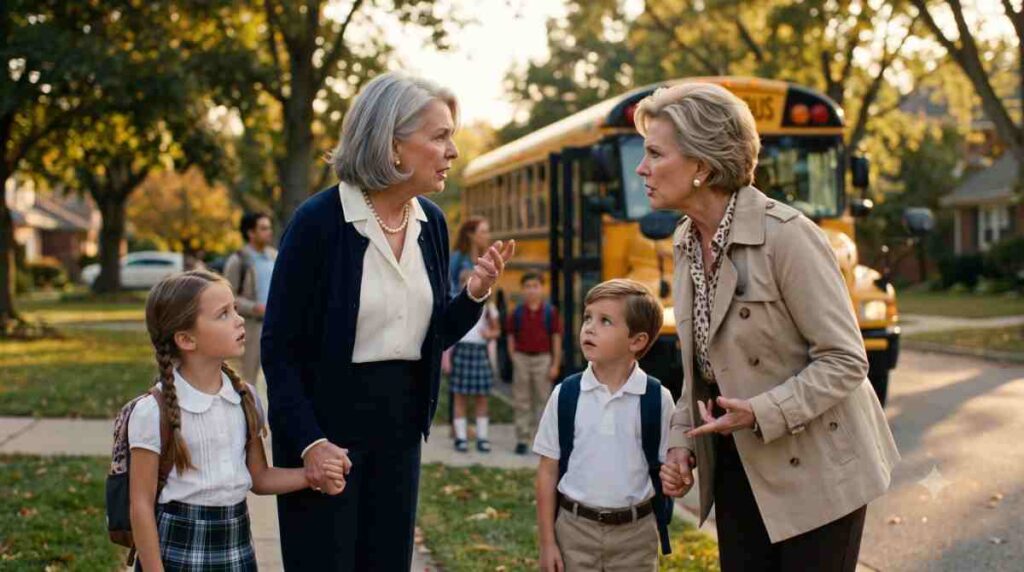
An Answer Without Words
Claire did not say anything at first. Words, for once, felt too small for what she was actually trying to say, too easily misunderstood, too easily taken back the way words sometimes could be.
So instead of answering him out loud, she closed the distance Ben had left between them and kissed him.
It was nothing like the kiss they had performed a dozen times for the lawyer, nothing like the quick, practiced goodnight ritual that had become second nature to both of them over the past year.
There was no one watching. No contract requiring it. No door about to open with a neighbor standing on the other side expecting to see a happily married couple.
There was only Claire, and only Ben, and an entire year finally arriving at the one true, uncomplicated thing underneath all of it.
Ben kissed her back the way a man kisses someone he has been quietly, carefully falling for without ever letting himself say so — with none of his usual caution, none of the careful control he brought to every other part of his life.
For once, Ben was not calculating anything at all.
Coming Back to Something Old
The kiss did not feel like the beginning of something new. That surprised Claire, in the small, still part of her mind that was capable of noticing anything at all in that moment.
It felt instead like arriving somewhere she had already been once before, a long time ago, without understanding what she was standing inside of.
It took her back, without warning, to a school bus stop on an ordinary afternoon that had never actually been ordinary at all.
To two grandmothers arguing over the correct spelling of a rock star’s name with the kind of ferocity usually reserved for matters of real consequence.
To Mrs. McCauley’s sharp, no-nonsense stride cutting across the schoolyard, and Timothy arriving out of breath, and the ridiculous, theatrical seriousness of his verdict — the rock star’s real name was Aidan… but now his name is Aiden — and the laugh that had cracked straight through the principal’s careful composure for the first and only time anyone could remember.
It took her back to the hug that had been ordered, the ritual reconciliation the two grandmothers had performed so many times it had become a kind of language between them.
To Ben stepping forward, seven years old and completely unaware of what he was starting, kissing her cheek without asking, without understanding, without any concept at all of what that small, careless gesture would eventually grow into.
She remembered the shiver. The strange, unexplainable shiver that had moved through her that day, the one she had spent years pretending she did not remember, the one she had never once managed to fully forget no matter how hard she tried.
She understood it differently now. She understood, finally, exactly what it had been trying to tell her, decades before she was ready to listen.
What the Grandmothers Had Seen
Ben pulled back slightly, just far enough to look at her properly, his hand still resting warm against the side of her face.
Something in his expression told Claire he was thinking about the exact same afternoon, following the exact same thread backward through all the years between now and then.
“Do you think they knew?” Claire asked quietly. “Back then. At the bus stop.”
Ben considered the question seriously, the way he considered everything that mattered to him. “I think,” he said slowly, “our grandmothers watched two kids hug on command and saw something neither of us would be able to see for another twenty years.”
Claire thought about the two women who had stood there that day, calm and unsurprised, watching their grandchildren with an expression that had made no sense to Claire at the time.
She understood now what that calm had actually been. Not indifference. Recognition.
“They spent their whole lives circling the exact same thing,” Claire said. “Loving each other and calling it an argument, because that felt safer than saying it plainly.”
“And then they built an entire will around making sure we didn’t make the same mistake,” Ben finished.
Claire almost laughed, the sound catching somewhere between amusement and disbelief. “They used a house as bait.”
“A really nice house,” Ben said, and this time Claire did laugh, the sound easy and unguarded, nothing performed about it at all.
No Contract, No Condition, Only Choice
They stood together in the quiet living room of the brownstone that had belonged to Claire’s grandmother, and to her grandmother’s dearest friend and fiercest rival before that, and now, somehow, impossibly, belonged to both of them in a way no legal document had ever actually required.
There was no contract left to define what they were to each other. No inheritance condition demanding they stay together for the sake of a house neither of them had to fight for anymore.
No financial arrangement, no year left to count down, no performance left to give for anyone watching from the doorway.
There was only the choice itself, plain and entirely their own, arrived at freely after a year that had started as a fake marriage neither of them wanted and become, without either of them fully noticing the exact moment it happened, the most real thing either of them had ever built.
Claire thought of her grandmother’s diary, of the stubborn, competitive love laid bare across a hundred handwritten pages, of a woman who had spent her whole life loving fiercely and calling it something else.
She thought of the letter the lawyer had read aloud only days earlier. The test was whether you would still choose him once you no longer had to.
She looked at Ben — at the boy who had kissed her cheek at a bus stop without understanding what he was starting, at the man who had fixed a faucet without being asked and stood beside her on the front steps without needing a reason and kissed her one second too long in front of a lawyer who noticed nothing at all — and she understood, finally and completely, exactly what her grandmother had actually been asking her.
Not whether she needed him.
Whether she would choose him anyway.
She did. She would. She already had.
Claire reached for Ben’s hand, and this time there was no audience to perform for, no reason left except the simplest one either of them had ever had.
For the first time in their lives, with nothing left forcing them together at all, Claire and Ben chose each other.
What started as a fake marriage ended as the realest thing either of them had ever chosen.
Bound by a Fake Marriage: How an Inheritance Rewrote Our Love Story
THE END
–
Closing Quote
“The best thing to hold onto in life is each other.”
— Audrey Hepburn
–
Link
Fake Marriage, Forced Proximity, Fragile Love Story
Fake Marriage: The Real Phenomenon Behind Fiction’s Most Addictive Trop
–
FAQs
Is “Bound by a Fake Marriage” a marriage of convenience story?
Yes. Claire and Ben enter a fake marriage to satisfy a strict condition in her grandmother’s will, agreeing to live together for one year in exchange for an inheritance and a way out of debt. What begins as a business arrangement slowly turns into something real.
How long is the story?
The story is told across 14 chapters, following Claire and Ben from the reading of the will through their full year of marriage to the final twist behind why they were really brought together.
Does the fake marriage turn into a real relationship?
Yes. Over the course of their year together, small unplanned moments — a fixed faucet, a cup of coffee, a goodnight kiss that lasts one second too long — slowly turn their fake marriage into genuine love, long before either of them is ready to admit it.
–

0 Comments