
Table of Contents
When Lies Become the Only Truth They Share
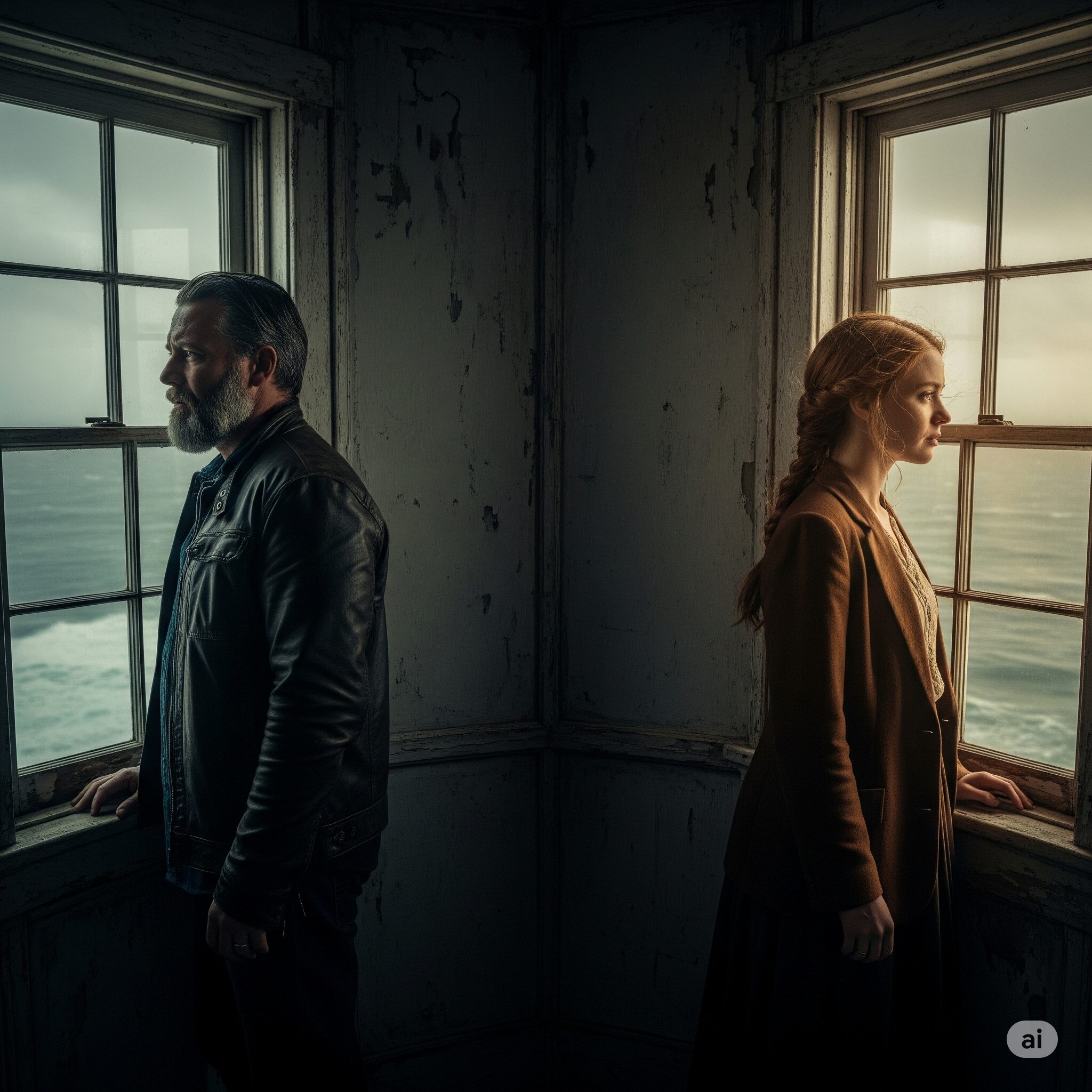
She arrived at the lighthouse during low tide, wearing a blue raincoat that seemed older than she was. Her name wasn’t real, and neither was her story. But it was the one they’d agreed on.
He opened the door with fingers that bore old burns, not from war but wiring. The man called “Jay” didn’t ask for reasons. He just nodded. The less spoken, the less broken.
https://www.dipseastories.com/blog/forced-proximity-trope/
This lighthouse had long stopped guiding ships. It now served as a disguised coastal security relay—one so forgotten by the world that no one noticed when two people with forged clearance arrived claiming to be married.
Two Strangers, One Cover Story
They shared no history—except the one they had written together. Their new names were etched on duty logs, marriage certificates, and evacuation rosters. Their fingerprints scrubbed from past lives.
She was hiding from a conviction never handed down. She had vanished before the verdict could find her.
He was escaping the shadows of wrongful punishment. The records had cleared him—but his memory hadn’t.
They shared lies over canned food and battery-lit dinners. Wrote fictional anniversaries in a water-damaged ledger. Her handwriting curled. His was sharp.
They rehearsed their story like actors in a play that could cost them everything if forgotten.
Built on Lies, Surrounded by Storms
The sea was violent here. It crashed against rocks like something trying to claw back time.
Each storm trapped them longer. No power. No radios. Just wind that rattled the shutters like impatient ghosts.
She took up baking with rationed flour, pretending birthdays mattered.
He rebuilt the broken beacon—not to guide ships, but because he needed something to fix.
“I used to want to be a teacher,” she said once, watching the lightning.
“I never wanted to be anything,” he replied.
They didn’t touch. But intimacy grew anyway—in how they refilled each other’s coffee. How they finished each other’s imaginary pasts.
Memory Is a Strange Kind of Love
One night, they invented their first kiss under interrogation practice.
“It was raining. We’d just fought,” she whispered.
He added, “I kissed you because you wouldn’t look at me.”
The story stuck. Not because it was real. But because it felt like it could’ve been.
Their memories started bleeding into their bones. Their invented road trips. Their fake dog. The way he supposedly held her when her father died.
Except—he didn’t know her father’s name.
And yet, grief rose in her chest anyway.
The Lie That Became Safer Than the Truth
By the third month, she had memorized how he folded shirts. He had learned the rhythm of her breathing at night.
She began writing entries in her journal addressed to “us,” not “me.”
A real inspection came. A real officer. Real questions.
“How long married?”
“Two years,” they said.
Favorite movie?
He answered: Wings of Desire.
She answered: The Lighthouse.
They laughed like real couples do when they forget things together. The officer smiled.
“You look like people who’ve loved each other too long.”
Afterward, they didn’t speak for hours. But they didn’t sleep apart either.
The Past Tries to Return
An old radio signal caught a stray transmission—someone mentioning her real last name. A search warrant in another county.
Panic wasn’t thunder. It was silence.
“We can still run,” she said.
“We are running,” he replied. “This place is just… longer legs.”
She smiled. “Then let’s limp together.”
But fear changed things. She started painting windows shut. He stopped talking at meals. They made love once, out of cold, out of fragility—not passion.
Afterward, she cried while pretending to sleep. He left toast burning until the fire alarm snapped them out of it.
The Fiction Becomes the Only Real Thing
One morning, he found her stitching their initials into a towel.
“It’s what people do,” she said, without meeting his eyes.
“But we’re not people,” he said gently. “We’re echoes.”
“Echoes of what?” she whispered.
He didn’t know. Just that losing her felt more dangerous now than losing freedom.
They danced once—no music, just creaking floors.
They had a ritual: whispering one new lie to each other daily.
“I bought you tulips once in Kansas.”
“You left your boots in my childhood home.”
“You cried the night I got my scars.”
But Real Love Makes Things Unlivable
Then the orders changed. Reassignment. Real couples coming to occupy the base.
They would be discovered.
“I’ll go,” he said.
“You’ll leave?”
“No. I’ll make it seem like you were abandoned. A soldier lost at sea. They won’t question you.”
“You’d die for this?”
“I already did. When I chose to love someone I can’t ever call mine.”
She hit him. Then hugged him. Then begged him to lie again—just one more time.
“I never loved you,” he said with eyes wide open.
“Good,” she said. “Then we’re even.”
The Ending Only They Will Remember
She stayed.
He left.
Weeks passed. No letters. No names.
Then, a package arrived under her door. Inside: the stitched towel, her raincoat—freshly washed—and a note:
You kissed me because I wouldn’t look at you.
But now, I see you everywhere.
I lie to stay alive. But you… you made me live inside the lie.
And that, Lina, was the only truth I needed.
She burned the note.
Then wrote it down again—word for word—in her own journal.
Why Readers Love Fake Marriage Romance in a Lighthouse
What draws us to fake marriage romance in a lighthouse? Perhaps it’s the metaphor—the structure built for light, now used to hide. A place of warnings becoming a shelter.
It’s the slow burn of two strangers forced into false closeness that slowly becomes something real.
The forced proximity, the isolation, the lie that requires intimacy—it creates emotional friction. Every gesture matters. Every silence deepens the tension. And when trust is built on fiction, love becomes a rebellion.
Readers crave that danger: love where it shouldn’t exist, blooming in places abandoned by others.
END

0 Comments