

By: Ranjan Sarkhel
–
Table of Contents
–
Quote
“Love means that two people protect and touch and greet each other’s inner world.” — Rainer Maria Rilke
–
Introduction
Done well, this story type isn’t just asking “Will they end up together?” It’s asking something bigger: “Can two people who grew up together let each other change and grow, and still choose to love one another without losing who they are?”
–
Key Points:
- Core premise — Childhood best friends to lovers slow burn romance isn’t about meeting someone new; it’s about rediscovering someone you thought you already knew.
- Central question — The story asks whether two people who grew up together can change, grow, and still choose love without losing themselves.
- Five-beat structure:
- Childhood Foundation (shared history & safety)
- The Crucible (growing apart / wearing adult “masks”)
- The Catalyst (reconnection & re-learning each other)
- The Internal Shift (dismantling the savior complex)
- The Sovereign Union (two whole people choosing love)
- Masks & facades — Adulthood forces characters into personas shaped by family, career, and society; reconnecting with a childhood friend cracks that facade.
- The “sanctuary” setting — A private, isolated space (rooftop, diner, porch) acts as an emotional safe zone where masks come off and real conversations happen.
- Pacing rule — Emotional vulnerability must come before physical intimacy; small gestures (a hesitant touch) carry more weight than big ones.
- Savior complex must be broken — Healthy romance replaces “rescuing” the partner with respecting their autonomy and asking what they actually need.
- Ticking clock device — External pressures (arranged marriage, career move, etc.) raise stakes, but characters should choose growth and space over impulsive escape.
- Earned resolution — The ending works when both characters have become fully themselves; love gives them courage, not a shortcut around their problems.
- Supporting psychological tropes:
- The “secret life” (hidden dreams/projects) as a marker of trust
- Micro-tension (small hesitations, contrasts between public/private behavior) over grand gestures
- Case study — The Summer We Stopped Pretending (Ansh & Zara) illustrates all these beats in a 10-chapter story.
- Writer’s takeaways:
- 1. Ground history in specific, concrete details
- 2.Let silence and pacing build tension
- Make the romance a deliberate choice, not an escape from problems
–
The Main Idea: History vs. Identity
This kind of story is not a “meeting” one, but a story of re-discovering a person you thought you already knew.
The plot usually moves through the following points:
The Struggle – distance, or living under “adult” masks
The Spark – finding each other again and learning about the “new” person
The Change – no longer trying to save each other
The Choice – full-grown and free individuals choosing each other.
Usually, when you grow up, you put on a “mask” of your own choice to fit in at work, home, or in society in general – and it might be hard to remove it. The struggle begins when two childhood friends meet again, but their old relationship can no longer match their current realities.
–
The 5 Key Story Beats
1. Reconnecting and Seeing Through the Act
The story should have the kind of history between the characters without boring backstory dumps. Perhaps a glance that says more than words, an old inside joke that somehow seems wrong coming out of their mouths, a realization that their old friend’s smile doesn’t quite reach their eyes anymore.
The internal conflict could be that while the world sees “good kid”, “responsible one”, etc., their childhood friend can see right through it.
The goal for the writer is to have the tension between the two about what has changed subtly present itself in both of them.
2. The Safe Place
Every good slow burn needs a secluded location, where the two characters are alone (or feel like they’re alone) to interact in a way that they wouldn’t be able to in public. This could be an old rooftop, a porch during a blackout, or a diner at 2am.
When the characters are alone, the masks come down. They say things here that they wouldn’t say in polite company.
When it comes to pacing, it’s important that physical interactions come before emotional ones. A touch can be more impactful than a kiss, because it’s something the characters will both remember, and understand the significance of.
3. Letting Go of the “Savior” Habit
A common mistake in romance writing is having one character “rescue” the other. In a really well-written story, this habit should be broken, not rewarded.
| The Unhealthy Pattern | The Better Pattern |
| Character A fixes Character B’s problems without asking | Character A asks, “What do you actually need from me?” |
| Love means managing your partner’s problems | Love means giving your partner space to handle things themselves |
| The relationship feels uneven | The relationship is based on equal respect |
When one person tries to control or “fix” the other’s life, the other one needs to push back. The real turning point is when pity turns into real respect for what the other person has done on their own.
4. The Deadline and Facing Things Alone
One thing beyond their control makes a situation more difficult: an arranged marriage, a promising opportunity in another city, family pressure, and so on.
They decided not to flee from it together but to give each other an opportunity to study the situation and get out of it on their own terms.
5. Choosing Each Other, Fully
The ending is satisfying because both of the protagonist became who they were always supposed to be. Loving each other will not make them change their lives for the better, but it gives them strength to face their issues with their families and achieve their dreams and goals on their terms.
–
Psychological Ideas That Make These Stories Better
Small Moments Matter Most Big dramatic gestures can feel fake in a slow burn. What really works is small stuff:
- Hesitating before holding hands in the dark
- The difference between how they act in public vs. private
- Noticing that silence between them now feels exciting instead of just comfortable
–
Example Story: “The Summer We Stopped Pretending”


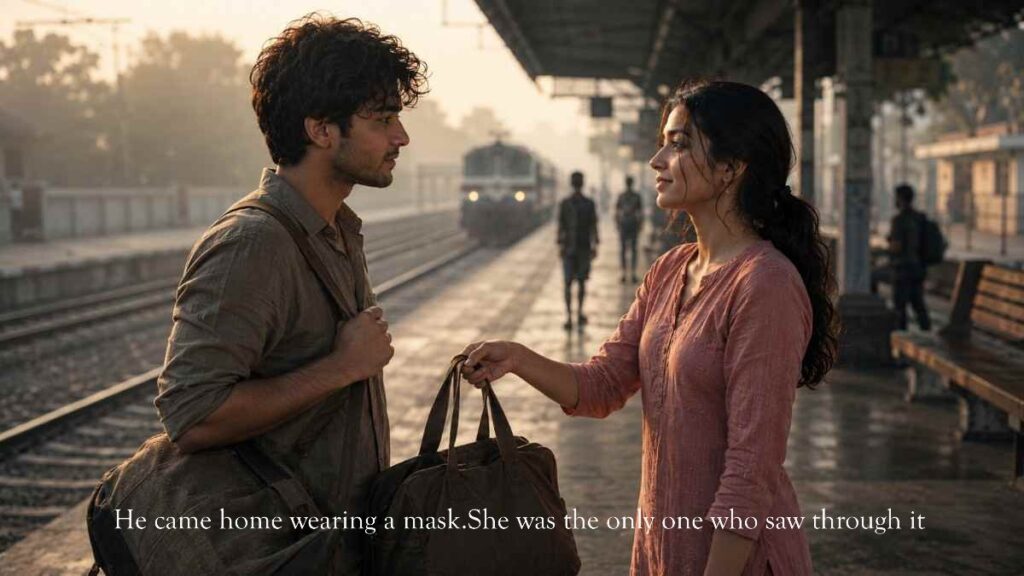
This is a 10-chapter story about two characters, Ansh and Zara, set during a hot small-town summer.
Ansh comes home from college, secretly struggling with living a double life. He finds out Zara has spent years dealing with family pressure and an arranged marriage — all while secretly building her own online career.
- Their safe place: Late-night talks on an old school rooftop
- Their conflict: Learning the difference between helping and pitying someone
- The turning point: They agree to spend three months growing individually instead of rushing into anything
👉 Read The Complete Story: The Summer We Stopped Pretending
–
Tips for Writers
- Use specific memories, not vague statements. Don’t just say they were close — show the exact promise they made as kids, or a habit only they share.
- Let silence do some of the work. Don’t rush the scenes. The tension is in what’s not said, in pauses, in almost-touches.
- Make love a choice, not a way to escape problems. Both characters should have their own goals and flaws. Real love is two complete people choosing to face life together — not one person needing to be saved by the other.
End
–
Link basket
Romantic Stories:Ultimate Guide
–
FAQ
What makes a childhood best friends to lovers slow burn story different from a regular slow burn romance?
The key difference is history. In a regular slow burn, two strangers slowly build attraction over time. In a childhood best friends to lovers story, the characters already share years of memories, trust, and familiarity — so the tension comes from watching that platonic bond slowly shift into something romantic, which makes the emotional stakes feel higher when either character risks the friendship for something more.
How long should the “slow burn” actually take before the characters get together?
There’s no fixed word count, but the pacing should feel earned rather than rushed. Most successful slow burns spend at least 60–70% of the story building emotional intimacy — vulnerable conversations, small moments of closeness, internal conflict — before any romantic confession or physical intimacy happens. Readers should feel the tension building gradually, not arriving suddenly.
–

0 Comments