

Read Time 6 Min
Table of Contents
Nature with Love: The First Forecast Is a Lily
The first monsoon doesn’t come with thunder.
It comes with quiet.
It comes when the neem trees stop shedding, and the wind forgets how to move.
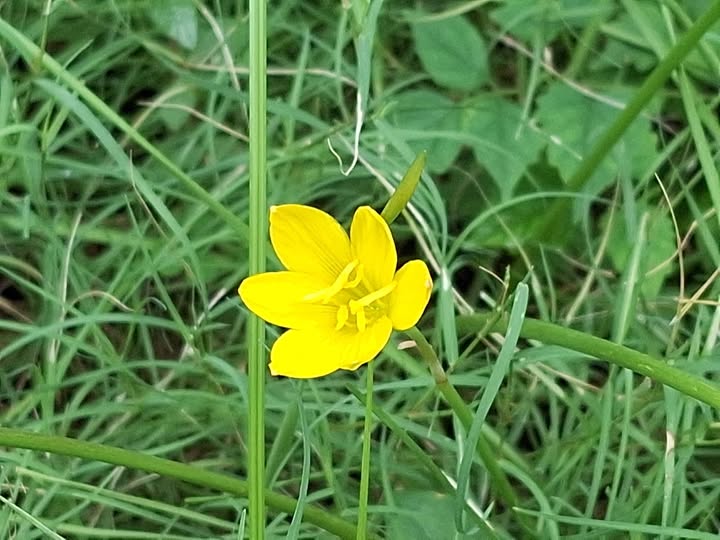
It comes when the lilies break open in the field behind the kitchen window—wild, uninvited, insistent.
My grandmother never owned a radio. He didn’t trust the weather reports. But he trusted the Earth.
“The Earth will tell you,” she used to say. “Just watch her. She doesn’t lie.”
And so I learned to watch.
The sky turns grey, yes—but it’s the soil that tells you the truth. It darkens not from moisture, but from memory. Like it already remembers the rain before it arrives.
The scent changes, too. It’s not perfume. It’s a kind of signal. Dust meeting silence. Clay meeting promise. Geosmin.
I smell it first near the banana tree. Then again near the tulsi. And that’s how I know: she’s on her way. The romantic monsoon—late, like a lover who needed to be missed before she returned.
Wild Lily Bloom: The Earth’s Way of Saying “Soon”
When I see the wild lilies bloom, I feel time slow down.
They arrive without ceremony. No one plants them. They just… show up.
Soft yellow blossoms in the untamed grass, refusing to explain themselves. They bloom not because they’re expected, but because they are ready.
They’re not loud. Not decorative. They are Earth’s signals. Her shy messengers. Her floral telegrams.
My grand mother used to say, “When the lilies bloom, don’t schedule anything. The rain is coming. Let it rearrange your plans.”
I didn’t believe her at first. But one year, we were planning a temple trip. The lilies bloomed the day before we left. She told us to wait.
We didn’t. We left anyway.
The rain caught us halfway. The roads washed out. The car stalled. And yet somehow, standing barefoot on the muddy roadside, soaked to the bone, I laughed.
Because the lilies had warned us. We just hadn’t listened.
“To wait for the rain without complaint is how the Earth teaches us to love with love—no demand, no promise, only return.”
Romantic Monsoon: The Kind That Waits Before It Falls
The romantic monsoon is not like other rains.
It is less about water, more about return. It doesn’t fall. It arrives.
Once, in a dusty village near Bastar, I stayed with a woman who didn’t own a clock. She rose with the mynas and rested when the frogs began their low song.
One evening she said, “Tomorrow, the sky will break open.”
There wasn’t a cloud in sight.
She pointed to a cow lying down far from the tree shade. “Even she knows.”
That night, the air turned still. Heavy. Like something unsaid was about to be whispered.
By morning, the rain began.
Not in sheets. But in story.
First the wind. Then a drizzle. Then a silence.
Then thunder, low and cracked, like the throat of someone remembering how to sing.
Nature’s Weather Forecast: Reading Without Satellites
In our time, we chase prediction.
We want percentages and radar maps. But the Earth doesn’t work in numbers. She speaks in signs.
A parrot screaming at dusk. A crow refusing to land. Mangoes falling before ripening. Cracks on the anthill sealing shut. A child too sleepy by noon.
I once visited a tribal elder in Abujhmar in Narayanpur Baster who said, “The Earth doesn’t tell you what will happen. She shows you what’s already begun.”
He pointed to a cracked sal leaf folded backward. “That’s your forecast.”
It rained that night.
The next day, the city near by was caught unprepared—umbrellas forgotten, munadi (human way of propagating information) blaring, drains overflowing.
They had numbers.
We had listening.
And we were dry.
“The lilies bloom not because we watch, but because the Earth remembers. That is love with love—silent, sure, and rooted in knowing.”
Earth Signals: The Conversations Before the Rain
The Earth signals. Not just to the sky, but to us.
But you have to know how to hear her. Not with ears. With presence.
Like the sudden fluttering of pigeons taking flight all at once. Or the way a puppy refuses food and hides under the cot. Or how your own mood shifts—subtle grief, inexplicable longing.
That’s not your sadness. That’s the Earth’s anticipation, pulsing through you.
There is a word in Odia: Anuraga. It means affection with devotion—but without expectation.
That’s how the monsoon arrives.
Not to impress.
But to complete a cycle.
Bhumi Devi Symbolism: What We Forgot in Our Hurry
In the Sanatani worldview, Bhumi Devi is not metaphor. She is not myth.
She is Mother. Soil. Skin. Time. Rhythm.
I once watched a farmer touch the ground before taking his first step into the field. He didn’t speak. He just bent, touched his forehead to the earth, and stood.
No camera. No Instagram. Just offering.
It reminded me of something I had forgotten: Love with Nature doesn’t need witness.
In cities, we love with conditions. In nature, we love with surrender.
She takes our filth, our wires, our plastics, and still sends us lilies.
What greater proof of love could there be?
Monsoon in India: A Romance Beyond Romance
To the outside world, the monsoon in India is a hazard or a spectacle.
To us, it’s a romance with time.
It touches everything. Clothes don’t dry. Doors swell shut. The power flickers. But somehow, people become more patient.
You wait for buses longer. You share your umbrella. You stop hurrying.
I remember once being stuck under a bus stand roof with a woman I didn’t know. She had two bags. I had none. The rain came so hard we couldn’t see the road.
We didn’t speak for ten minutes. Then she offered me a boiled peanut.
I said thank you.
That’s it. That was the love story.
“When we stop predicting and start listening, we meet nature with love with love—not for what she gives, but for how she speaks.”
Not Every Love Has Skin and Eyes
There is a frog that sings only once a year. It buries itself underground until the romantic monsoon returns.
I’ve always admired its patience.
No hurry. No need to be heard daily. It waits. For the right rhythm.
Like the banyan tree behind the temple that hasn’t borne fruit in five years—but still stretches toward the sky.
Like the koel who doesn’t stay through winter but always finds its way back in June.
Like the seed that dies into the soil before it even knows if it will bloom.
This is Nature with Love.
No promises. Just showing up.
The Garden’s Reminder: Nothing Is Too Small for Devotion
My garden has tulsi, a aakashneem, variety of stubborn hibiscus, and wild weeds that return no matter how often I clear them.
But everything in that space is alive with memory.
When the lilies bloom, I don’t just see flowers. I see my mother rinsing lentils on the verandah. I see my brother chasing dragonflies with a slipper. I see my father pausing after his bath to water the aloe with a leftover mug.
No one thought of it as devotion.
But it was.
Nature with love doesn’t need incense or mantra. It needs noticing. It needs gentleness.
The Soil Remembers Better Than We Do
I once buried a rusted key in the backyard. No reason. I was a child. I just wanted to see what would happen.
Years later, I dug in the same spot. I didn’t find the key. I found a lily.
I don’t know how it got there. No bulb. No planting.
But it bloomed.
Maybe the Earth remembered the gesture, not the object.
Maybe Bhumi Devi doesn’t store things. She stores meaning.
The way you store music in silence.
“The bloom of a wild lily is nature with love with love—unasked, unmeasured, yet arriving exactly when the heart needs remembering.”
Final Forecast: Listen More. Predict Less.
The lilies bloomed again yesterday. Hidden near the drain. No one saw them but me.
They were smaller this year. A little bent.
Still, they stood.
I didn’t take a photo. I didn’t tell anyone.
I just stood with them, in silence.
A gust of wind passed. The scent returned.
The romantic monsoon was near.
And that was enough.
Because the Earth had spoken.
And I had finally learned how to listen.
Read Eternal Secrets of Love with Nature Beneath Guilin’s Mist

0 Comments