


Read Time 30 Min’s Focus: Eternal love
© 2025 [Your Name or Website]. All rights reserved.
This article is an original work created and published by [https://romancetropes.com/ ] on [29July2025], and is protected under applicable copyright laws.
Unauthorized copying, reproduction, or republication of this content in any form is strictly prohibited.
This work may not be reproduced, distributed, or mirrored on any other website, platform, or medium without express written permission.
If you wish to reference or share this content, please link directly to this page or contact us for proper usage rights.
Table of Contents
Eternal love –First Glance: A Leaf Between Pages
The campus library possessed the hush of an old cathedral. Dusty oak shelves stood like sentinels, rows of parchment and yellowing volumes pressed together as though whispering secrets.
The afternoon light, tender and golden, fell through stained-glass windows and painted quiet shapes upon the worn floorboards.
It was a place meant for thought, or for forgetting the world outside.
It was here, amidst the silence and scent of old paper, that Itai first beheld her.
She sat by the window, where the sun gathered most generously, her posture still and composed like an old portrait come alive.
A book of Hebrew verse lay open in her hands. The tips of her fingers turned the fragile pages with care, as though they were sacred.
She did not notice him at first. She was far away, it seemed—in the rhythm of stanzas, or the memory of something gentler than the present hour.
A wind, sudden and hushed, lifted the corner of a curtain. A dry leaf, small and curled like an autumn thought, fluttered inward and settled at her feet.
“Even the wind remembers—such is the quiet persistence of eternal love.”
Itai, walking past with neither aim nor expectation, paused. His eyes, drawn to the movement, found her instead.
Something in the curve of her neck or the way she did not flinch at the intrusion of the leaf—something small, imperceptible—held him in a delicate bind. He stepped forward.
Without saying a word, he stooped to gather the leaf. It was crisp and veined, light in the palm like a secret never spoken.
Gently, he placed it on the table beside her open book. He did not linger. He did not speak.
Only a single nod, almost imperceptible—a gesture meant for her, or perhaps for the moment itself—and he turned away.
She looked up, startled by the motion, by the closeness. Her gaze followed him for a breath or two.
Then, just as the light caught the curve of her cheek, her lips parted into the faintest smile.
Not an answer, not a beginning, but a recognition. It was the kind of smile one offers to the sky when no one is watching.
Neither of them turned back.
But the leaf remained.
And so did the silence—heavier now, somehow, yet filled with a warmth that had not been there before.
“Some loves begin with fireworks. Ours began with silence and a falling leaf. That’s how eternal love speaks—without noise, without reason.”
From that moment on, time had a different rhythm.
A Shelter for Eternal Love: The Second Meeting
The day of their second meeting was not drawn from the palette of sunshine, nor painted with the colors of calm skies.
Rather, it was as though the heavens themselves, overwrought with unspoken emotion, had loosened their hold and wept.
The rain did not fall in slender threads, but in heavy, uninterrupted sheets—as if some great sorrow was being emptied upon the earth with fervent urgency.
At Gate Number Two of the Tel Aviv university bus terminal, Sylvia stood as though sculpted into the morning—her slender figure leaning beneath the frail shelter, shoulders drawn inward, her books clasped to her chest like one might hold a diary too tender for other eyes.
Strands of her dark hair, half-loosed by the wind, curled like ink against her neck, damp from the mist that the shelter could not keep at bay.
The edges of her dress were soaked through, and though her feet shuffled to avoid the small rivulets crawling across the concrete, she made no complaint. One hand held an umbrella—not above her own head—but to the side, as if more interested in the motion than the protection.
The bus, it seemed, would not come. At least, not when expected. The downpour had likely hindered its arrival, and the wait pressed on like a silence one dares not interrupt.
And then—through the blurry curtain of rainfall, a figure appeared. First as a blur, then a shape, and finally a young man—Etai—arriving not from the usual gate of Einstein Street where the Egged buses were known to pass, but strangely, from the road leading toward this quieter stop where Dan buses paused, often half-empty and unhurried.
He was soaked from head to toe; his shirt clung to his frame, his hair plastered to his forehead, and in his hand, a notebook dripping water, its pages crumpled like fallen petals left in the rain.
It would have made more sense for him to take his usual route—to avoid this drenched detour—but there he was, shivering slightly, as if drawn by something beyond mere logic.
Perhaps it was not reason that brought him to Gate Two that day, but longing. A quiet yearning that had ripened in the silence since they last met.
Sylvia looked up as he approached. Her expression did not bloom into a full smile, but her eyes softened—a look like lamp-light caught in glass.
Without hesitation, and before even asking, she extended her umbrella toward him.
“You look colder than I do,” she said gently.
There was no performative concern in her tone. It was the kind of statement made not out of pity, but instinct—the kind of kindness that does not announce itself, but simply is.
She remained where she was, her own hair darkening further in the rain, the droplets striking her shoulder like quiet questions.
Yet she did not pull the umbrella back toward herself. It belonged to him now.
Etai took it—not thoughtlessly, not hastily—but with reverence. His hand brushed hers in the exchange, a mere second of touch that nevertheless lingered as though time had slowed to accommodate it.
“It was not a grand encounter… But in the muted world of rainfall, something ancient stirred—something that bore the quiet scent of eternal love. A love not loud, but steady. Not sudden, but certain.”
Normally, he would have declined. He was not the sort of young man who took gifts lightly.
But the umbrella—this fragile barrier against the storm—was no longer merely a shield against water. It had become a token, a bridge between hearts.
“I shall return it,” he said. His voice trembled slightly—not from the cold alone.
“Only if you want to,” she replied, and this time her smile did appear—quiet, lopsided, and utterly disarming. It was not a smile that demanded anything; it offered.
That was the moment—the precise moment—when warmth bloomed in the hollows of his chest.
Despite the wet fabric clinging to his skin and the gooseflesh raised along his arms, he felt oddly, undeniably warm.
What is an umbrella, if not a temporary roof beneath which two lives might pause?
It was not a grand encounter, not the sort recited in novels with trumpet-like declarations or ink-heavy vows.
But in the muted world of rainfall, something ancient stirred—something that bore the quiet scent of eternal love.
A love not loud, but steady. Not sudden, but certain.
Etai would later confess to himself, in the privacy of his journal, that his detour to Gate Two had not been an accident.
He had left his home with the intention of catching the bus from the familiar stop. He had even walked all the way to Einstein Street.
But something—some notion half-born in memory, half-stitched with hope—had urged his feet otherwise.
The kind of invisible push one feels not in the body, but somewhere deeper, like wind in the soul.
Was it mere coincidence that the detour led him to her again?
He did not believe in coincidences—not when it came to her.
As they stood together for those few minutes, shielded from the deluge by a single shared silence, the world beyond them continued in blur and motion.
Vehicles hissed across puddles. People ran, clutching briefcases over their heads. The trees shivered under the weight of water.
But none of it disturbed the stillness that had formed around them.
“This was eternal love. Not because it had yet declared itself. But because it did not need to.”
Sylvia did not speak again. She simply looked out into the rain, and then—after a minute—looked up at him once more, as if to memorize the way he appeared when half-lit by grey skies and honesty.
That day, they did not board the same bus.
He climbed onto the Dan line that passed through her neighborhood. It was, in fact, a longer and more complicated route to reach his own destination.
But that hardly mattered.
Sometimes, one takes the longer road on purpose.
Etai carried the umbrella home as though it were a letter unopened. He did not dry it completely, fearing to disturb the scent it carried—a blend of lavender, damp paper, and her.
He left it near his window, where the rain continued its quiet knocking.
In the days that followed, he did not hurry to return it.
It was not forgetfulness. It was longing, shaped into delay.
He wrote lines in his notebook, none of them addressed to her directly but all of them somehow about her.
Words like “lighthouse,” “ashen warmth,” and “momentary sky” found their way into the margins of old math notes.
He began noticing the rain more closely—its moods, its music, its mercies.
“A place where eternal love was not declared but allowed to happen.”
And in that time, something within him began to shift—not drastically, not loudly—but like a river’s slow turn.
The idea of love, once a distant and dramatic idea, began to take root as something quieter, something that moved like fog over hills.
This, he knew, was not infatuation. It was not the throb of newness or the heat of romantic novelty.
This was something else. It was rain soaking into earth, unnoticed until the green shoots appear days later.
This was eternal love. Not because it had yet declared itself. But because it did not need to.
It is said that love is often loudest in silence. That when two people choose stillness over performance, the heart is better heard.
On that second meeting, neither Sylvia nor Etai made promises. No numbers were exchanged. No plans set.
And yet—there was understanding. A shelter built of borrowed umbrellas and rainwater.
In years to come, he would remember that morning not for the chill, but for the warmth. Not for the delay in the bus, but the arrival of something far less predictable.
It was in that rain-soaked hour that a small corner of their world was carved out—just for the two of them.
A corner not of marble or iron, but of glances, pauses, and half-spoken generosity.
A place where eternal love was not declared but allowed to happen.
“Under one umbrella, two strangers became a memory. And memories like that never fade. That’s what eternal love feels like—gentle, unexpected, unforgettable.”
The Courtship: Laughter in Little Things (An Eternal Love Unfolds)
Their love did not thunder into being. There were no violins that swelled, nor stars that burst into brighter flame.
It arrived instead with the modesty of dawn—thin slivers of light slipping through shutters long closed, warming the corners of rooms thought forgotten.
It was a love that wore no banners, made no declarations. It stitched itself quietly between their lives like threads of golden breath in a tapestry still in the making.
They did not go on formal outings, for neither Etai nor Sylvia were inclined to theatrical displays.
Instead, their courtship was written in fragments—unofficial and unassuming, yet wholly sacred in its unfolding.
In the hush between morning lectures, they often found one another beside the library steps or near the mechanical hum of the old vending machine.
There, amidst the scent of old books and plastic coffee cups, laughter took root—not in the grand sense, but in the way autumn leaves chatter in a soft breeze.
Their love made its home in the everyday. Sylvia would sometimes hand him napkins bearing crookedly written riddles or lines of poetry that ended abruptly, daring him to imagine the rest.
In return, Etai left behind little drawings—tucked into the corners of her books or sketched onto the undersides of borrowed handouts.
A rocket ship launching from a desk corner. A sun wearing spectacles. A giraffe, always in sunglasses, standing beneath a tree whose leaves looked suspiciously like question marks.

It was their language—silent and sincere. And though neither admitted it aloud, they carried each offering home like one might carry letters from the frontlines of some quiet, tender war.
One rainy afternoon, when the sky had been the color of bruised lilac and the gutters gurgled with city sadness, she had given him a chocolate bar wrapped in gold foil.
His name was spelled in icing—misspelled on purpose. An ‘I’ where there should have been an ‘E’, a heart dotting the ‘i’.
A joke, perhaps. But when he saw it, he looked at her not with amusement, but with something softer—a kind of reverence that only comes when the world pauses for a breath and shows you that you are, impossibly, loved.
She said nothing, only watched him from beneath the hood of her coat, the rain tracing tiny rivers down her sleeves.
“True courtship,” he would later write in a notebook he never showed her,
“lives in the quiet.
In the space between a joke and a gaze. Eternal love doesn’t announce itself—it unfolds like a smile you didn’t expect.”
They walked together often. Not with hands clasped or footsteps hurried, but in tandem—like streams winding side by side, murmuring the same song in different keys.
On one such walk through the northern end of campus, where ivy climbed up old stone walls and the air always smelled faintly of lavender from the nearby garden beds, their hands brushed on the stair rail. Neither moved.
Neither pulled away. The silence grew dense between them, like fog—but not a suffocating kind.
A fog that wrapped them, suspended them, slowed the world until it felt manageable, meaningful.
“True courtship lives in the quiet. In the space between a joke and a gaze. Eternal love doesn’t announce itself—it unfolds like a smile you didn’t expect.”
They rarely spoke of love. Not because it wasn’t there, but because it was too present, too sacred for clumsy language.
Their affection lived in borrowed pencils, in the way she always gave him the second cookie from her lunchbox, in how he would tilt his notebook to her during lectures so she could copy missed lines without asking.
Once, they found themselves seated beside one another on the stone bench near the botanical garden.
The sun was lowering, gold streaking the air like syrup. The trees shivered softly in the wind. They said nothing.
Yet the quiet wrapped them so thoroughly that it felt as though the rest of the world had gently receded, leaving only them—two hearts in gentle accord.
In that silence, she tilted her head slightly toward him, her hair catching the evening light.
He did not speak, but watched the curve of her cheek and the way her thumb traced invisible circles against the bench’s edge.
It was a moment so still, so intact, that he feared any motion might shatter it. And so, they remained there—side by side, not speaking, not needing to.
“Their eternal love made its home in the everyday. It was their language—silent and sincere.”
There was a trail behind the library—half-forgotten, neglected by most students.
A narrow footpath lined with damp moss, winding like a river through unmown grass and bent stalks of goldenrod.
At its end stood a solitary tree that bloomed out of season. A marvel of nature, or perhaps just a stubborn old tree refusing to yield to calendars.
They found it by accident—or so they thought.
It became their place. Beneath its wayward blossoms, they would sit—backs resting against the textured bark, knees drawn up, heads tilted toward an ever-curious sky.
Conversations meandered there. Sometimes they spoke of books, of wild dreams, of stars that refused to blink. Sometimes they didn’t speak at all, content in the presence of one another.
And once, just once, he said something different.
“If something ever happens to me,” Etai murmured, his voice soft, like the hush that comes after lightning but before thunder,
“you’ll still find me in the stars.”
Sylvia did not blink. Her hand, resting on the grass beside her, moved slowly toward his.
Their fingers found each other—not clinging, not pressing, but resting, as though they had always belonged in that quiet space between root and sky.
They did not speak much after that. But something shifted in the air between them.
A tension not of fear, but of knowing. Like a seed cracking open deep underground—soundless, unseen, but irreversible.
She never asked what he meant. He never explained.
But from that day onward, every time they passed beneath that tree, the wind seemed to sigh a little deeper.
And when the petals began to fall—as they always did, silently and in their own time—they would watch them land on their joined hands like fragile omens.
“Beneath that tree,” Sylvia would later write in the margins of a book he once gifted her,
“we made no vows. Spoke no promises. And yet everything was said. Eternal love lives in what we don’t say.”
At dusk, the dreams began to form. Not loudly, but like fog curling under doorways.
They would sit near the art building on old stone steps, warmed by coffee gone cold.
There, amid the drone of distant traffic and the occasional meow of a university cat, they began to speak of things to come.
Not of futures forged in ambition or wealth, but of simple, rooted dreams.
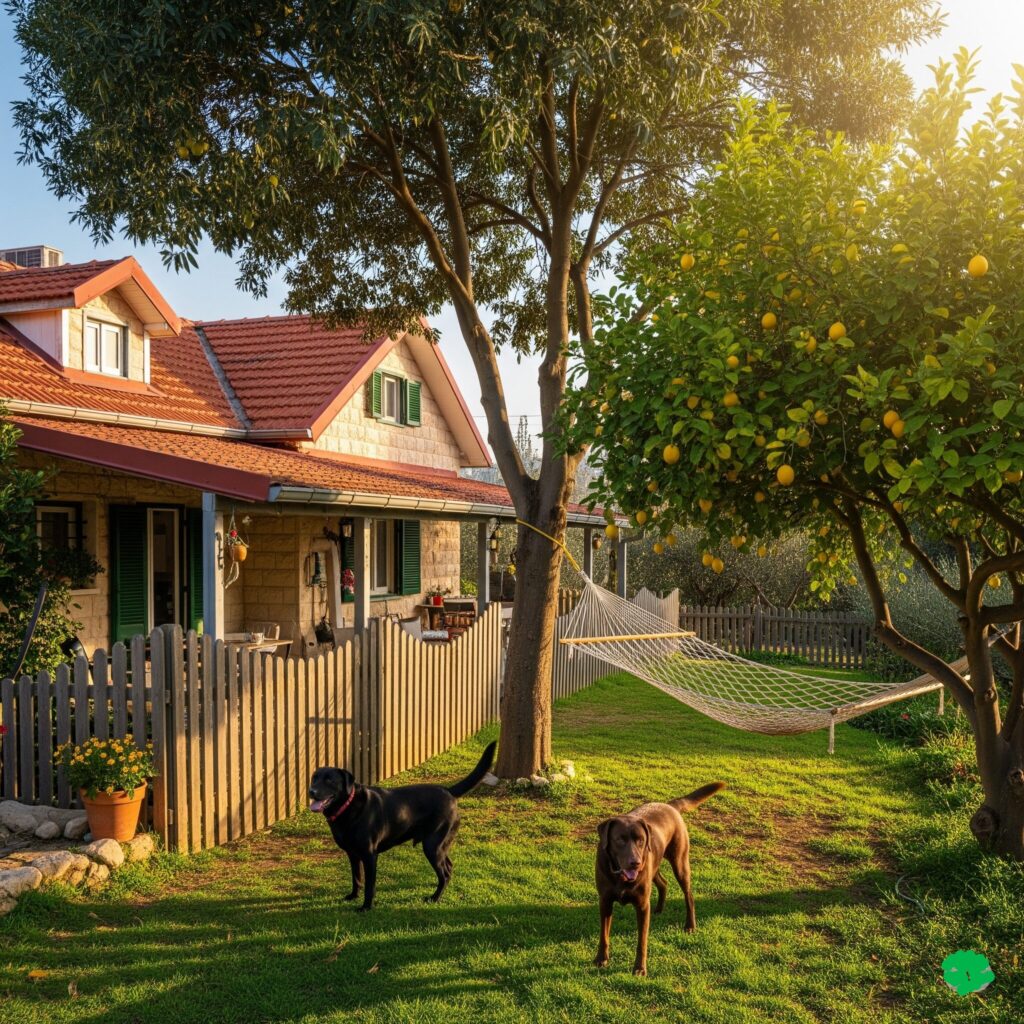
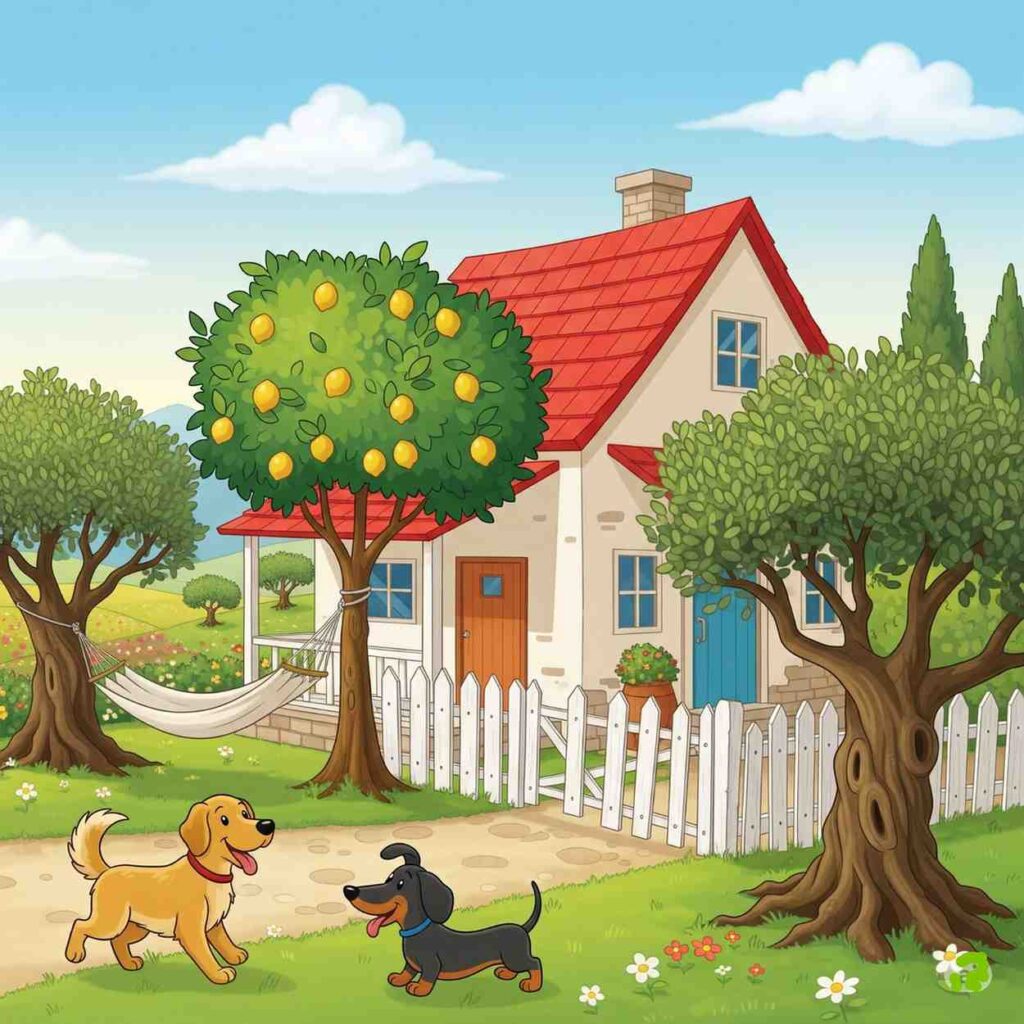
A house outside Haifa. Red roof. Crooked fence. Two dogs. A lemon tree. A hammock stretched between olive trees.
She would teach literature at a local school.
He would build birdhouses, paint shutters in odd colors, plant sunflowers for the bees.
Sometimes, he drew these futures on napkins—hasty sketches filled with joy. One house had a crooked chimney puffing little hearts instead of smoke.
Another had a bench out front where two stick figures always sat holding coffee cups. He never labelled them. He didn’t have to.
They even named the children they hadn’t had: Eden. Lior. Tamar. Names full of breath and warmth and soil.
“We didn’t dream of castles. We dreamed of garden fences, laughter in the kitchen, and lemon trees swaying in the wind. That’s how eternal love lives—in the ordinary made sacred.”
“The soil here listens,” he once told her, “It knows who loves it.”
And Sylvia would nod, placing her hand gently on his sketch as if to bless the dream into something real.
They did not speak of eternity, but eternity whispered in those dreams. In the way they hoped for ordinary joys. A creaking floor.
A dog barking in the morning. A lemon falling into an open palm.
“We didn’t dream of castles,” she would later write,
“We dreamed of garden fences, laughter in the kitchen, and lemon trees swaying in the wind. That’s how eternal love lives—in the ordinary made sacred.”
This was courtship as it ought to be—not constructed in fireworks and declarations, but in small gestures, private rituals, the soft blooming of mutual understanding.
It was a love that asked for no audience. That whispered itself into the folds of everyday life and took root there—quiet, enduring, eternal.
They did not know what would come.
But for a time, the world stood still enough for them to believe in sunlight through blinds, in dreams sketched on napkins, in chocolate bars misspelled on purpose.
In the space between breath and speech.
They believed in each other.
And sometimes, for eternal love, that is enough.
“True courtship lives in the quiet. In the space between a joke and a gaze. Eternal love doesn’t announce itself—it unfolds like a smile you didn’t expect.”
Unspoken Promises Beneath the Flowering Tree: A Tale of Eternal Love
There exists, in the shadow of the campus library Tel aviv university, a narrow and meandering trail—half-forgotten and nearly overgrown, as though nature herself had intended to reclaim what once belonged to her alone.
It was a path few walked, known not by maps or mention, but by memory and feeling.
It wound its way between soft hedges and wild grass, leading gently toward a single flowering tree that stood in quiet defiance of the seasons.
The tree bloomed out of turn. While others followed nature’s calendar—spring for blossoms, autumn for decay—this one flowered when it pleased.
Its pale pink petals fell even in the dry months, and its branches, though slender, bore blossoms like secrets too full to keep.
It was here, beneath the hush of this unseasonal tree, that Sylvia and Etai found a private world.
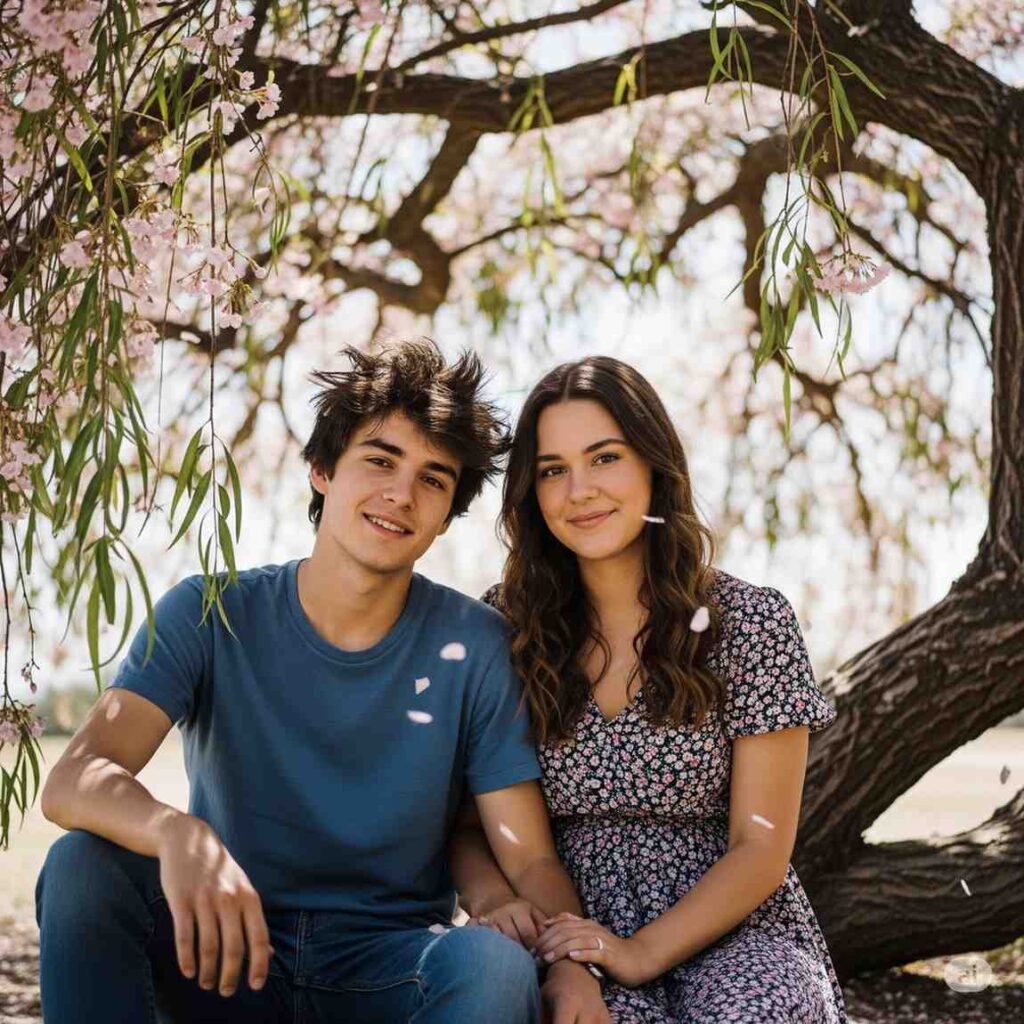
Their meetings beneath its shade were never arranged with words. No time was agreed upon, no invitation offered.
And yet, they returned again and again, drawn as surely as the tide to the shore. Sometimes they spoke; sometimes they sat in silence. Always, they remained.
The bark at their backs grew familiar—the way it curved like a shoulder, the slight roughness that pressed into their spines and reminded them they were still real.
Above them, the branches stretched like arms toward the light, and through their interlacing fingers, shafts of golden sunlight trickled down like a benediction.
On one such afternoon—one that smelled faintly of dust and petal, and where the warmth was neither stifling nor absent—they sat side by side, their shoulders nearly touching, and spoke of nothing of consequence.
There was no need for important topics. Sometimes, it is only in the presence of another that the soul finds its fullest expression, even in silence.
Etai, who often gazed at the world as if it held a language only he could decipher, stared upward through the bloom-laced branches.
The light caught the edges of his features, outlining them in a glow so gentle it seemed not of the sun but of something more eternal.
And then he said, softly—as though the words had not come from within him, but drifted in from some far-off place:
“If something ever happens to me, you’ll still find me in the stars.”
Sylvia did not startle. Her breath did not quicken, nor did her hand retreat.
Instead, she turned toward him—slowly, like a petal responding to light—and reached for his hand. She took it without ceremony, without remark, and simply held it.
There was nothing romantic in the gesture, and yet it was more intimate than a kiss. It was an answer.
He did not look at her. His eyes remained fixed on the sky, perhaps because the sky was vast enough to hold what his heart could not voice.
Perhaps because to meet her gaze at that moment would have been too much to bear.
And so they sat—hand in hand, beneath a tree that defied time—with a single sentence suspended between them like dust in light.
To those who live by timetables and tidy truths, such a moment might seem small, inconsequential even.
But love, especially that which we call eternal love, does not always declare itself in thunderclaps or grand pronouncements.
Sometimes it arrives softly—on the breath between words, or in a glance that lingers too long.
For Sylvia, something shifted within. She could not say precisely what, nor point to its beginning.
But it felt like a seed cracking open beneath the soil—quiet, invisible, yet certain.
The sort of change one does not notice until the first green shoot rises one morning where there had been only earth the night before.
It was in that silence following Etai’s words that she understood.
Whatever future lay before them—whether brief or endless—she belonged to him now. Not in the manner of ownership, but of kinship. Of soul.
And he, she knew, was already part of her.
The days that followed carried the weight of that moment like perfume—trailing after them, filling spaces unseen.
They still met beneath the flowering tree, though less frequently, as academic burdens pressed upon their schedules.
But the tree stood waiting, always, like an old friend with room enough for two.
Sometimes Sylvia would arrive before him and sit with her eyes closed, listening to the wind combing through the branches.
She would picture the stars not as distant burning stones, but as letters scattered across a page—waiting to be rad. Waiting for a name.
At other times, Etai would find himself walking toward the tree even when he had no reason to go.
He would bring with him nothing—no book, no intention—only a strange longing that seemed tied to the scent of the petals or the feel of bark against his back.
“Eternal love is not about possession. It is about appreciation.” — Osho
They rarely revisited the words spoken that afternoon. To do so, it seemed, would be to disturb them—like touching a pond’s surface and watching the reflection vanish. But the promise lingered in everything they did.
He held her gaze a little longer. She listened to his voice a little deeper. They walked side by side more slowly, as if the act of being near each other had become sacred.
And always, there was the sense that they stood on the edge of something vast and unnamed.
Itai had always carried with him a quiet melancholy, as if some part of him already lived elsewhere.
Not in a sorrowful way, but in the manner of those who understand that beauty and impermanence often walk hand in hand.
Sylvia never asked where his thoughts went during his long silences. She only waited. And when he returned from wherever he had gone, she was there—steadfast, still.
That was the rhythm of their love. No grand declarations. No public moments to be preserved in photograph or post.
Only the quiet hum of presence, the knowledge that no matter what the world demanded, they had this: a tree, a moment, a vow wrapped in metaphor.
In years to come, when memory had softened the sharper edges of time, Sylvia would often return—if not in body, then in thought—to that flowering tree.
Even if the blossoms had faded, even if the path had vanished entirely beneath grass and forgetfulness, she would see it clearly.
The way the light fell in fragments. The way Etai’s voice had sounded—soft, like the rustle of leaves.
The way their hands had fit together, not perfectly, but like pages closing in a well-read book.
She would remember the unspoken promise of that day.
And when the stars grew bright in the sky, she would look upward—not in grief, but in knowing. For she had found him there, just as he had said.
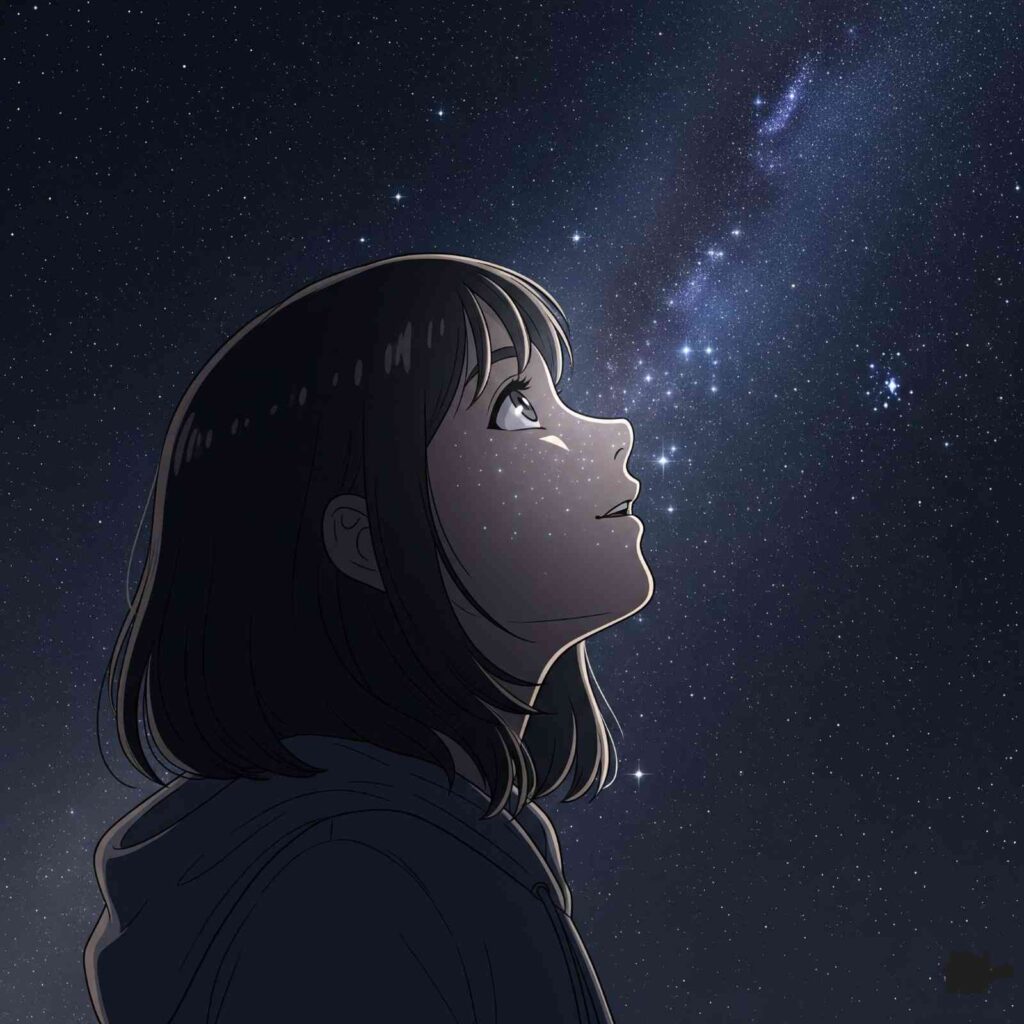
This was eternal love.
Not loud. Not uninterrupted. But faithful. Unbending in quiet. Eternal not because it defied death, but because it refused to be measured by time.
Love that bloomed out of season.
Love that waited without asking.
Love that said:
If I cannot walk with you, I will remain with you—in starlight, in silence, in the place where memory and sky become one.
“Beneath that tree, we made no vows, spoke no promises. And yet, everything was said. Eternal love lives in what we don’t say.”
Home, Hearth, and Dreams: A Sketch of Eternal Love
naturally integrated eternal love
In the hush between late afternoon and dusk, when light melts gently into the folds of olive trees and the air bears the perfume of distant citrus, two young souls dreamed—not of castles or conquests, but of modest things.
Their dreams were not written in bold fonts nor spoken with theatrical gestures. Rather, they were passed in whispers, exchanged like pressed flowers between the pages of quiet conversation.
Sylvia and Etai dreamed of a life beyond the present—of a home not far from Haifa, nestled where the hills breathe and the wind remembers.
A cottage, they imagined, with whitewashed walls and a red-tiled roof that sagged slightly with age but stood proud, like an elder who had weathered all seasons.
The fence would be crooked—not by design, but by the gentle stubbornness of the soil and time.
They would never straighten it. It would be theirs that way, perfectly imperfect.
These words were not meant to impress, but to reveal something sacred within him. He loved the land not just for its beauty, but because he saw in it something eternal.
The same earth that bore olive trees and lavender also bore the promise of ordinary days filled with meaning.
Sylvia would listen, her hand resting on his, and feel the truth of his belief seep into her bones.
He dreamed of building birdhouses—small wooden homes for those who needed rest mid-flight.
In the corners of their imagined garden, he would place them—under eaves, near flower beds, hanging from crooked branches.
Not out of hobby, but purpose. “Everyone needs a place to land,” he once said. “Even the smallest things.”
Sylvia dreamed of teaching literature at the village school, of walking home with chalk on her fingers and sun in her hair.
She would read aloud to young minds about forests, revolutions, and poems written in secret. She wanted to give them stories with roots and wings.
Together, they named children who did not yet exist—Eden, whose laughter would ring like bells; Lior, who would plant wildflowers without being asked; and Tamar, who would climb trees and speak to birds in silence.
They spoke of these things not as fantasies, but as truths awaiting time. There was no irony in their tone, no fear of dreaming too sweetly.
For them, the future was not a grand palace—it was a hearth, a patch of garden, a pair of boots left by the door.
One autumn evening, as twilight brushed the hills in smoky lavender, Sylvia found Etai sitting cross-legged on the dry grass, his sketchbook open beside him.
He was drawing again—the same house, the same crooked fence. But this time, there were new details: little shoes on the porch, a cat perched on the sill, and behind the house, a field of bees dancing over golden blossoms.
She sat beside him without speaking, their arms brushing. For a moment, she did not look at the drawing, but at him—his brow slightly furrowed in focus, his lips parted just so.
There was something in his face that did not match the youth of it. It was a stillness, a kind of knowing that came not from books but from waiting, watching, and listening.
“In the quiet understanding of shared moments, a sketch of a life unfolding reveals the art of eternal love.”
“Will it truly be ours one day?” she asked.
He turned to her—not startled, but slow, like someone rising from a dream—and said simply, “It already is. In us.”
Her throat tightened. She did not speak. But in that moment, she believed him—not in the way children believe fairy tales, but in the way seeds believe in the sun. With quiet faith.
Their love was not marked by dramatic gestures or sweeping romance. They did not dance in the rain or shout from rooftops.
But there was something more profound than passion in the way they inhabited each other’s imagination.
They carried one another in their futures—not as passengers, but as architects.
Etai never forgot to add a window in the east-facing wall—“for the morning light,” he said.
Sylvia always imagined a bookshelf just by the kitchen—“so we can read while bread rises.”
And always, always, there was the tree—an old olive, wide-armed and welcoming.
Beneath it, their hammock would sway. Sometimes with their children, sometimes just with wind.
And someday, when their hair had silvered and the fence grew more crooked still, they would sit beneath that tree again, perhaps in silence, and remember that they once dreamed it all into being.This was eternal love.
Not because it lived forever in the world, but because it lived quietly, resolutely, in them—unchanged by distance, undeterred by time.
It was the kind of love that bloomed in napkin sketches and rooted itself in whispered plans. A love that did not need to be seen to be known.
Even if the cottage was never built, even if the lemon tree remained only a fragrance in her dreams, the love that bore these visions was real.
The kind of love that leaves imprints on soil, sketches in notebooks, and hope in the silent corners of the heart.
Years later, long after the campus had changed, and long after she had stopped walking the familiar path past the old café, Sylvia would still open drawers and find folded napkins.
Faded lines drawn in blue ink—a chimney, a fence, a field of bees. Her fingers would linger on the sketches, and the air would smell, just faintly, of lemon and olive wood.
The world had moved on. But the house they built in thought remained. It lived in her—unchanged, undiminished.
That was the grace of eternal love: it did not demand proof, only remembrance. And she remembered everything.
“We didn’t dream of castles. We dreamed of garden fences, laughter in the kitchen, and lemon trees swaying in wind. That’s how eternal love lives—in the ordinary made sacred.”
“…where eternal love lives—in what’s never fully said ”
ETERNAL LOVE – THE CALL TO SERVE
It began not with the sound of drums or the flutter of flags. There were no uniforms hanging by the door, no summons creased on the kitchen table.
Instead, it came softly—like a shifting current in the air, like the way leaves lean subtly before the wind announces itself.
A silence. That was all. A silence that settled between two people who had, until then, shared everything.
Sylvia first noticed it in the mornings. The birds outside the apartment window had grown more restless, their songs sharper, more insistent—as though trying to speak into the hush that neither of them dared name.
Etai had grown quieter, not in mood but in motion. He lingered longer by the window, studied the news more often, always with the volume turned low.
She watched him with quiet curiosity. He was not absorbing headlines—he was timing something.
Measuring some unseen thread that grew tauter by the hour.
One evening, while brushing his teeth beneath the yellow light of the bathroom mirror, he paused, toothbrush mid-air, water running freely into the basin.
His reflection—damp, shadowed, unguarded—looked back at him not as a boy, but as something older.
“I think I’ll have to go soon,” he said.
His voice wasn’t raised. It did not call for reply.
From the other room, Sylvia heard. She placed her book down, her thumb still holding the page open, and said nothing.
Her silence was not born of indifference, but helplessness. What answer could suffice when the one you love begins to disappear in pieces?
What language contains the right words to say, “Do not leave me,” when duty already has its hand upon his shoulder?
Beneath the Tree
The next morning dawned bright—mockingly so. The sky, stripped of clouds, stretched blue and endless above them, unbroken and strange.
The wind, too, carried no chill, but stirred the leaves like breath over parchment.
They walked without direction until they reached the tree behind the old garden center. It was a stubborn thing—its roots gnarled, its branches sprawling.
It bloomed ahead of season, bearing small purple flowers that dared time itself.
Sylvia sat first. Her dress gathered in the grass. Etai followed, folding his long legs beside her with a quiet heave, as though the act of sitting were already a form of surrender.
They did not touch.
And yet their nearness spoke of a language older than words. The bark behind them, the humming bees above, the distant hum of traffic—all bore witness.
After some time, Etai spoke, not to her, but into the air.
“I’ll go if they call.”
She turned slightly, her eyes resting on the horizon. “Are you afraid?”
He answered not immediately, but eventually. “Yes. But not of dying.”
Her throat caught. “Then what of?”
He looked ahead still. The wind moved the grasses, but he remained steady.
“Of not being able to tell you again… how much I love you.”
A quiet bloomed between them then. Not empty, but full—aching with all that could not be said.
“Some things don’t need repeating. But eternal love always wants one more chance to say it—just in case.”
The Morning He Left
There was no fanfare. No parades. The morning he left was not draped in ceremony but cloaked in simplicity.
He wore jeans and that faded grey hoodie—the one with the frayed embroidery on the left sleeve.
A small, uneven star Sylvia had stitched during their final exam season, in a moment of playful boredom.
He had never let it go. It was his talisman, and now, his armor.
They spoke very little. What could be said that hadn’t already been whispered between the branches of the tree?
He drank his coffee slowly, as though the warmth in the mug could stretch time. She packed a small bag—a shirt, a pair of socks, a flask of tea—and tucked in a photograph.
It was of no particular occasion. Just the two of them on a wooden bench, eating sandwiches, sunlight playing through the leaves. Mundane, perfect.
At the door, he touched her wrist. It was neither firm nor fleeting. It was how he said goodbye.
Outside, at the gate, she stood on her toes and straightened his collar. It wasn’t crooked. But still. She fixed it.
He then reached into his pocket and handed her an envelope. Her name was written in soft pencil, the letters slightly smudged by the heat of his palm.
“Only if…” he began.
She clutched it tightly. No reply.
Then, something else. A necklace. Small. Silver. A Star of David, cold from the morning air, already warmed by the place it had rested over his heart.

“I love you,” he said.
“I know,” she replied.
“There are goodbyes that echo louder than bombs. And some goodbyes never finish speaking. That’s where eternal love lives—in what’s never fully said.”
The gate clicked behind him.
She did not turn back into the house immediately. She stood there, long after he vanished down the road, as though her eyes might stitch him back into the air if only she looked long enough.
Letters from the South
The first letter arrived on a Wednesday. Folded precisely. Ink smudged on the corner. The paper held the scent of dust and iron—of distance.
To my Sylvia, my everything, my reason…
He spoke of sand that filled his boots, of air so dry it seemed to whisper against his skin.
He described not the horrors, but the small mercies. A stray cat that visited their tents.
A boy from Haifa who played the harmonica after nightfall. The silence of the desert between two gunshots.
He did not speak of blood. Or fear. Or the cries at night that did not always come from pain, but from memory.
Instead, he wrote:
“I miss the way you say my name like it’s not just a name. Like it’s a promise.”
Sylvia never sent a reply. It was not because her love faltered, but because the words, when summoned, trembled. The ink bled. The sentences collapsed.
Instead, she began a journal. A quiet ledger of grief, of memory, of survival.
She wrote of the tree. The one behind the garden center. The one still blooming too early, as if waiting.
She wrote of skies that seemed lonelier now. Of her hands, always cold.
“Eternal love doesn’t fade with distance. It grows into everything—letters, dreams, silences, and the places where the other used to be.”
The Final Letter
That night, the desert was still.
Etai sat in the dim glow of a candle inside his tent. The wind brushed the canvas like hesitant fingers.
Outside, the world continued its uneasy turning. But inside, he paused.
He had not written for days. There had been no time. Or perhaps, too much fear.
Now, with trembling fingers and breath drawn slow, he opened his pad. The same one he had once filled with verse and daydreams.
Tonight, there would be no poetry. Only truth.
To her. To the girl who waited. To the only home I’ve ever known…
He did not recount his fears. He did not beg for forgiveness.
He simply thanked her.
For loving me. For letting me love you. For making this life—this brief, battered, beautiful life—feel like enough.
“When you know your story might end, you write to the one who made you believe it was worth beginning. That’s eternal love—knowing they’ll keep reading even after you’re gone.”
He signed it:
Yours forever, Itai
Final Thoughts
Their love was never shouted across battlefields, nor carved into marble. It was not loud.
It deepened—quietly—through acts of restraint, through the sharing of unremarkable mornings, through a tree that bloomed out of season, through letters that bled.
Etai left as a soldier. But he was never only that.
He was a man who built birdhouses and painted dream windows. A man who carried love in the curve of his handwriting and in the silence between sentences.
And Sylvia—she did not wait like a statue. She lived. She remembered.
In her, the tree grew on. The coffee stayed warm. The sketches remained in drawers.
Because this was not just the story of a man who went to war. It was the story of a woman who kept him alive—in memory, not mourning.
Eternal love is not a flame that burns endlessly. It is the smoke that lingers after, the warmth left behind in the coldest places, the name spoken silently when no one else can hear.
And even now, when the birds sing too loudly outside the window, and the wind changes just slightly, she looks up—
—and feels him listening.
ETERNAL LOVE – THE LETTER ARRIVES
It was not a morning that portended sorrow. The sky was gently blue, and the air bore the hush of spring’s earliest sigh.
Curtains stirred faintly at the windows, carrying the scent of lemon balm and early dew.
Sylvia sat in the parlour, her hands motionless upon the embroidered cloth upon the table, and time itself seemed suspended in fragile glass.
Then came the knock.
It was not loud. Not forceful. A mere tap, almost tentative—yet its echo cleaved her world in two.
Before and after. Past and present. Life and something unnamable that now loomed.
She rose without thought. There was no tremor in her limbs, no cry upon her lips.
The body, in moments of great rupture, obeys strange laws. She opened the door.
Three figures stood upon the stone step.
The first was a man of middle years, his uniform too precise, his face set as though carved from dry oak.
The second, younger, bore eyes that would not meet hers. And the third—old, silent, and infinitely gentle—extended the envelope.
She did not touch it at first. Her gaze rested upon the paper, folded and creased, stamped with the mark of the Ministry.
Government-printed. Cold. Official.
Something within her shifted.
She stepped back, the soles of her feet seeking memory rather than movement, and sat down upon the threshold. Slowly. As though her bones no longer believed in motion.
The envelope remained unopened.
Overhead, the wind chimes whispered once, sharp and sudden, as though gasping.
“Grief does not thunder. It enters like an old acquaintance and sits beside you in silence, whispering: he is not returning. Yet eternal love never rises to leave.”
She waited three days.
The envelope sat upon the kitchen table, a sentinel of unspoken sorrow.
For three nights she walked the floor, barefoot, as moonlight moved in silver patterns upon the tiles.
She drank no tea. Ate no bread. Only watched.
On the fourth morning, the sun fell golden through the lace-curtained window. The shadows were kind.
She opened it.
The handwriting was unmistakable. Slanted, meticulous, tender.
She brought it to her chest. The scent lingered—ashes and lemon balm. A smell of memory.
And as she unfolded it, the room became him.
” My Sylvia, my heart,
If you read this, then I am somewhere the sun cannot reach. But know that my last breath held your name, and my first thought in every morning here was you.”
He wrote not of war or blood, but of beginnings. Of laughter in their first spring.
Of the way she tucked her hair behind her ear. Of burnt toast, and ink stains on their fingers from shared poems.
Of the smell of her shampoo, which reminded him of orchards.
He told her not to cry.
He asked her to live.
He spoke of how, when the sky changed hue, she must remember it was him, painting the heavens with his thoughts of her.
“Love such as ours does not vanish. It lingers in trees, in winds, in the hush before evening. You will find me in the quiet, always. That is eternal love.”
She wept.
Not from loss, but from presence. From the unbearable reality that he was still here, in ink and paper, in the way the light touched the corner of the room.
In every breath she drew.
“Some do not depart when they die. They remain in the rustle of leaves, in the slant of sunlight. That is eternal love—it does not perish. It becomes.”
A week hence, she returned to the tree.
The one they had found on their walks beyond the college library. It stood alone still, flowering too early for the season, its wild roots stubbornly claiming the land.
The bark, sun-warmed, welcomed her like an old friend.
She sat where he once had rested.
The wind carried his scent—faint, but certain.
She placed the letter in the earth. Dug a little hollow with her fingers, just enough to cradle the envelope. Then covered it with soil.
Not as farewell.
But as planting.
“This is not goodbye. It is a seed. Love is never buried—it blooms again in memory.”
She leaned her back against the tree, her body curved like a question, and stared at the sky.
One star.
In daylight.
In the weeks that followed, the house remained as it had been.
His boots still stood by the door, muddied from their last walk together.
His books rested upon the nightstand. His scent lived in the old woolen hoodie by the fireplace.
But something in her shifted.
She began to move through the world differently.
She went to the café they had once whispered about, where the chairs were mismatched and the air smelled of cardamom.
She picked lemons from the neighbor’s tree.
She smiled at strangers.
She wrote him letters, once every week.
Folded them with care, kissed the seal, and burned them in the hearth. The smoke would curl up the chimney, out into the air, and rise.
“This is for you, she would whisper. For us. Because eternal love listens even when the voice is gone.”
Sometimes, she spoke aloud to him. Other times, it was her breath upon the windowpane, her hand upon the pillow beside her.
Stillness had become their language.
Spring returned.
A full year had passed, though grief does not count in days. The tree had flowered again—earlier than the others.
Its blossoms were paler this time, almost translucent.
She walked up the hill, her fingers curled around a bouquet of wildflowers gathered from the roadside.
Children’s laughter drifted up from below, and far away, a train sang its lonely tune.
She knelt.
Placed the flowers at the tree’s roots.
She read the letter again. The ink was faded, the paper soft, but it remained whole. As did she.
And at last, she smiled.
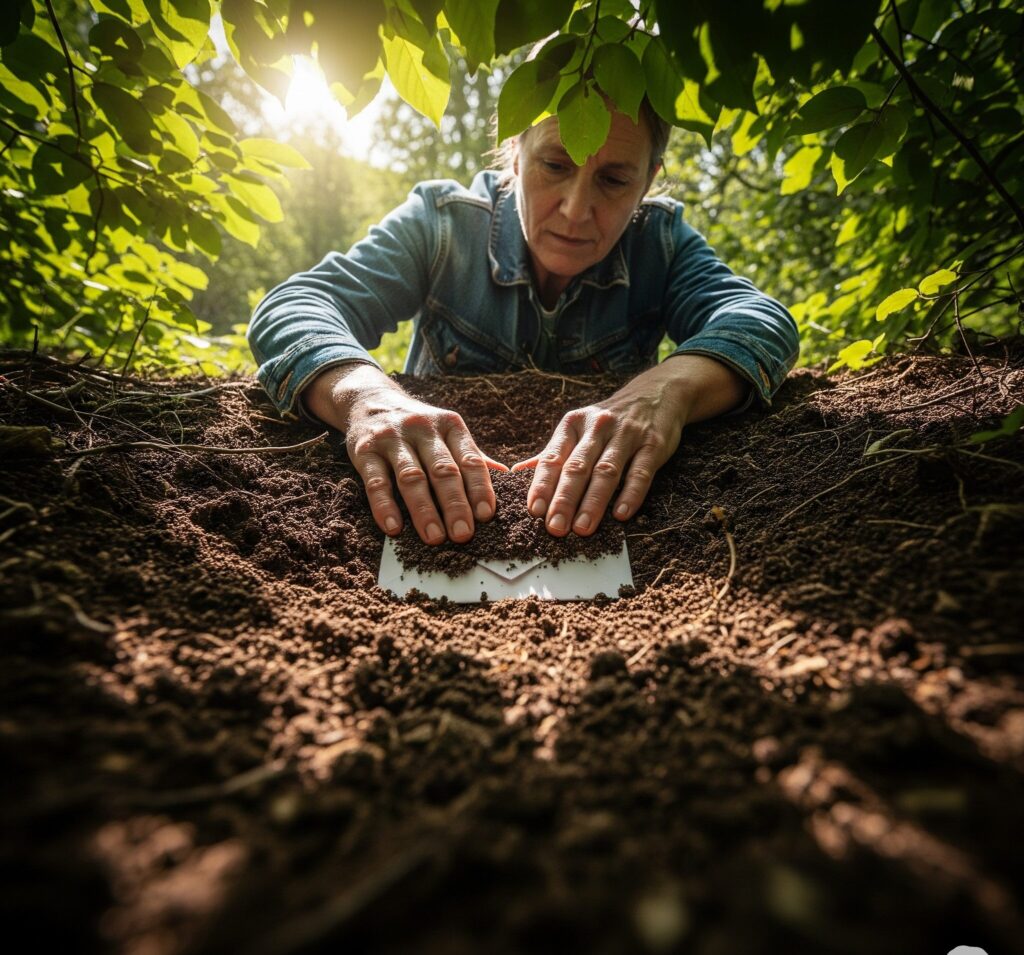
“Not because I am healed,” she whispered, “but because I am held. He loved me with a strength that endured war, and I loved him with a gentleness that outlasts sorrow. That is eternal love.”
She looked up.
The clouds moved softly, like someone’s fingers had brushed them aside.
A bird lifted into the air.
And in the rustle of leaves, he spoke again—not in language, but in presence.
She walked home as the evening gathered.
Upon her windowsill sat a pot. Within it, a small lemon sapling reached for the light.
It had taken root.
Like her.
Tentative.
But alive.
And growing.
“Love does not leave. It merely becomes invisible. Eternal love is the breath that still warms your cheek when no one else is in the room.”
END
Behind the Story: A Tribute to Eternal Love and the Spirit of Israel
The story of Etai and Sylvia—names changed to protect privacy—was born from a moment of quiet devastation that reached me through social media.
It is inspired by a real incident of July2025 in Khan Yunis, Gaza, during an operation led by the Israel Defense Forces (IDF), where Commander Etai gave his life in pursuit of justice, dignity, and rescue.
Etai was not just a soldier. He was a symbol of courage—a man who loved two things with unwavering devotion: his homeland, and the woman who awaited his return.
During a mission to rescue hostages from the clutches of barbaric Hamas militants, Etai was gravely injured while eliminating threats to innocent lives.
He later succumbed to his wounds.
But before he departed this world, he left behind something eternal: a letter. A final note to his beloved Sylvia.
In it, he promised her not a reunion in life, but companionship that transcends death—a vow shaped by eternal love. It was not written in desperation but with solemn calm, as though he knew that eternal love is not bound by time or distance.
When I read his words, I felt something shift within me. His farewell wasn’t just to her—it was to all of us who still believe in love that outlives life itself.
That moment compelled me to write—not to fictionalize, but to honor.
This story, although shaped with symbolic imagination, is a heartfelt tribute to the enduring soul of eternal love.
Through Sylvia’s sorrow, I sensed a quiet strength—the strength of a woman who must now carry both grief and memory.
Through Etai’s sacrifice, I saw the face of a nation that continues to fight not just for survival, but for truth, for history, and for home.
This tale is my small offering—a story that holds both kinds of love:
– The love for the sacred homeland, the land of braves—Israel.
– And the tender, personal eternal love between two souls torn apart by war but bound forever by promise.
To Israel and its people, I offer my unwavering respect and hope.
May you endure this war for existence with honor. May peace one day return to your soil.
And may the spirit of your fallen live on—in the letters they wrote, the hearts they touched, and the eternal love they leave behind.
And one final prayer—
Whenever you place a bouquet of flowers at the memorials of your brave martyrs, may you consider one flower from that bouquet as a tribute on behalf of the crores and crores of Indianswho stand morally and spiritually with Israel in this hour of darkness.
Across the oceans and borders, our hearts remember with you.
Am Yisrael Chai.
Let eternal love be your strength. Let remembrance be your light.
What is Eternal Love? Eternal Love Diccussed In Detail
TALE BASKET
The Silicon Love Algorithm: A Story of Eternal Love, Sacrifice, and Redemption in the Age of AI
When the Sea Whispers Eternal Love
Eternal Secrets of Love with Nature Beneath Guilin’s Mist
Eternal Love Part 1 – The Dawn of Conflicting Dreams
ETERNAL LOVE – PART 2: The Desert of Dreams
From Slow-Burn Tension To Eternal Love: A Heartfelt Tale
Enemies to Lovers: A Slow Burn Romance Without Labels
Eternal Love in the Age of Algorithm-A Modern Romance Story
Slow Burn Love Story: When Letters Taught Two Strangers How to Feel
Friends to Lovers Slow Burn Story: How Two Strangers Found Eternal Love Through Handwritten Letters
The Signature Beneath the Skin: An Eternal Love Story of Loss and Hidden Truth
AI Girlfriend Love Story: The Girl Who Stayed Alive Inside the Code
AI Love Story : OWEN | Imperfect Hearts
Romantic Stories: The Ultimate Guide to Love, Proposals, and Happily Ever After
Meaning of Situationship: Signs, Definition & Advice
Frequently Asked Questions (FAQs)
Q1. What is the main theme of Eternal Love – The Call to Serve?
A: The central theme is enduring love tested by time, distance, and duty. Set against a backdrop of military service, the story explores how love persists through separation, memory, and sacrifice
Q2. Why is this considered an “eternal love” story?
A: It’s called an eternal love story because it portrays a romance that transcends physical presence and even death. Through letters, memories, and silent tributes, the characters’ love lives on, unwavering and timeless.
Q3. Is Eternal Love – The Call to Serve based on a true story?
A: While fictional, the story draws emotional inspiration from the real experiences of soldiers and those they leave behind. It symbolizes countless true tales of love, loss, and loyalty during wartime
Q4. What romance tropes are featured in the story?
impact and support the theme of eternal devotion.
A: This story uses classic and emotionally rich romance tropes such as:
The soldier’s farewell
Long-distance love
Love beyond death
These tropes deepen the narrative’s emotional
Q5. Q: Who will be moved by Eternal Love – The Call to Serve?
A: This story will resonate with readers who feel deeply drawn to themes of quiet devotion, sacrifice, and remembrance. It’s written for those who connect with emotionally rich, symbolic storytelling and who value love that endures across time, distance, and duty.
Frequently Asked Questions (FAQs)
Q1. What is the main theme of Eternal Love – The Call to Serve?
A: The central theme is enduring love tested by time, distance, and duty. Set against a backdrop of military service, the story explores how love persists through separation, memory, and sacrifice.
Q2. Why is this considered an “eternal love” story?
A: It’s called an eternal love story because it portrays a romance that transcends physical presence and even death. Through letters, memories, and silent tributes, the characters’ love lives on, unwavering and timeless.
Q3. Is Eternal Love – The Call to Serve based on a true story?
A: While fictional, the story draws emotional inspiration from the real experiences of soldiers and those they leave behind. It symbolizes countless true tales of love, loss, and loyalty during wartime.
Q4. What romance tropes are featured in the story?
A: This story uses classic and emotionally rich romance tropes such as:
- The soldier’s farewell
- Long-distance love
- Love beyond death
These tropes deepen the narrative’s emotional impact and support the theme of eternal devotion.
Q5. Who will be moved by Eternal Love – The Call to Serve?
A: This story will resonate with readers who feel deeply drawn to themes of quiet devotion, sacrifice, and remembrance. It’s written for those who connect with emotionally rich, symbolic storytelling and who value love that endures across time, distance, and duty.
© 2025 [Your Name or Website]. All rights reserved.
This article is an original work created and published by [https://romancetropes.com/ ] on [29July2025], and is protected under applicable copyright laws.
Unauthorized copying, reproduction, or republication of this content in any form is strictly prohibited.
This work may not be reproduced, distributed, or mirrored on any other website, platform, or medium without express written permission.
If you wish to reference or share this content, please link directly to this page or contact us for proper usage rights

0 Comments