
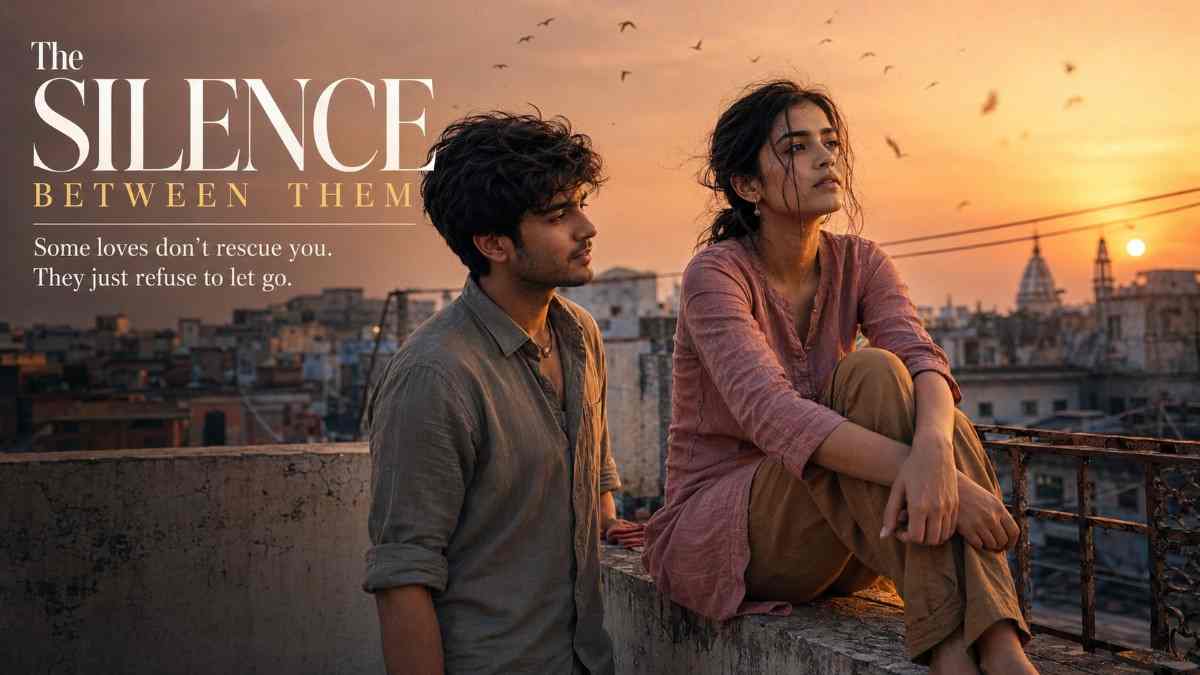
By: Ranjan Sarkhel
–
Table of Contents
–
Introduction
Some people leave home to find themselves. Ansh did the same — until one summer forced him to choose between the person everyone expects him to be, and the person he’s actually become.
This is a childhood best friends to lovers slow burn story about two people who grew up on the same street, in the same lanes, under the same summer sun — and somehow still have everything left to learn about each other.
Ansh comes home from college carrying a secret he’s too scared to say out loud. Zara, his fierce childhood best friend, has been carrying secrets of her own — quietly, for years, without a single person noticing.
What starts as an easy, familiar friendship slowly turns into something neither of them planned for. Old warmth becomes something electric.
Comfortable silence becomes the kind that makes your heart race. And somewhere between stolen rooftop conversations and unspoken feelings, both of them start to wonder if the people they used to be were ever really the whole story.
But love isn’t the only thing standing in their way. An arranged marriage is closing in on Zara. A big opportunity is calling Ansh back to the city. And both of them have to answer one hard question before the summer ends —
Is love about running away together? Or is it about giving each other the room to stand alone, and still choose to come back?
This is a story about growing up, about family, about the quiet courage it takes to build a life on your own terms — and about a love that doesn’t rescue you, but simply refuses to let you go through it alone.
–
Story Key Points
1. Two childhood best friends, one life-changing summer Ansh comes home from college to find that Zara, the girl he grew up with, sees right through the mask he’s been wearing since he stepped off the bus.
2. A secret double life Ansh has become a different person at college — more honest, more himself — but slips back into pretending the moment he’s home.
3. A stolen future, buried for years Ansh discovers that Zara’s full scholarship was secretly rejected by her own father, without her ever being given the choice.
4. The danger of rescuing instead of respecting When Ansh tries to fix Zara’s situation without asking her first, she teaches him the difference between loving someone and managing their life.
5. A slow-burn connection built on honesty This childhood best friends to lovers slow burn unfolds through quiet rooftop conversations and small, real moments, not grand gestures.
6. Zara’s hidden strength, finally revealed Zara has secretly been building her own independent future for years, proving she was never waiting to be saved in the first place.
7. Forced honesty An unexpected visit from Ansh’s college friend exposes his double life to his family, forcing him to finally stop hiding.
8. A father’s manipulation comes to light Zara learns her father exaggerated his illness to keep her tied to home and steer her toward an arranged marriage.
9. Choosing growth over running away Instead of eloping or making empty promises, Ansh and Zara agree to spend three months growing separately before deciding their future together.
10. An ending built on self-respect, not rescue The story closes with both of them choosing to become their own person first — trusting that real love means having the courage to stand alone, and still choose to come back.
–
Quote For The Beginning
“Be yourself; everyone else is already taken.” — Oscar Wilde
( This captures Ansh’s opening struggle perfectly — the exhausting act of becoming who everyone else expects, instead of who he actually is.)
–
A small town. One summer. Two people who used to know everything about each other — and now have to learn it all over again.
Chapter 1: The Mask We Put On — A Childhood Best Friends to Lovers Beginning
The bus stopped with a tired screech, like it didn’t want to be here either.
Ansh stepped down into heat that hit him like a wall. Dust. Diesel. The smell of frying samosas from the stall near the station, exactly where it had always been.
Nothing here has changed in one year. Which was strange, because he had changed in almost every way that mattered.
His mother was already waving from the gate before he’d even reached the lane. His father stood behind her, arms crossed, but smiling — the small, proud smile of a man whose son had “made it.”
Neighbors leaned out of windows. An aunty called out to ask if he’d gotten fairer in the city, and everyone laughed like that was the most normal question in the world.
Good boy. Quiet boy. Our boy, who never gave us any trouble.
Ansh smiled back at all of it. He touched his mother’s feet. He let his father pat his shoulder twice, the way he always did. He said “yes aunty” and “no aunty” in exactly the right places.
Inside, none of it felt true anymore.
A year of college had done something to him that he hadn’t expected. Not just new friends or late-night arguments about things that used to feel forbidden to even think about.
It had given him something quieter and much more dangerous — his own voice.
Somewhere between the hostel room and the lecture halls, he had stopped performing the version of himself everyone here expected, and started becoming a version he actually recognized.
But that version didn’t survive the bus ride home.
By the time he crossed his own doorstep, he was folding himself back into the old shape, like a shirt he no longer fit but still knew how to wear.
Same posture. Same careful silences. Same easy nods. It was exhausting in a way city life had never been, because there, at least, he didn’t have to pretend.
This is the quiet ache at the center of every childhood best friends to lovers slow burn story — the fear that the people who love you most only love the version of you they’ve already decided is real.
He was still thinking about that, still rearranging his face into something acceptable, when he turned the corner near the old tea stall and saw her.
Zara.
She was standing exactly the way she used to — one hip against the wall, arms crossed, watching the street like she owned a little piece of it.
She hadn’t changed the way he had. Or maybe she had changed in ways that didn’t show on the outside, the way a person changes when life doesn’t give them the luxury of transformation, only the burden of managing what stays the same.
“Look who’s back,” she said. Not warm. Not cold either. Just Zara — direct, the way she’d always been, the way that used to annoy him when they were fourteen and now felt like the only honest thing in this entire town.
“Hi,” he said, and even to his own ears, it sounded stiff.
She tilted her head, studying him the way she used to study test papers before deciding if she’d actually done well or just gotten lucky. It only took her a few seconds.
“Your smile’s different,” she said.
He laughed, too quickly. “It’s the same smile.”
“No,” she said, and there was something almost gentle underneath the bluntness. “It’s not.”
That was Zara. She had never once let him get away with lying to himself, not when they were kids racing bicycles down this same lane, not now.
In a town where everyone else saw the mask and complimented the stitching, she was the only one who looked past it and asked what it was hiding.
He didn’t have an answer for her yet. He wasn’t even sure he had one for himself.
“How’s your father?” he asked instead, because it felt safer than whatever she’d just started to uncover.
Something flickered across her face — there and gone, too fast to name. “Same,” she said. “Tired. I manage.”
I manage. Two words carrying the weight of a life he couldn’t fully picture — a life that had asked her to grow up while he’d been given the privilege of leaving.
They stood there a moment longer, the noise of the street moving around them, two people who used to finish each other’s sentences now searching for where to even begin.
“I should get back,” she said finally. “Dinner won’t cook itself.”
“Right,” he said. “I’ll see you around?”
A small pause. Then that half-smile he remembered from a hundred summers before this one — the one that always meant she knew something he didn’t.
“You know where to find me,” she said. “You always did.”
She walked off down the lane, and Ansh stood there a moment longer than he needed to, watching her go, feeling the strange, unsettling comfort of being seen by someone — even if it was only for four seconds, even if what she saw was a boy still too afraid to take his mask all the way off.
This is a small town summer romance built on the smallest of moments — a glance, a half-sentence, the particular ache of coming home to people who think they know you completely, and one person who never stopped looking closer.
He turned back toward his house, already rehearsing the next version of himself he’d need to wear at the dinner table.
But something about the way Zara had looked at him stayed with him the rest of the walk home — quiet, unshaken, like she was waiting for him to catch up to something she already knew.
He just didn’t know yet that she was carrying a secret of her own.
“Your smile’s different,” she said. “It’s not the same one you left with.”
The Summer We Stopped Pretending: A Childhood Best Friends to Lovers Slow Burn Story
–
Chapter 2: The Rooftop Confessions
The rooftop of the old government school had always been theirs.
Nobody officially ever gave them permission to be up there. The gate to the stairwell had been broken since they were children, and somewhere along the way, that broken lock had turned into a kind of secret agreement between the two of them — this place belongs to us, and to no one else.
Ansh climbed the last step and found Zara already sitting where she always sat, legs stretched out, back against the low wall, looking out at a town that had never once looked back at her the way she deserved.
“You still come up here?” he asked, settling down beside her.
“Where else would I go?” she said, not turning to look at him. “It’s the only place nobody needs anything from me.”
The evening was doing that soft golden thing it always did in this town — the kind of light that made even broken buildings look like they meant something. For a while, neither of them said anything. It was the first real silence since he’d come home that didn’t feel like a performance.
“Tell me about your day,” he said finally. “The real one. Not the one you tell the neighbors.”
She was quiet for a moment, picking at a loose thread on her sleeve.
“I woke up at five,” she said. “Made tea for Papa before his medicine. I walked to the market before the good vegetables were gone. Came back, cooked, cleaned, sat with him while he complained about his knees, cooked again, and now I’m here, telling you about it like it’s interesting.”
“It is interesting,” Ansh said quietly. “You do all of that, every single day, and you never once complain.”
Something shifted in her face. Not anger exactly. Something closer to tired.
“You think that makes me strong,” she said. It wasn’t a question.
“Doesn’t it?”
She finally turned to look at him, and there was something raw in her eyes that he hadn’t expected. “I’m not strong, Ansh. I just never had the option to be weak. There’s a difference. Strong is a choice. What I have is just… survival. Nobody claps for survival. It’s just what happens when you don’t have anywhere else to put your feelings, so you carry them instead.”
The words landed harder than he expected. He’d spent the whole year thinking about his own struggles — the loneliness of a new city, the exhaustion of pretending to be someone at home and someone else everywhere else. He hadn’t once stopped to think about what it must feel like to stay. To watch everyone else leave for bigger things while you quietly held an entire household together with your bare hands.
“I’m sorry,” he said. “I never really asked. Not properly.”
“You’re asking now,” she said, and there was no bitterness in it, just fact. “That’s more than most people bother to do.”
He wanted to say something bigger, something that could hold the weight of what she’d just told him. But nothing felt big enough, so instead he just sat with her, letting the silence do what words couldn’t.
“Do you remember,” she said after a while, her voice softer now, “when we used to come up here and talk about all the things we’d do when we grew up? You wanted to build bridges. I wanted to…” She stopped, laughed a little at herself. “I don’t even remember what I wanted anymore. It feels like a different person wanted those things.”
“You wanted to travel,” Ansh said quietly. “You had a list. Seven countries. You made me promise I’d come with you to at least three of them.”
She looked surprised that he remembered. Then something like sadness crossed her face, quick and quiet, like a cloud passing over the sun.
“That girl feels very far away now,” she said.
Ansh wanted to reach for her hand. He almost did. But something held him back — not fear exactly, more like a kind of respect for how fragile this honesty was, how easily it could shatter if he moved too fast.
This is the heart of any real slow burn romance — not grand gestures, but two people slowly letting each other see the parts they usually keep hidden, one small confession at a time.
“You’re still in there,” he said instead. “The girl with the list. I don’t think people like you disappear. I think they just get buried under everything they had to carry.”
Zara didn’t answer right away. She looked out at the darkening sky, at the lights beginning to flicker on across the rooftops of the town below them.
“Careful, Ansh,” she said finally, but there was the smallest smile tugging at her mouth now. “You’re starting to sound like someone who actually pays attention.”
“Maybe I finally am,” he said.
They sat there a while longer, the space between them smaller than it had been an hour ago, though neither of them could have said exactly when that happened.
Neither of them knew yet how much more there was still to uncover — hers, and his.
“I’m not strong. I just never had the option to be weak.”
The Summer We Stopped Pretending: A Childhood Best Friends to Lovers Slow Burn Story
–
Chapter 3: The Buried Acceptance
Two days later, Zara’s father asked Ansh for a favor.
“My old files,” he said, gesturing weakly toward the small storage room off the courtyard. “Everything is a mess. My eyes aren’t what they used to be. Zara has been meaning to sort it for months, but she never has the time. Would you help her, beta?”
Ansh said yes before he even thought about it, glad for a reason to spend the afternoon near her.
The storage room smelled like old paper and dust that had settled so long it had become part of the walls. Zara knelt on the floor, pulling out stacks of yellowed files — ration cards, old report cards, medical papers, property documents going back decades. Ansh sat across from her, sorting through a box of loose letters, most of them faded beyond reading.
“Your father keeps everything,” he said, half-laughing, holding up a decade-old electricity bill.
“He says throwing away paper is throwing away proof,” Zara said, not looking up. “Proof of what, I don’t know. But arguing with him about it isn’t worth the energy.”
They worked in comfortable quiet for a while, the kind that had become easier between them since the rooftop. Ansh liked this — being useful to her in a small, ordinary way, without any of the weight of the conversations they usually had.
Then his hand found an envelope near the bottom of the box, slightly separate from the rest, like it had been pushed to the back on purpose.
It was addressed to Zara. The university seal was still visible on the corner, faded but unmistakable.
He almost set it aside without thinking — until he noticed the date. Almost two years old. And the seal had already been broken once, then resealed with tape that had long since yellowed.
Something made him open it. He would think about that decision for a long time afterward — whether he should have asked first, whether some doors are better left unopened. But in that moment, curiosity moved faster than caution.
Inside was a formal letter. An acceptance. A full scholarship, covering tuition and hostel fees, addressed directly to Zara, congratulating her on being selected out of thousands of applicants for a program that could have changed the entire direction of her life.
Stapled behind it was a second letter. Shorter. Colder. A formal decline, written and signed — not by Zara, but by her father, on her behalf, stating that she would not be accepting the offer due to “family circumstances.”
Ansh sat very still, the paper trembling slightly in his hands.
“Zara,” he said quietly. “What is this?”
She looked up, saw what he was holding, and her face changed in a way he had never seen before — not surprise, but something worse. Recognition. She had known exactly what was in that envelope the entire time.
“Put it back,” she said, her voice flat.
“Zara, this is a full scholarship. This is — you got in. You actually got in, and someone —”
“I know what it is, Ansh.” Her voice cracked slightly on his name, the first crack he’d seen in her all summer. “I’ve known for two years.”
He stared at her, the pieces slowly, painfully falling into place. “Your father rejected it. Without telling you.”
“I found out three months after it happened,” she said, pulling her knees up to her chest, suddenly looking much younger than nineteen. “He said it was for the best. Said the timing was wrong, with Ma gone and his health the way it was. Said a good daughter doesn’t abandon her family to go chasing a fancy degree in another city.”
“And you just… accepted that?”
The look she gave him then was sharp enough to cut. “What was I supposed to do? Fight him while he was recovering from surgery? Scream at a man who raised me alone after my mother died? You don’t understand what it’s like to owe someone your entire life and then have to choose between what you want and what you owe them.”
Ansh felt something twist painfully in his chest — guilt, sharp and sudden, though he couldn’t yet name exactly what he felt guilty for. Maybe for having a father who had never once stood in the way of what he wanted. Maybe for the ease with which he’d gotten to leave, while she’d been quietly carrying the wreckage of a decision that was never hers to begin with.
“This isn’t fair,” he said, his voice low.
“No,” Zara agreed. “It isn’t. But unfair things happen to people every day, and most of us don’t get the luxury of falling apart about it. We just carry it and keep moving.”
She reached over and gently took the letter from his hands, folding it back along its old creases with a kind of practiced care, like she’d done this exact motion many times before, alone, late at night, when no one was watching.
“Please don’t tell anyone you found this,” she said. “Not your parents. Not mine. This isn’t a story for anyone else to have opinions about.”
“Zara—”
“Promise me, Ansh.”
He promised, though something in him already knew this wasn’t the kind of promise he’d be able to keep quietly for long. Not because he wanted to betray her trust — but because watching her fold that letter back into silence, back into the dark corner of a storage room, lit something angry and protective in him that he didn’t yet know how to control.
What he didn’t notice — what he was too distracted to catch — was the way Zara’s eyes flicked, just for a second, toward a small locked drawer at the bottom of the old wooden cabinet behind her. The kind of glance a person gives something they’re guarding, not something they’re hiding out of shame, but something they’re protecting because it’s theirs and theirs alone.
She closed the storage room door behind them a few minutes later, and neither of them mentioned the letter again that day.
But it stayed with Ansh the rest of the evening — not just the injustice of what had been taken from her, but the quiet, practiced way she had learned to carry things without ever asking anyone to help her carry them.
He didn’t know yet that this was only one of the things she’d learned to carry alone.
“Please don’t tell anyone you found this. This isn’t a story for anyone else to have opinions about.”
The Summer We Stopped Pretending: A Childhood Best Friends to Lovers Slow Burn Story
–
Chapter 4: The Line Between Love and Pity
Ansh didn’t sleep well that night.
He lay on the narrow bed in his childhood room, staring at the ceiling fan turning its slow, tired circles, and all he could think about was that letter. The acceptance. The rejection written in a hand that wasn’t hers. Two years of Zara carrying a stolen future like it was just one more chore on her endless list.
By morning, he had a plan.
He didn’t tell her. That was his first mistake, though he wouldn’t understand that until much later. He spent the next three days making calls from the terrace, where the network was best and nobody could overhear him. He tracked down the university’s admissions office. He found an old professor from his own college who had contacts there. He learned that scholarships could sometimes be deferred, reactivated, appealed — that doors thought closed weren’t always as final as they seemed.
By the fourth day, he had something real. A pathway. A chance, however small, for Zara to reclaim what had been taken from her.
He found her in the kitchen, chopping vegetables for the evening meal, and he could barely contain the excitement in his voice.
“I found a way,” he said, setting his phone down on the counter, already pulling up the emails. “The scholarship — it’s not completely gone. There’s an appeals process. I spoke to someone in admissions, and if we can get a letter explaining the circumstances, there’s a real chance they’ll reconsider you for the next intake. I already drafted most of it. All you’d need to do is—”
“Stop.”
The word came out sharp, cutting him off mid-sentence. Zara set down the knife, very deliberately, and turned to face him fully. Something in her expression made the excitement in his chest curdle into something colder.
“You went behind my back,” she said slowly, “and made calls about my life. To people I’ve never met. About a decision that was never yours to fix.”
“I was trying to help you,” Ansh said, confused by the anger radiating off her. “Zara, this could actually work. You could still go. You could still have everything that was taken from—”
“I didn’t ask you to fix it.”
“You shouldn’t have to ask! It’s obviously the right thing to—”
“That’s exactly the problem.” Her voice was rising now, something he’d rarely heard from her. “You decided what was right for me without asking me a single question. Do you understand what that feels like? My father did the exact same thing. He decided my life was his to manage, my future his to sign away, all because he thought he knew better than me what I needed.”
Ansh felt the ground shift beneath his certainty. “That’s not fair. I’m not your father. I’m trying to give you back something he took—”
“You’re trying to give me something,” Zara said, her voice suddenly very quiet, which was somehow worse than the shouting, “without once asking if I wanted it handed to me this way.”
The kitchen went silent except for the low hum of the refrigerator in the corner.
“I could have made those calls myself, Ansh,” she continued. “I could have, at any point in the last two years. I chose not to. Not because I forgot how, but because I needed to decide what to do with my own life on my own timeline, in my own way. And instead, the moment you found out, you took that choice away from me too — just wrapped in kinder paper this time.”
“So what, I’m supposed to just watch you suffer and do nothing?” The words came out harsher than he meant them to, frustration leaking through.
Something flashed in her eyes — hurt, quickly buried beneath anger. “You think this is suffering? You think I’ve spent two years drowning, waiting for someone like you to swoop in and rescue me?”
“I didn’t say that—”
“You didn’t have to. It’s written all over your face every time you look at me since you found that letter. Pity. Not respect. Pity.” She crossed her arms, and he could see her hands were trembling slightly, though her voice stayed steady. “There’s a line, Ansh, between loving someone and pitying them enough to start managing their life for them. You’re standing right on top of it, and you don’t even realize it.”
Ansh opened his mouth to argue, then closed it again. Because somewhere underneath the frustration, a smaller, more honest voice was asking him a question he didn’t want to answer: had this been about her at all? Or had it been about his own guilt, needing somewhere to go, needing some grand gesture to make him feel less helpless about a wrong he hadn’t caused but couldn’t stop thinking about?
“I don’t know one single thing about what I’ve already built,” Zara said quietly, almost to herself, the words strange and specific enough that Ansh looked up sharply. “You think this letter is the whole story. It isn’t. Not even close.”
“What do you mean?”
But she was already shaking her head, pulling back from whatever door she’d almost opened. “It doesn’t matter right now. What matters is that you don’t get to decide what rescue looks like for me. If I ever choose to fight for that scholarship, it’ll be because I chose it. Not because you couldn’t sit with the discomfort of watching me carry something hard without trying to take it from me.”
She picked the knife back up, returning to the vegetables, her back to him now — a clear, unmistakable signal that the conversation was over.
Ansh stood there for a long moment, his phone still open on the counter to an email he’d been so proud of an hour ago, now feeling like evidence of something he hadn’t understood about himself.
He left the kitchen without another word, her sentence echoing in his mind the entire walk home. You don’t know one single thing about what I’ve already built.
He didn’t understand yet what she meant. But something about the way she’d said it — quick, then quickly buried — told him this wasn’t the last he’d hear of it.
“There’s a line between loving someone and pitying them enough to manage their life. You’re standing right on top of it.”
The Summer We Stopped Pretending: A Childhood Best Friends to Lovers Slow Burn Story
–
Chapter 5: Unspoken Currents
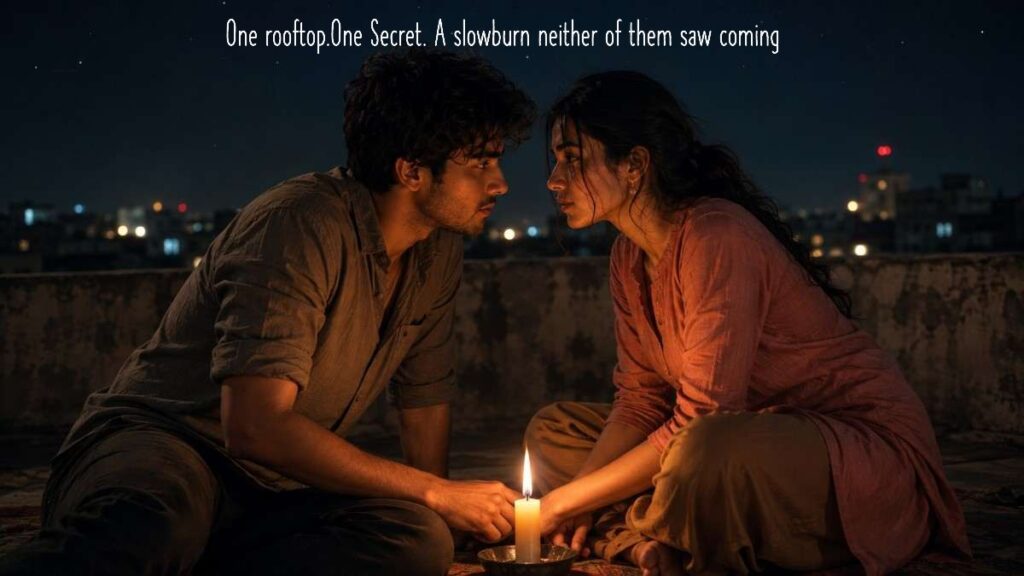
The power went out just after eight in the evening, the way it often did in this town during the peak of summer, when the whole grid seemed to groan under the weight of a hundred fans running at once.
Ansh was sitting on his own veranda when the streetlights flickered and died, plunging the lane into a soft, unfamiliar darkness. A few minutes later, his phone buzzed. A single message from Zara.
Rooftop?
He didn’t reply. He just went.
By the time he climbed the last step, she was already there, sitting cross-legged with a small candle flickering beside her, its light throwing warm, moving shadows against the low wall. She hadn’t said a word about their fight three days earlier. Neither had he. Some kind of unspoken truce had settled between them instead — not quite forgiveness, but not quite distance either.
“I like it better this way,” she said, without looking up as he sat down across from her. “No streetlights. No one watching. Just dark enough that you can say things you wouldn’t say with the lights on.”
“Is that an invitation?” he asked, trying to keep his voice light.
“Maybe.” She smiled faintly, the candlelight catching the edge of it. “Depends what you’re offering to trade.”
They sat in silence for a while, the distant sound of someone’s radio drifting up from a few streets away, a dog barking somewhere, the ordinary noise of a small town settling into an unplanned, candlelit evening.
“I’ve been thinking,” Ansh said finally, “about what you said. In the kitchen.”
Zara went still, just slightly. “Which part?”
“That I don’t know one thing about what you’ve already built.” He watched her carefully. “What did you mean?”
For a moment, he thought she might actually tell him. Something moved behind her eyes — a decision being weighed, a door being tested to see if it would open. Then she looked away, back toward the candle, and the moment passed.
“Not tonight,” she said quietly. “Ask me again sometime. Just not tonight.”
He didn’t push. He was learning, slowly, that with Zara, patience got him further than persistence ever could.
“Tell me something else, then,” he said. “Tell me what it’s actually like. The city. Since you asked about it, and I never really answered honestly.”
She looked interested despite herself. “Go on.”
“It’s lonely,” he admitted, surprising himself with how easily the word came out. “Everyone talks about freedom, about finally being someone new, and it is that. But nobody tells you how lonely freedom can feel when you don’t have anyone who actually knows you. I have friends there. Good ones, even. But none of them know who I was before college. None of them know this version of me—” he gestured vaguely at the rooftop, at the town below them, “—the one who used to race you down this exact lane on a bicycle two sizes too small for him.”
Zara’s expression softened, something unguarded slipping through. “I think about that a lot, actually. Being unknown.”
“You? Everyone here knows you.”
“They know a version of me,” she said. “The good daughter. The dutiful one. The girl who gave everything up without complaint.” She pulled her knees up to her chest, resting her chin on them. “Nobody here knows what I actually think about at three in the morning. Nobody knows what I want, because I stopped telling people a long time ago. It felt safer that way. Wanting things and not getting them hurts less if nobody knows you wanted them in the first place.”
“I want to know,” Ansh said quietly. “What you actually think about. What you want.”
She turned to look at him then, really look at him, the candlelight flickering warm and gold between them. There was something charged in the air suddenly, something that had been building slowly across every rooftop conversation, every shared silence, every small unguarded moment since he’d stepped off that bus.
“That’s a dangerous thing to ask a person like me,” she said softly. “I might actually tell you.”
“I’d like that.”
“Would you?” Her voice had dropped lower, and he realized how close they’d drifted without either of them quite noticing — close enough now that he could see the candlelight reflected in her eyes, close enough to feel the warmth of her without touching her at all.
“Zara—”
“Don’t,” she said, but it wasn’t a rejection. It was something closer to a plea, quiet and unsteady. “Don’t say something you might not mean tomorrow, when the sun’s back up and everything feels complicated again.”
“I would mean it,” he said. “Tomorrow, and the day after that.”
Her breath caught, just slightly, and for a long moment neither of them moved. The space between them had narrowed to almost nothing — his hand finding hers in the dark, hesitant at first, then steadier when she didn’t pull away. Her fingers curled around his, and something in his chest ached at how small and careful the gesture felt, how much weight it carried after everything unsaid between them.
He leaned in. She didn’t pull back. For a moment, it felt like the whole town had gone quiet just for them, like the power cut had cleared away every distraction until it was only this — her breath, her hand in his, the small distance between them shrinking to almost nothing.
Then, right as their faces were close enough to feel each other’s breath, the streetlights flickered back on down below, spilling harsh yellow light up over the edge of the rooftop wall.
They both pulled back at the same moment, as if the light itself had reminded them of everything still unresolved between them — her father, his double life, the scholarship neither of them had mentioned again, the future neither of them could yet promise the other.
Zara let out a shaky breath, half-laugh, half something else. “I guess that’s our answer,” she said. “The universe is telling us to slow down.”
“Or telling us we’re not ready yet,” Ansh said, his own voice unsteady.
“Same thing,” she said softly.
They sat there a while longer, hands still loosely linked between them, neither quite willing to let go completely, even if neither of them was ready to finish what the darkness had started.
This is the kind of moment every real slow burn romance builds toward — not a rushed kiss, but two people choosing to wait, because what’s between them is too important to get wrong.
“I meant what I said,” Ansh told her quietly, as they finally stood to head back down. “About wanting to know you. All of you. Not just the parts you let people see.”
Zara looked at him for a long moment in the returning light, something unreadable passing across her face.
“Then earn it,” she said softly. “Slowly. I’m not something you can rescue your way into knowing.”
She walked ahead of him down the stairs, and Ansh stood there a moment longer, his hand still faintly warm where hers had been, wondering what exactly she was protecting behind that locked drawer in the storage room — and how much longer she’d be able to carry it alone before she let him all the way in.
“I meant what I said. About wanting to know you. All of you.”
The Summer We Stopped Pretending: A Childhood Best Friends to Lovers Slow Burn Story
–
Chapter 6: Mirror Images
It happened on an ordinary evening, which was somehow worse than if it had happened during an argument.
They were sitting on the veranda outside Zara’s house, the air finally cooling after another brutal day of heat, and Ansh was talking — really talking, the way he did when he forgot to watch himself. About his college friends. About debates that ran past midnight. About a professor who had opened his mind to ideas he’d never been allowed to have at home. About how different everyone there was, how much bigger the world felt once you’d seen even a small piece of it.
He didn’t notice, at first, that Zara had gone quiet.
“You should see the kind of people I get to talk to now,” he said, still caught up in his own excitement. “It’s like a different planet. Everyone’s doing something — building something, starting something. It makes you realize how small this town really is, how little room there is here to actually become someone.”
“Small,” Zara repeated. Her voice was flat.
Something in her tone finally reached him. He looked over and saw her jaw set tight, her eyes fixed somewhere past him, out toward the darkening street.
“I didn’t mean it like—”
“You did, though.” She stood up, arms crossed, putting distance between them that had nothing to do with the space on the veranda. “You meant exactly that. This town is small. The people in it don’t get to become anyone. Just you, out there, in your big important world.”
“Zara, that’s not fair—”
“Isn’t it?” Her voice cracked, sharp and sudden. “You come home every summer and talk about your new life like it’s the only real one. Like the rest of us are just standing still, waiting for our lives to start the way yours already has.”
Ansh stood up too, frustration and confusion tangled together. “I never said you were standing still. I don’t think that about you.”
“Then what do you think about me?” she snapped. “Because from where I’m sitting, it feels like pity. Like you look at me and see someone who got left behind.”
“That’s not—”
“Isn’t it?” She was breathing hard now, something long held back finally breaking loose. “You think I don’t know what people say about me in this town? Poor Zara. Gave up her whole future for her father. Such a good daughter, such a shame about her life. I have heard that sentence in a hundred different voices, Ansh, and I am so tired of it. And now you’re sitting here talking about your exciting new world like I’m supposed to just nod along and agree that yes, my life is small, yes, I got left behind—”
“I never once thought you got left behind!”
“Then why do you look at me like that?” Her voice broke properly this time, raw in a way he’d never heard from her. “Like something fragile. Like something that needs saving. Ever since that letter, Ansh, that’s all I’ve been to you. A problem. A tragedy you want to fix.”
The silence after that stretched long and uncomfortable, filled only with the sound of her ragged breathing and the distant hum of the town settling into night.
“You think I’m jealous of your life,” she said finally, quieter now, but somehow that was worse. “You think that’s what this is. It’s not jealousy, Ansh. I’m terrified. I’m terrified that one day you’ll finish becoming whoever you’re turning into out there, and you’ll look at me the way everyone else does. Like I’m someone who stayed behind because she couldn’t do any better.”
“Zara, I would never—”
“You don’t know that,” she said. “You don’t know what you’ll become. Neither do I. That’s what scares me.”
She turned and walked into the house without another word, leaving him standing alone on the veranda, the weight of everything she’d said settling heavy in his chest.
He almost left. He almost let the night end there, both of them nursing a wound neither fully understood. But something told him to wait — some instinct that this wasn’t really over, that there was a door still slightly open somewhere behind her anger.
Ten minutes later, she came back out. Not calm exactly, but steadier. She was carrying something in her hands — a laptop, old and a little battered at the corners, the kind of object that clearly meant more to its owner than its condition suggested.
She sat down beside him without a word and opened it.
“I need to show you something,” she said. “And I need you to not say anything until I’m finished. Can you do that?”
He nodded, too surprised to do anything else.
She turned the screen toward him. A dashboard filled with numbers — client names, dates, small transactions logged carefully over what looked like more than a year. A separate folder full of documents, essays, project files, all under a name that wasn’t quite hers, close but different, deliberately chosen.
“I write,” she said quietly. “For people online. Content, essays, sometimes research work for small businesses that need someone who can put sentences together properly. I started almost two years ago, right after the scholarship letter, when I realized nobody was going to hand me a future — I’d have to build one with whatever I had. A laptop. A library card. Nights when everyone else was asleep.”
Ansh stared at the screen, then at her, unable to speak, exactly as she’d asked.
“I have thirty-one regular clients now,” she continued, her voice gaining steadiness as she spoke, like she was finally allowed to say all of this out loud after holding it in for so long. “I’ve saved almost enough to cover a year of independent living, somewhere far from here, if I ever choose to use it. Nobody knows. Not my father. Not the neighbors who feel sorry for me. Not you, until right now.”
“Zara…” he started, but she held up a hand.
“I’m not finished.” Her eyes were bright now, fierce in a way he’d never quite seen before, not even on the rooftop. “I was never sitting still, Ansh. I was never just waiting for someone to open a door for me. I built my own door. Quietly. Alone. At one in the morning, after everyone else had gone to sleep and stopped needing anything from me. I did that without any degree, without any scholarship, without anyone clapping for me or feeling sorry for me. I did it because nobody was coming to save me, so I decided to save myself.”
Ansh felt something crack open in his chest — not quite shame, though shame was part of it, but something bigger. A complete and sudden collapse of every assumption he’d been quietly carrying about her since that letter in the storage room.
“I thought—” he started, his voice unsteady. “I thought the scholarship was the only thing you had. I thought I was the one who had to fix everything, because I thought you didn’t have anything else.”
“That’s exactly the problem,” Zara said, closing the laptop gently. “You never thought to ask if I had something else. You just assumed I was standing still because that’s what fit the story you already believed about me. The good, sad daughter with nothing of her own.”
He didn’t know what to say. Every word felt too small for the moment.
“I’m not telling you this because I want your pity to turn into pride instead,” she said, softer now, some of the fierceness settling into something more tired, more honest. “I’m telling you because I need you to understand something. I was never the one who needed rescuing in this story, Ansh. I think, somewhere along the way, you needed to rescue someone, and I was just the easiest person to point that at.”
The words landed hard, because they were true, and because he hadn’t been ready to hear them until this exact moment.
“I’m sorry,” he said quietly. “I’m so sorry, Zara. I didn’t see you. Not really. Not until right now.”
She looked at him for a long moment, something softening behind her eyes. “I know,” she said. “But you’re seeing me now. That has to count for something.”
They sat together in silence after that, the laptop closed between them, the whole shape of the summer shifting quietly into something neither of them had expected — not a story about a girl who needed saving, but a story about a boy learning, slowly and honestly, what it actually meant to see someone completely.
He still didn’t know everything. There was still her father’s illness, still the wedding neither of them had spoken about directly, still a hundred unresolved threads between them.
But for the first time all summer, Ansh understood that the bravest thing Zara had ever done wasn’t surviving what her father took from her.
It was building something entirely her own, in the dark, with no one watching — and trusting him enough, finally, to let him see it.
“I was never sitting still, Ansh. I built my own door — quietly, alone, at one in the morning.”
The Summer We Stopped Pretending: A Childhood Best Friends to Lovers Slow Burn Story
–
Chapter 7: The Uninvited Guest
Kabir arrived on a Thursday, unannounced, the way people who have never had to consider consequences usually do.
Ansh was in the middle of helping his mother arrange chairs for that evening’s family dinner — a small gathering for a cousin’s engagement — when a taxi pulled up outside and a familiar voice called out his name like they were still standing in a hostel corridor a thousand kilometers away.
“Bhai! I told you I’d surprise you one of these days.”
Ansh’s stomach dropped even as his face broke into an automatic smile. Kabir had always been like this — loud, warm, utterly unaware of the difference between the world he came from and the one Ansh had grown up in. In college, that had felt refreshing. Here, on his parents’ doorstep, it felt like a bomb someone had just casually rolled through the front gate.
“You can’t just show up,” Ansh said under his breath, pulling him aside while his mother went to fetch water. “This isn’t the hostel, Kabir. Things are different here.”
“Relax, yaar. I’m just passing through, my cousin’s wedding is two towns over. Thought I’d say hi to my favorite mystery man.” Kabir grinned, clapping him on the shoulder. “You disappear every summer like you’re in witness protection. I had to see this legendary hometown for myself.”
There was no getting rid of him gracefully. Ansh’s mother, ever hospitable, insisted Kabir join them for dinner that evening, waving away his protests with the easy warmth she extended to anyone who walked through her door. By the time the extended family gathered around the table that night — uncles, aunts, the cousin and her fiancé, and Zara, who had been invited as she always was for family occasions — Kabir was seated comfortably in the middle of it all, entirely unaware of the quiet architecture of secrets he was about to knock over.
It started small. An offhand comment about a party Ansh had attended. A joke about a professor Ansh had argued with over something political at the dinner table. Ansh tried, subtly at first, to steer the conversation elsewhere, but Kabir was a storyteller by nature, and stories, once started, have their own momentum.
“You should have seen him at the debate last semester,” Kabir said, laughing, gesturing with a piece of naan. “Practically tore the room apart arguing that arranged marriage is basically a polite version of—”
“Kabir.” Ansh’s voice came out sharper than he intended.
But it was too late. His father had gone very still across the table. His mother’s smile had frozen in place, polite and brittle. An uncle cleared his throat in the particular way that meant a subject had just become dangerous.
“Arguing what, exactly?” his father asked, his voice deceptively calm.
Ansh felt the whole table’s attention shift toward him, heavy and expectant. He could lie. He’d gotten good at lying by omission this whole summer, at smoothing over the edges of who he’d become. But something about Zara’s eyes on him from across the table — steady, watchful, not unkind, but waiting — made the easy lie stick in his throat.
“I said some things,” Ansh said slowly, “about how a lot of arranged marriages don’t really account for what the people involved actually want. That’s all.”
“That’s all,” his father repeated, something tight in his voice.
Kabir, sensing too late that he’d wandered into a minefield, tried to backpedal. “It was just a debate exercise, uncle. Academic stuff. We argue all kinds of things in college, doesn’t mean—”
“Doesn’t mean what, exactly?” his father asked, turning his gaze back to Ansh. “That my son actually believes it? Or that he only says these things when he’s far enough away that we won’t hear?”
The table had gone uncomfortably silent. Ansh’s mother was staring at her plate. His younger cousin looked between the adults with wide, uncertain eyes, sensing tension she didn’t fully understand.
This was it. The exact moment he’d been quietly dreading and avoiding since he’d stepped off that bus three weeks ago — the mask cracking in front of everyone at once, with no controlled way to manage the pieces.
He looked up and found Zara watching him from across the table. Not smug. Not enjoying his discomfort the way he might have deserved after everything he’d put her through with the scholarship. Just watching, quiet and steady, the way she’d watched him that very first day on the street corner.
Your smile’s different, she’d said. She’d known even then.
“I do believe it,” Ansh said, his voice quiet but clear enough to carry across the table. “Not because I think everyone who has an arranged marriage is unhappy. But because I think everyone deserves an actual say in the shape of their own life. That’s all I meant.”
His father’s jaw tightened. “And what else do you believe now, that we don’t know about? What other version of my son has been living in that city, coming home every summer wearing a mask for us?”
The word landed like a slap, because it was true, and because his father — without knowing the exact word Zara had once used — had somehow found the precise shape of what Ansh had been doing all along.
“I didn’t want to hurt you,” Ansh said, and his voice cracked slightly, the performance finally, fully collapsing. “I didn’t know how to be different around you without it feeling like I was betraying everything you raised me to be. So I just… became two different people. One for here, one for there. I’m sorry. I should have trusted you enough to just be honest.”
Nobody said anything for a long moment. Kabir, mortified, mumbled something about needing air and excused himself from the table, clearly regretting every word that had left his mouth that evening.
It was Zara who finally broke the silence, her voice calm and even. “I think,” she said carefully, looking at Ansh’s father, “that a son who’s still figuring out who he wants to be isn’t the same as a son who’s lying to you. He’s just growing into something none of us expected yet. Maybe that’s not something to be angry about.”
Ansh’s father looked at her for a long moment, something unreadable in his expression, before he finally looked away, back down at his plate, the tension in the room easing by a fraction, though far from resolved.
Later that night, after the guests had left and the house had gone quiet, Ansh found Zara sitting outside on the low wall near the gate, waiting for him without having said she would.
“Thank you,” he said, sitting down beside her. “For what you said in there.”
“I didn’t say it for you,” she said, though not unkindly. “I said it because it was true.”
They sat in silence for a moment, the night settling cool and quiet around them.
“It’s strange,” Ansh said eventually. “Watching my whole double life fall apart in front of everyone. I spent so long being terrified of exactly that moment. And now that it’s happened, I feel almost…” He searched for the word. “Relieved.”
Zara nodded slowly, understanding in a way that surprised him until he remembered — of course she understood. She had spent two years hiding an entire second life of her own, quietly building something no one around her knew existed.
“It’s a strange kind of freedom, isn’t it?” she said. “Being fully seen. Terrifying, and then suddenly lighter than you expected.”
“You’d know,” he said quietly.
“I would,” she agreed, a small, knowing smile touching her mouth. “I gave you that lesson myself, remember? A few nights ago, on my own veranda, with a laptop and thirty-one clients I’d never told a soul about.”
Ansh laughed, low and a little disbelieving. “I used to think I was the one who understood you better than anyone else in this town.”
“And now?”
“Now I think you’ve always understood me better than I understood myself,” he said. “Even before tonight.”
Zara looked at him for a long moment, something warm and unguarded passing across her face in the dark.
“Good,” she said softly. “Then maybe you’re finally ready to stop hiding. From your family. And from yourself.”
They sat there together a while longer, the uninvited guest of the evening long gone, leaving behind him something neither of them had expected — the first real crack of honest daylight breaking through a house full of long-kept secrets.
But Zara’s own house, and her own secrets, still had one more storm left to weather before the summer was through.
“A son who’s still figuring out who he wants to be isn’t the same as a son who’s lying to you.”
The Summer We Stopped Pretending: A Childhood Best Friends to Lovers Slow Burn Story
–
Chapter 8: The Calculated Illness
Zara found out by accident, the way most painful truths seem to arrive — not through confrontation, but through a door left slightly open at the wrong moment.
She had gone to the kitchen for water late one night, unable to sleep, when she heard her father’s voice drifting from the sitting room, low and unguarded, the way people speak when they believe no one else is awake to hear them.
He was on the phone with his brother, her uncle from the next town, the one who had been visiting more often than usual that summer.
“…the wedding needs to happen before winter,” her father was saying. “Once she’s settled with the Malhotra boy, there won’t be any more talk of scholarships and cities. She’ll have a home to run. That’ll be enough to keep her here, keep her steady.”
Zara stood frozen in the hallway, the glass of water forgotten in her hand.
“And your knees?” her uncle’s voice asked, tinny through the phone speaker. “The doctor said—”
“The doctor said what I needed him to say,” her father replied, and there was something in his tone — not cruel exactly, but tired, resigned, the voice of a man who believed he was doing something necessary rather than something wrong. “A little exaggeration on the reports. Enough to remind her why she needs to stay close. She’s a good girl. She just needs the right reasons to remember her place.”
The words hit Zara like a physical blow. Two years of her life — five years, if she counted honestly — spent nursing a condition that had been quietly stretched beyond its truth, all to keep her tethered to a house, a routine, a version of her life that had never once been fully hers to choose.
She didn’t confront him that night. She couldn’t. Her legs carried her back to her room on their own, numb and disconnected, and she sat on the edge of her bed until the sun came up, turning the same sentence over and over in her mind. A little exaggeration. Enough to remind her why she needs to stay.
She told Ansh the next morning, on the rooftop, her voice flat and hollow in a way that frightened him more than tears would have.
“He lied,” she said. “Not about being sick. He is sick, the knees are real, the pain is real. But the severity — how much I needed to be here, every single day, unable to even consider leaving — that part was managed. Curated. Like a performance, and I was the only audience who was never allowed to know it was one.”
Ansh sat very still, letting her finish, remembering the lesson she’d taught him in the storage room and again with the laptop — that sometimes the most respectful thing he could do was simply listen without rushing to fix.
“And the wedding,” she continued, her voice finally breaking, “isn’t really about tradition or timing at all. It’s a leash. Something to make sure that even if his health improves, even if I ever got another chance at something bigger, I’d already be tied down to a life that couldn’t accommodate it.”
“Zara, I’m so sorry.”
“I keep thinking about what you did,” she said quietly, looking out over the town below them. “With the scholarship. Calling admissions, making all those plans without asking me first. I was so angry at you for taking my choice away, even with good intentions.” She turned to look at him. “But at least you loved me enough to want to fix something. My own father just wanted to keep me small enough to manage.”
Ansh felt something rise in his chest — anger, protectiveness, the same old instinct that had gotten him into trouble before.
He wanted to march downstairs, confront her father, undo the whole arrangement by sheer force of will.
He almost did exactly that. He could feel the shape of the plan already forming — a confrontation, a rescue, a grand gesture to finally set things right.
Then he remembered the kitchen. Her voice cracked as she told him there was a line between loving someone and managing them.
He remembered how much it had cost her to say that to him, and how much more it would cost her now if he made the exact same mistake twice.
So instead, he asked a different question.
“What do you need?” he said quietly. “Not what I think you need. What do you actually need from me, right now, at this moment?”
Zara looked at him, something shifting behind her eyes — surprise, and beneath it, something that looked almost like relief.
“I need you to not fix this,” she said slowly. “I need you to just… be here. Let me be angry. Let me figure out what I want to do about it, in my own time, without you turning it into another rescue mission.”
“Okay,” Ansh said simply. “I’m here. Whatever you decide, I’m not going anywhere.”
Something in her seemed to loosen at that — not relief exactly, but the particular relief of being fully believed, fully trusted to carry her own weight without someone else deciding to carry it for her.
They sat together for a long while after that, the town waking up slowly beneath them, before Zara finally spoke again, her voice steadier now.
“I have almost enough saved,” she said. “From the writing. Almost a full year of independent living, if I’m careful. I’ve had it ready for months, if I’m honest. I think some part of me always knew I might need it eventually.”
“What’s stopped you from using it?”
“Fear,” she admitted. “And guilt. And some small, stubborn part of me that kept hoping he’d change his mind on his own, without me having to burn everything down to leave.” She let out a slow breath. “But I don’t think that part of me is in charge anymore.”
“What do you want to do?”
Zara was quiet for a long moment, watching the town below them — the same rooftops, the same narrow lanes, the same life that had shaped every version of her that existed so far.
“I don’t know yet,” she said honestly. “But for the first time, that not-knowing doesn’t feel like drowning. It feels like standing at the edge of something. Like maybe, for once, the next choice actually gets to be mine.”
Ansh reached over and took her hand, gently this time, no darkness needed to make the gesture feel safe. She let him hold it, her fingers curling around his without hesitation.
“Whatever you choose,” he said, “I meant what I said. I’m here. Not to fix it. Just to stand beside you while you figure it out.”
Zara looked at him for a long moment, something soft and unguarded settling over her face — not the fierce independence she’d shown him with the laptop, not the sharp honesty of their fight, but something quieter, something that looked, for the first time all summer, almost like hope.
“That,” she said softly, “is exactly what I needed you to say.”
Below them, the town carried on as it always had, unaware that somewhere above its rooftops, a girl who had spent her whole life being managed by other people’s decisions had just quietly begun deciding, for the very first time, what her own life was actually going to look like.
“I need you to not fix this. I need you to just be here.”
The Summer We Stopped Pretending: A Childhood Best Friends to Lovers Slow Burn Story
–
Chapter 9: The Three-Month Accord — Childhood Best Friends to Lovers, Redefined
The wedding date was announced on a Sunday, over lunch, the way important decisions in Zara’s house often were — casually, as if they were discussing the weather rather than the shape of someone’s entire future.
“Diwali week,” her father said, passing the rice without looking up. “The Malhotras agreed it’s an auspicious time. Your aunt will start shopping next month.”
Zara said nothing. She simply nodded, the same practiced stillness she’d worn for years, though Ansh — watching from across the table, having been invited for the meal — could see something different in her now. Not resignation. Calculation. A quiet, private clock that had just started ticking.
She found him later that evening, waiting by the gate the way he always did now, and she didn’t waste time on small talk.
“Diwali,” she said. “That gives me about three months.”
“Three months for what?”
“To decide,” she said simply. “Really decide. Not just survive whatever gets decided for me.”
They walked together toward the rooftop, their rooftop, the place that had slowly become the only honest room in either of their lives.
The evening was warm, the kind of warmth that used to feel oppressive but had started, somewhere along this strange summer, to feel almost comforting.
“I keep waiting for you to tell me to run,” Zara said, once they’d settled into their usual spots.
“Elope. Disappear somewhere the wedding can’t reach us. Every story I’ve ever read tells me that’s supposed to happen right about now.”
Ansh considered this carefully before answering. He had thought about it too, if he was honest — some late-night version of himself that wanted to sweep in and simply take her away from all of it, wrap the whole complicated situation into one clean, dramatic gesture.
But he’d learned better this summer. Learned it the hard way, more than once.
“I’m not going to ask you to run away with me,” he said finally.
Something flickered across her face — not disappointment exactly, more like careful attention, waiting to see where this was going.
“Why not?”
“Because running away together isn’t the same as either of us actually knowing what we want,” he said slowly, working through the thought as he spoke it. “If I asked you to leave with me tomorrow, and you said yes, how would either of us ever know if it was because you wanted me, or because I was just the nearest exit from a life you didn’t choose?”
Zara was quiet for a long moment, studying him in the fading light. “That’s a very mature thing to say for someone who spent half the summer trying to fix my entire life without asking me first.”
He laughed, low and a little rueful. “I’m a slow learner. But I think I finally understand what you were trying to teach me.”
“Which is?”
“That love isn’t about deciding things for someone else,” he said. “Even when the decision feels urgent, or romantic, or like the right thing to do. Real love means giving someone room to become whoever they’re supposed to become — even if that takes longer than you’d like, even if it means waiting instead of rescuing.”
Zara’s eyes were bright now, something vulnerable moving behind them. “So what are you suggesting instead? If not run away together.”
“I have a fellowship,” Ansh said. “A research position, back in the city, starting in a few months. I haven’t told my parents yet. I was going to turn it down, actually. Stay closer, in case you needed—”
“Don’t,” Zara said quietly. “Don’t turn it down for me. Please.”
“I wasn’t finished,” he said, gentler now. “I was going to turn it down. But I don’t think that’s what either of us actually needs right now. I think we both need the next few months to figure out who we are, separately, before we decide anything permanent about who we are together.”
“Three months,” Zara said slowly, testing the idea. “You go do your fellowship. I figure out what I’m going to do about the wedding, about my father, about everything I’ve been carrying quietly for years.”
“And then,” Ansh said, “when the three months are up, we sit down again — as whoever we’ve each become by then — and we decide honestly. Not out of guilt, fear, or urgency. Just out of truth.”
Zara was quiet for a long time, the evening settling deeper into dusk around them, the first few stars beginning to show themselves over the rooftops of the town.
“What if I come back different?” she asked finally, her voice smaller than he’d heard it in a while. “What if three months from now, I’ve made a choice you don’t like? What if I decide I need to leave and build a life somewhere you’re not part of at all?”
Ansh felt his chest tighten at the thought, but he made himself answer honestly anyway. “Then that will hurt more than almost anything I can imagine,” he said. “But I’d rather love a version of you that chose freely, even if that choice doesn’t include me, than spend the rest of my life wondering if you only stayed because I asked you to before you had the chance to really choose.”
Zara reached over and took his hand, her grip firm and certain in a way it hadn’t been even during their most tender moments before.
“That’s the bravest thing anyone’s ever said to me,” she said quietly. “Everyone else in my life has always wanted me to decide for them. My father wanted me to choose staying, so his life stayed comfortable. Even you, a few weeks ago, wanted me to choose the scholarship, so your guilt could stop.” She squeezed his hand. “You’re the first person who’s ever asked me to choose for myself, and meant it, even knowing it might cost you everything.”
“I don’t want to lose you,” Ansh admitted, his voice rough. “I need you to know that. This isn’t me pretending not to care how it turns out.”
“I know,” Zara said softly. “That’s exactly what makes this different. You’re not pretending not to care. You’re just finally brave enough to let me care on my own terms too.”
They sat together as the last of the daylight faded completely, the town’s lights flickering on one by one below them, neither of them speaking for a long while, simply holding onto the quiet certainty of a decision that finally felt like it belonged to both of them equally.
“Three months,” Zara said again, finally, like she was sealing the agreement out loud.
“Three months,” Ansh echoed. “And then we tell each other the truth, whatever it turns out to be.”
Below them, the town carried on exactly as it always had — unaware that two of its children had just quietly rewritten the ending of a story everyone else assumed they already knew.
“I’d rather love a version of you that chose freely — even if that choice doesn’t include me.”
The Summer We Stopped Pretending: A Childhood Best Friends to Lovers Slow Burn Story
–
Chapter 10: Before the Next Summer
The letter about the fellowship arrived on a Tuesday, three weeks before Ansh was due to leave.
It wasn’t just any research position anymore. Somewhere in the process of applying honestly instead of half-heartedly, he’d been offered something bigger than he’d expected — a six-month placement, full funding, the kind of opportunity that would have felt like a dream a year ago and now felt like something more complicated: a beginning that also meant a leaving.
He told Zara that same evening, on the rooftop, the way they told each other everything now.
“Six months,” she repeated, turning the number over carefully. “Longer than we planned.”
“I can still turn it down,” he said, though they both knew, by now, that he wouldn’t, and that she wouldn’t want him to.
“No,” Zara said, shaking her head slowly. “You made me a promise on this rooftop. That we’d both use this time to actually become something, not just wait for each other. I’m not going to be the reason you break that promise before we’ve even started.”
Her own three months had not been quiet ones. She had spoken to her father — calmly, without shouting, though her voice had shaken the entire time.
She’d told him what she’d overheard, what she now knew about the exaggerated diagnosis, the wedding built more on control than tradition.
He hadn’t apologized, not fully, not in the way she’d once hoped he might.
But something between them had shifted anyway — a door that couldn’t be fully closed again now that she’d seen what was behind it.
The wedding had been quietly postponed. Not cancelled, not yet, but postponed indefinitely, in the careful language families use when they aren’t ready to admit a plan has failed.
Zara had started, slowly, telling people the truth about her writing work — first her father, tense and reluctant, then a few neighbors, then finally, almost defiantly, the aunties on the street who had spent years feeling sorry for her without knowing a single true thing about her life.
She had enrolled, using her own savings, in an online degree program that let her keep working while she studied — not the same dream as the stolen scholarship, but a real one, chosen freely, entirely her own.
“I used to think there was only one version of getting out,” she told Ansh, a few days before he was due to leave. “Running away, or being rescued. I never considered that maybe I could just… build a door where I was standing, and walk through it myself.”
“You already did that,” Ansh said. “Months ago. I just wasn’t paying close enough attention to notice.”
On the morning of his departure, there was no dramatic goodbye at the house, no tearful scene in front of the family.
His parents drove him to the station, his mother fussing over whether he’d packed enough, his father quieter than usual but no longer distant — something had eased between them too, since the night Kabir’s visit had cracked his careful double life wide open.
His father hadn’t fully agreed with everything Ansh believed now.
But he’d stopped pretending those beliefs didn’t exist, and somehow, that honesty had brought them closer than the old performance ever had.
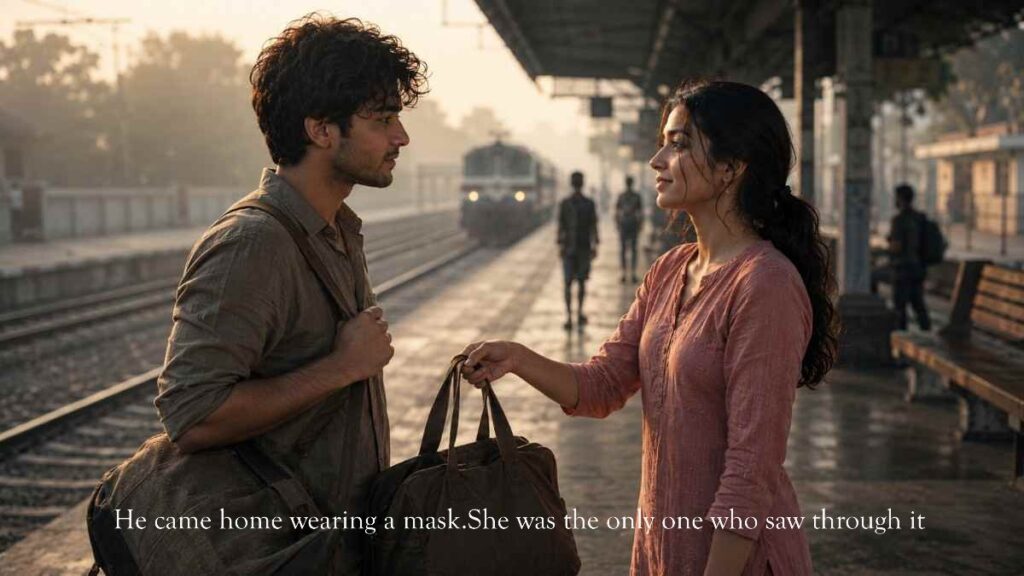
Zara was waiting at the station when they arrived, standing near the platform with his old college bag slung over one shoulder — the one he’d left at her house weeks ago and forgotten to collect.
“You’d have gotten on the train without this,” she said, holding it out to him, a small smile playing in her mouth.
“I would have noticed eventually,” he said, taking it from her, letting his fingers linger against hers for a moment longer than necessary.
There was no grand declaration between them. No desperate promise to wait, no elaborate plan for the future they hadn’t yet earned the right to make.
Just the ordinary noise of the station around them — vendors calling out, the distant rattle of an approaching train, his parents standing a respectful few feet away, giving them a moment that wasn’t quite private but felt like it belonged only to the two of them anyway.
“Six months,” Zara said. “Then you’ll be back next summer, and I’ll be… whoever I’ve become by then.”
“And I’ll be whoever I’ve become,” Ansh said. “And maybe we’ll fit together the way we do now. Or maybe we’ll have grown into people who need something different from each other. I don’t know which it’ll be.”
“Neither do I,” Zara said, and there was no fear in it this time, only something calm and steady, the voice of someone who had finally learned that not knowing wasn’t the same as drowning. “But I like that we’re both brave enough to let it be an honest question instead of a promise we’re not sure we can keep.”
The train pulled in, loud and final, cutting the moment shorter than either of them wanted.
“I’ll write to you,” Ansh said. “Properly. Not performing anything. Just telling you the truth about who I’m becoming, as it happens.”
“I’ll do the same,” Zara said. “Whoever that turns out to be.”
He picked up his bag, hesitated one last moment, then leaned down and kissed her — soft, unhurried, nothing like the interrupted almost-kiss on the rooftop weeks ago.
This one had nowhere to rush to. This one had all the time either of them needed.
When he pulled back, Zara was smiling, something quiet and sure settled behind her eyes.
“Go,” she said gently. “Go become someone. I’ll be busy doing the same.”
Ansh boarded the train, found a window seat, and watched her grow smaller on the platform as it pulled away — not chasing after him, not standing frozen in sorrow, just watching him go with the same steady clarity she’d greeted him with on his very first day back, all those months ago.
Your smile’s different, she’d said then.
He understood now what she’d really meant. Not that something was wrong with his smile. Just that it was time, finally, for both of them to stop wearing the ones that didn’t belong to them anymore.
Somewhere beyond the last curve of the platform, the town disappeared from view, carrying with it a rooftop, a locked drawer that wasn’t locked anymore, a letter that had finally been answered on her own terms, and two people who had learned, slower than most, that the truest kind of love isn’t about saving each other.
It’s about trusting each other enough to stand alone — and choosing, again and again, to come back.
“Go become someone. I’ll be busy doing the same.”
The Summer We Stopped Pretending: A Childhood Best Friends to Lovers Slow Burn Story
–
Quote For The End
“Love consists in this, that two solitudes protect and touch and greet each other.” — Rainer Maria Rilke
THE END
–
Link Basket
Friends to lovers Romance- Eternal Echoes
Slow burn- Authentic Vs Synthetic love
Childhood Best Friends to Lovers Slow Burn: Writing Guide
Is There Really a Formula for Love?
–
FAQ
What is the 11 6 3 rule of friendship?
The 11-3-6 rule of friendship is best understood not as a strict formula, but as a “friendship investment rule.” The idea is simple: friendship usually needs repeated time together before an acquaintance becomes someone you genuinely trust.
The 11-3-6 Rule, Made Simple
Think of it as a friendship equation:
11 meetings × 3 hours together × 6 months = a real chance for friendship to grow.
11 meetings — Repetition creates familiarity. Seeing someone again and again gives you enough shared experiences to move beyond polite conversation.
3 hours — Time creates depth. A quick coffee may introduce you to someone, but several hours together allow stories, opinions, humor, vulnerability, and personal experiences to emerge.
6 months — Consistency creates connection. If meetings are too far apart, the relationship can remain stuck at the acquaintance level. Regular contact keeps the emotional momentum alive.
But Here’s the Interesting Part…
The clock doesn’t create friendship. What happens during the hours does.
Two people could spend 33 hours sitting in the same office and barely become friends. Another two people might spend 20 deeply connected hours talking, laughing, helping each other, and sharing experiences—and develop a much stronger bond.
So the 11-3-6 rule isn’t a friendship formula with guaranteed results. It’s more like a reminder that meaningful friendship requires time + repetition + emotional involvement.
Why This Matters More as We Get Older
Making friends is relatively easy when you’re young because school, college, and activities constantly put the same people together.
Adult life is different. You might meet a potential friend at work, at the gym, at a party, or through another friend—but then see them for only 20–30 minutes every few weeks.
That’s where the problem appears:
You may like each other, but you haven’t spent enough meaningful time together to become close.
The 11-3-6 idea explains why some promising friendships simply fade. There may be chemistry, but not enough shared time to turn chemistry into familiarity, trust, and emotional closeness.
The Bigger Lesson
Don’t ask only:
“Do we get along?”
Ask:
“Are we giving this friendship enough time to become something real?”
Because friendship isn’t usually created in one unforgettable conversation. It grows through ordinary conversations, repeated meetings, inside jokes, shared problems, unexpected help, and hundreds of little moments that gradually change “someone I know” into “someone I can count on.”
And that’s the real value of the 11-3-6 rule: friendship needs an investment of time, not just an instant connection.
What are the top 10 romance tropes?

OVERVIEW
Romance tropes function as distinct emotional recipes, each defining a unique narrative ignition point, conflict style, and pathway to intimacy. Rather than rigid story formulas, they provide the structural framework for romantic tension—ranging from high-friction rivalries (enemies to lovers) and contractual entanglements (fake relationship, marriage of convenience) to unhurried emotional developments (slow burn, friends to lovers) and high-stakes barriers (forbidden love, second-chance romance).
Think of romance tropes not as formulas, but as distinct emotional recipes—each with its own tension, ignition point, and flavor of intimacy.
Enemies to Lovers: High-friction chemistry. Two rivals trade sharp barbs until the thin line between intense irritation and undeniable passion completely snaps.
Forced Proximity: Trapped into intimacy. One cabin, one stalled elevator, or the classic “only one bed”—physical confinement strips away every defensive wall.
Fake Relationship: Contractual chaos. Pretending for family, publicists, or a wedding date, until the rules of the pretend romance blur into real devotion.
Friends to Lovers: The quiet realization. Rooted in deep familiarity and shared history, the stakes peak when one touch risks the entire foundation of the friendship.
Slow Burn: The agonizing simmer. Lingering glances, unspoken tension, and pages of restraint where even a casual brush of hands feels earth-shattering.
Grumpy & Sunshine: Complementary opposites. A cynical, broody realist meets an irrepressible optimist who slowly becomes the only person permitted inside their guarded world.
Second-Chance Romance: Unfinished business. Former lovers reunited by time, carrying the emotional weight of old regrets, deeper maturity, and a desperate need to get it right.
Forbidden Love: High-stakes defiance. Star-crossed lovers separated by rival families, social divides, or taboo barriers, making every stolen glance a dangerous rebellion.
Marriage of Convenience: Pragmatism turned passion. A strategic pact forged for survival, legacy, or financial need that unexpectedly transforms a paper bond into a soul bond.
Soulmates & Destiny: The cosmic pull. An irresistible, gravitational force where two people are irrevocably tethered by fate, no matter the obstacles in their path.
–

0 Comments