
Read Time 10 Min
In a hollowed-out Midwestern town, a laid-off machinist and a Mexican single mother find slow-burn love through shared struggle and quiet resistance. A tale of labor, resilience, and rising intimacy.
Table of Contents
Slow-Burn Romance in a Abandoned Factory
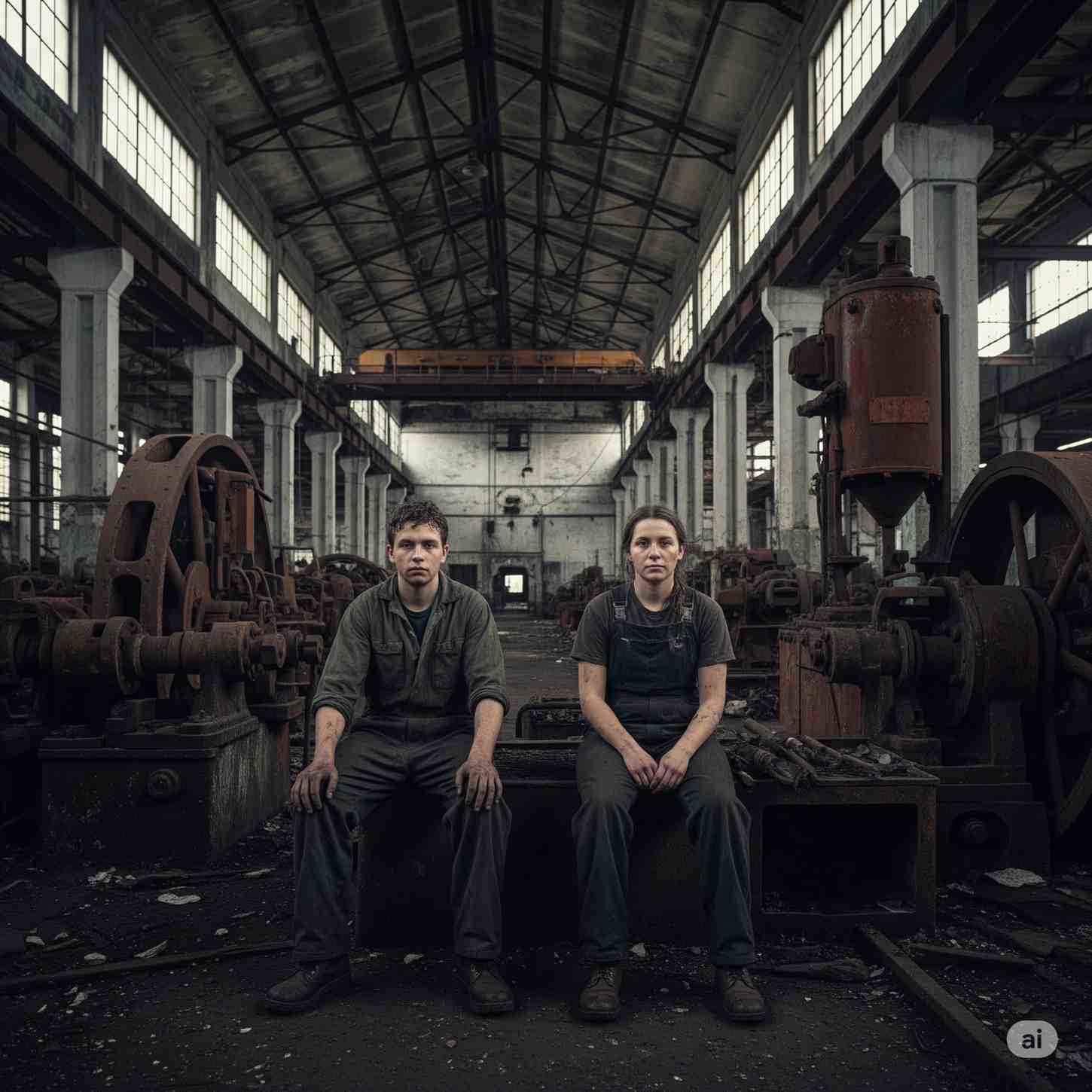
The air still smelled faintly of coolant and regret inside Dalton Manufacturing, even weeks after it shut its doors. A slow-burn grief had settled over the town—Ohio skies turned grayer, more permanent. What used to be the rhythmic clatter of machines now echoed only in memory, in the stubborn footsteps of those who refused to let go.
Eli Townsend still came back.
Late nights, after his mother had gone to sleep and his nephew had stopped asking when Uncle Eli would return to work. He’d unlock the side entrance with a key that should’ve been turned in. He’d walk past idle machines, each bearing the thumbprints of a generation that believed labor could buy a decent life.
He didn’t tell anyone—not even the men at the bar still spinning conspiracies about tariffs and layoffs—that he came here to tinker with his father’s old lathe. The rust had crept in, flaking like dead skin. Still, it spun.
He thought he was alone. Until he wasn’t.
Rosa Delgado moved like a whisper, like someone who had learned to be invisible. She worked nights—Dalton’s final cleaning contract hadn’t yet expired. She kept her head low, her back straighter than her paychecks.
They met in the fluorescent silence of that forsaken plant. No introductions. Just a flick of her mop near the lathe, a brief glance, and then nights that blurred into weeks.
He noticed she never made eye contact when the sound of sirens passed. She noticed he spoke to machines more than people.
One night, the lathe refused to budge. Eli muttered curses under his breath. Rosa walked over, pulled a spray bottle from her cart, and without a word, cleaned the rusted grooves.
“You don’t have to—” he began.
“I know,” she said.
That was the beginning. A slow-burn romance where nothing was declared, but everything was revealed—piecemeal, tentative, through shared action more than speech. The Midwest didn’t reward loud love. It favored those who loved like corn grew: gradual, stubborn, seasonal.
They started sharing little things. A thermos of coffee. A socket wrench. Stories half-told. Her son, Mateo, liked to draw trucks. His nephew, Aaron, hadn’t spoken since the layoffs. They played together in silence.
They found an old blueprint in the archives: a water-filtration prototype Eli had shelved years ago. Rosa traced its lines like it was a map home. They started building it again.
“Sell it,” Eli said, watching the fascination in her eyes. “Maybe we get lucky.”
She shook her head. “Or we use it. Start something small. Local.”
He laughed—not cruelly, but from that place where resilience meets disbelief. “You think people here will believe in dreams?”
“Not dreams. Work.”
Their connection grew like rust in reverse—slow, unseen, essential. He taught her torque and balance. She taught him that labor had value beyond checks. They worked in the shadows, fixing bikes, sharing gas, letting small intimacies bloom in the grease.
But desperation has its habits.
Eli, without telling her, pitched the design to a corporate buyer in Detroit. The offer was ugly—small money, full rights, no credit.
When Rosa found out, her face didn’t twist in anger. Just quiet disappointment, the kind that stings longer.
“You’d sell it?” she asked.
“You think a co-op’s gonna fix this town?” he snapped. “We need cash. Now.”
“You don’t get it.”
“No, Rosa. You don’t.”
That night, her landlord slipped a notice under her door. Mateo watched cartoons as she packed their bags, again.
Eli saw her car loaded the next morning. The prototype sat in the backseat.
He left a sealed envelope in her mailbox. Inside: full transfer of design rights. No note. Just his signature.
Months passed.
A story went viral—an anonymous campaign titled Industrial Love and Survival. Photos of rust, a broken lathe, a woman’s hands fixing what history abandoned. The campaign raised enough to rent a corner of Dalton’s old plant.
Laid-off workers returned—not to protest, but to rebuild. A co-op emerged like hope etched in steel. Rosa never took credit.
The opening day was gray, windy. Midwest summer didn’t believe in sunshine. Eli showed up with a wrench and no expectations.
They sat side-by-side under the worktable, watching Mateo and Aaron arrange tools in neat rows. Their hands didn’t touch.
But their fingers almost met.
A quote Rosa had written in the co-op newsletter echoed in his mind:
He didn’t speak. She didn’t either.
In the silence, the slow-burn love burned on.
“Love doesn’t always need a beginning. Sometimes it’s just what’s left after everything else breaks.”
What the Co-op Built was more than a Machine-It Was Slow-Burn Love
Word spread, not with fanfare, but in murmurs. Farmers passing by dropped off broken equipment hoping someone could fix it. Local plumbers came with bent copper piping, curious if the co-op could mold it into something useful. The air filled again—not with industry, but with purpose.
Rosa worked without fanfare. Her name was never on the banners, but she was in the rustless bolts, the straightened pipes, the repurposed gears. She stopped wearing gloves. Her hands bore oil and callus.
Eli took orders, helped design the workstations, taught younger men who had never touched steel before. At night, he often sat alone with the lathe, fingers brushing it like one might a gravestone.
A journalist visited from Cincinnati. They called the place “a new kind of American heartland experiment” in an article that trended for half a day. People donated again. But the factory’s foundation was not built on virality. It rested on resilience, on those who showed up even when the power went out or the water pump failed.
One afternoon, Rosa stayed late.
“You could’ve been the face of this,” Eli said, handing her a warm can of cola. “You should’ve been.”
She shrugged. “Faces are fragile.”
He nodded, uncertain. He wanted to say he missed her. That he still replayed their arguments in his mind, trying to edit the parts where he made it worse. But instead, he just said, “Mateo’s gotten taller.”
She smiled softly. “Aaron’s talking more now. He said you built the best bike in the world.”
They stood for a moment, listening to the creak of ceiling fans and the hum of low electricity. Tension still lingered, soft but present.
“Do you think this is sustainable?” he asked finally.
“I don’t know,” she said. “But at least it’s not pretend.”
That night, Mateo left his sketchpad behind. Eli picked it up. One page showed a drawing of a man and woman fixing a broken machine. Above them, in block letters, it read: Don’t stop. It’s almost fixed.
Eli folded it slowly. Slipped it into his jacket.
The next day, he worked on redesigning the prototype—not for speed, but for durability. He added a hand-crank, simplified the filter access. Rosa watched from across the table but didn’t interrupt. Her presence was enough. Their growing feelings no longer needed words.
Every Friday, they shared tea from a small burner in the corner. It was weak, barely warm. But it was theirs.
One evening, a storm knocked the power out. Workers huddled under flickering lamps. Rosa handed out flashlights. Eli distributed tools.
“Remember,” Rosa told the group, “This place was born in the dark.”
And someone whispered back: “And it keeps glowing.”
The Final Turn of the Lathe: A Slow-Burn Story of Labor, Silence, and Becoming
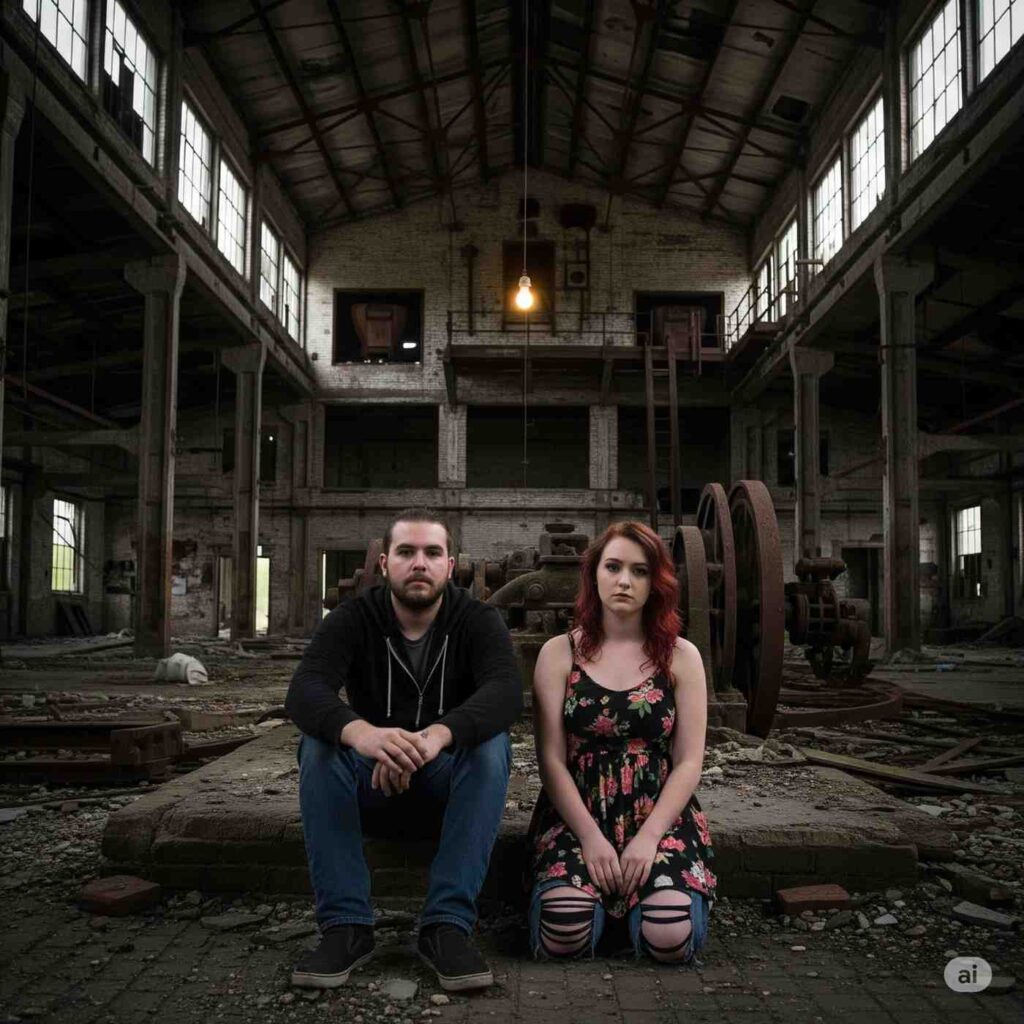
Autumn crept into the edges of the town like rust at the seams of a forgotten tool. The golden cornfields near Dalton thinned. Chimneys resumed coughing smoke into the dry air. But inside the co-op, the hum of slow creation continued.
Rosa and Eli rarely spoke of the past anymore. There were tasks to finish, shipments to prepare. Local schools had started placing small orders for low-cost filters. A farmer from Lima paid in produce. Progress was modest, but evolving.
One Friday, after the last shift clocked out, Rosa found Eli sitting in the machine bay, Mateo’s old drawing unfolded in his hands.
“I couldn’t throw it out,” he said, his voice thinner than usual.
“I wouldn’t have let you,” she replied.
They shared the silence.
Later that week, an invitation came from a regional sustainability summit in Cleveland. The co-op had been nominated for a grassroots innovation award. Rosa declined to attend. Eli said nothing, but his shoulders stiffened.
“You should go,” he said the next evening, wiping grease from a gear.
“I don’t want cameras. You know that.”
“But they need to see the hands behind the machine.”
She looked down at her palms. “They won’t show that part.”
When he left for the summit alone, he took the drawing. He folded it into his wallet, pressed flat like a prayer.
At the summit, they called his name. He walked onstage in his only clean shirt. Said what he had to say.
“This isn’t about me,” Eli told the room. “It started because one woman refused to walk away.”
He didn’t name her. He didn’t need to.
Back in town, Rosa had stayed late. She’d been fixing a broken pump valve. Her hands ached from the cold. Aaron and Mateo had fallen asleep in the corner on a pile of canvas cloth.
Eli returned that night around midnight. No one saw him walk in.
He placed the award—a welded sculpture shaped like water droplets—on the table beside the prototype.
“I told them it was a group effort,” he said.
Rosa didn’t look up right away. She was calibrating pressure flow.
“Did they believe you?” she asked, her voice almost teasing.
“No.”
She let out a breath that might’ve been a laugh. Or maybe it was just release.
He stood beside her, watching her check the seals. She wore his old denim jacket. Didn’t remember to give it back. He hadn’t asked.
“You’re staying?” she finally asked.
Eli looked around. At the old concrete walls now patched with insulation. At the calendar with community hours penciled in. At their kids still asleep.
“I think I already did.”
She nodded. “Then keep working.”
They stood side by side again.
Rosa reached for the lever that restarted the lathe. Eli moved his hand to guide hers.
Their fingers touched—briefly. No pull. No grasp. Just the gradual electricity of two people who had overcome not only their obstacles, but themselves.
The lathe whirred to life.
Outside, snow began to fall—not a storm, not yet. Just a soft dusting. A prelude.
Inside, the co-op lights glowed low. The kids stirred. And Rosa whispered, more to herself than to him:
“Some things take time to begin. Some things take even longer to end.”
Eli didn’t answer.
He just stayed.
And in the warmth of old machines and new hope, their slow-burn love endured—not as fire, but as the quiet heat that keeps hands moving, hearts open.
Slow Burn – Authentic Vs Synthetic Love
END

0 Comments